| OCR Text |
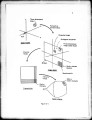
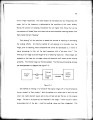
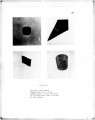
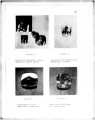
Show mtm.imnmim^^^mH^m^mm Ji ■! «m^^mmmm^^^^^ nmu »i II 36 the surface, the intensity might be a function of pressure, strain, height, density, artistic whim, etc. If these can be expressed in a bicubic equation then thev fit into the subdividing scheme. Color components could also be calculated as bicubic equations. One must use care to ensure that the calculated intensity values stay within required bounds for the display. Three ways of doing this are: 1. Check each calculated value and clip it if too large or too small. 2. If using normals, renormalize at every point. 3. Solve for the Bezitfr control points of the patch (see Appendix A) and normalize those points so that none of them are out of range, then recalculate the patch. Since the patch is contrained io lie within the convex hull of the points they will be in the required bounds. First derivative continuity across patch boundaries may be lost with this method. MAPPING Photographs, drawings, or any picture can be mapped onto bivariate patches. This is one of the most interesting consequences of the patch splitting algorithm. It gives a method for putting texture, drawings, or photographs onto surfaces. It also allows one to have reflections in pictures, as in flat or curved mirrors. One can make a correspondence between any point on a patch and an intensity on a picture. If a photograph is scanned in at a resolution of x times y then every element can be referenced by u-x and v-y where 0^u,vSl. In general, one could think - -■ - ■ inii |