| OCR Text |
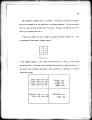
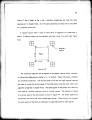
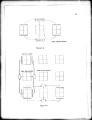
Show mm «* »i immmmmmmmmmmm* 3l CHAPTER FIVE THE HIDDEN SURFACE PROBLEM In order to display surface patches it is necessary to determine which surfaces are visible. Two methods that can be used to solve the hidden surface problem for bicubic patches are the "modified Newell algorithm" and the "z-buffer algorithm." THE MODIFIED NEWELL ALGORITHM Newell, Newell, and Sancha [10] have devised an algorithm for displaying polygons that sorts the polygons in z order and paints the polygons in that order into a frame buffer; the polygon farthest away from the eye is written first. Subsequent polygons may be written over those already in the buffer thus eliminating obscured polygons. If two polygons intersect or are situated so that it is not easy to sort them in z order, they are split into smaller pieces until they can be correctly sorted. There are two parts to the z sort in the Newell algorithm. The first is a simple, quick z sort of all the polygons based on their farthest vertex. It does not guarentee that the polygons are in the correct order to be written into the buffer. The second is a time-consuming sort that guarentees that the polygons are in the right order. Martin Newell of the University of Utah has noted in private discussion that that algorithm can b« extended to patches and that the Bezier control points (see appendix - '-- - ■ - |