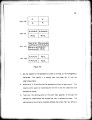
| OCR Text |
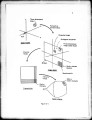
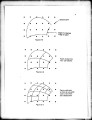
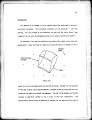
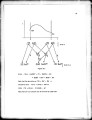
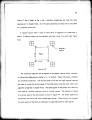
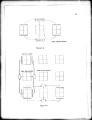
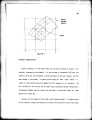
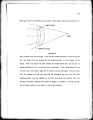
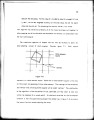
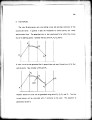
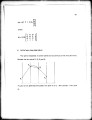
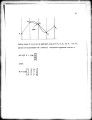
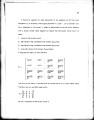
Show wmmmm&^i*^ ^•wpwwiwiwwiir'wtnunp' '^~"p*n'?«nff^HI"P»!f"^»w^ni^"«^^»^»i«^wr^^^^i»»- hiddsn-surfac» problem. The orthogonal projection of the image-space object onto the x-y plane is called the "projected image." That part of the -y plane which will be associated witn the raste: is called thf "screen." We must define the relationship Between the image-space and the raster in order to transfer information from the projected image to the raster. Recall that the screen is the portion of the x-y plane of the image-space that correrponds to the raster. The area of the screen is divided into small squares called "raster-element squares." There is, Of course, a one-to-one correspondence between raster-element squares and raster elements. The center of each raster-element square will be called a "sample-point." A diagram depicting the relationships of the above terms is shown in figure 2-1. THE SUBDIVISION ALGORITHM The algorithm for establishing the correspondence between a patch and the raster-elements will now be presented. The algorithm, hereafter called the "•ubdivision algorithm," works for either patches or segments of patches, called "subpatches." Figure 2-2 illustrates a portion of the screen where the dots represent the sample-points. (The outlines of the raster-element squares are not shown.) The curved lines n resent the edges of a projected patch. Even though only the projection is shown, we assume that enough information about the patch is maintained so that the light intensity for any location on the patch can be calculated. A statement cf the algorithm is: If the patch (subpatch) is small enough so that its projection covers only MM . |