| Title |
Edwin "Ned" C. Winder, West Valley City, Utah: an interview by Becky B. Lloyd, October 22, 2001: Saving the legacy tape no. 412 |
| Alternative Title |
Edwin "Ned" C. Winder, Saving the legacy: an oral history of Utah's World War II veterans, ACCN 2070, American West Center, University of Utah |
| Creator |
Winder, Ned,1922-2005 |
| Contributor |
Lloyd, Becky B.; University of Utah. American West Center |
| Publisher |
Digitized by J. Willard Marriott Library, University of Utah |
| Date |
2001-10-22 |
| Date Digital |
2015-09-16 |
| Access Rights |
I acknowledge and agree that all information I obtain as a result of accessing any oral history provided by the University of Utah's Marriott Library shall be used only for historical or scholarly or academic research purposes, and not for commercial purposes. I understand that any other use of the materials is not authorized by the University of Utah and may exceed the scope of permission granted to the University of Utah by the interviewer or interviewee. I may request permission for other uses, in writing to Special Collections at the Marriott Library, which the University of Utah may choose grant, in its sole discretion. I agree to defend, indemnify and hold the University of Utah and its Marriott Library harmless for and against any actions or claims that relate to my improper use of materials provided by the University of Utah. |
| Spatial Coverage |
Caroline Islands; Japan; Salt Lake County, Utah, United States |
| Subject |
Winder, Ned,1922-2005--Interviews; World War, 1939-1945--Personal narratives, American; Veterans--Utah--Biography; World War, 1939-1945--Naval operations, American; World War, 1939-1945--Campaigns--Pacific Area--Personal narratives, American |
| Keywords |
Radio; Hugh W. Hadley; Winder Dairy |
| Description |
Transcript (59 pages) of an interview by Becky B. Lloyd with Ned C. Winder on October 22, 2001. This is from tape number 412 in the "Saving the Legacy Oral History Project |
| Collection Number and Name |
Accn2070, Saving the Legacy oral history project, 2001-2010 |
| Abstract |
Winder (b. 1922) discusses his family heritage, including his great-grandfather starting Winder Dairy in 1880. He also talks about his mission to the Southern States before joining the Navy in 1944. After his training in radar he was assigned to the destroyer Hugh W. Hadley as a fire control officer on a five-inch gun. He describes the attack on the Hadley and sinking of the Hale. He was discharged in 1945. 59 pages. |
| Type |
Text |
| Genre |
oral histories (literary works) |
| Format |
application/pdf |
| Extent |
59 pages |
| Language |
eng |
| Rights |
 |
| Scanning Technician |
Mazi Rakhsha |
| Conversion Specifications |
Original scanned with Kirtas 2400 and saved as 400 ppi uncompressed TIFF. PDF generated by Adobe Acrobat Pro X for CONTENTdm display |
| ARK |
ark:/87278/s6dr4tqp |
| Topic |
Personal narratives--American; Veterans; World War (1939-1945); Military operations, Naval--American |
| Setname |
uum_slohp |
| ID |
1020352 |
| Reference URL |
https://collections.lib.utah.edu/ark:/87278/s6dr4tqp |
| Title |
Page 47 |
| Format |
application/pdf |
| Setname |
uum_slohp |
| ID |
1020338 |
| OCR Text |
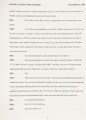
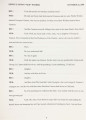
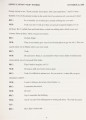
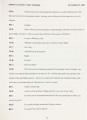
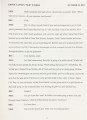
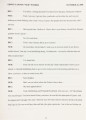
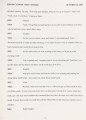
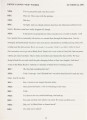
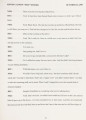
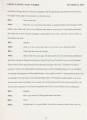
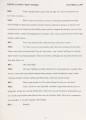
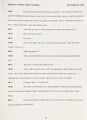
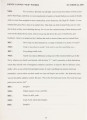
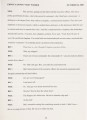
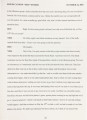
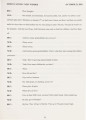
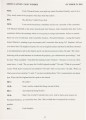
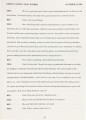
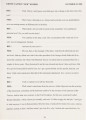
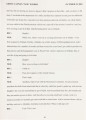
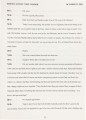
Show EDWIN CANNON "NED" WINDER T B R 22 20 1 NED: There were a lot of ships docked in ther mo t of th d tr y r . BEC: And so you'd go out on these pickets and get whatever in£ rmation y u could. Now you said, when you were attacked you were out there with the Hale. W r th r ju t two of you that would go at a time or were there more ships? NED: Well, they were behind us and they had them scattered along in-there wasn't just one out there. We were the farthest in the East China Sea to Japan and as I say, the purpose was to relay the information that radar at that time couldn't get. Now they could, that would be a piece of cake with the equipment they have now. And, so, it seemed like when we were waiting there a few days, about every night one would come in that had been shot up or they'd had some scary-and that was when Japan had decided to just throw everything at us with suicide attacks. BEC: Desperation. NED: They were getting young kids that hardly knew how to fly. Wasn't that [World Trade Center Attack] terrible on September 11th? BEC: NED: BEC: NED: BEC: NED: That was terrible. Man, looking at those pictures were horrifying, weren't they? Yeah. And to bring down two buildings like that, that was really successful. Yeah, I would say. You even wonder if they planned it to be that successful. Oh, no. I think it exceeded their best plans. Usually, when something hits something, why, but boy that one plane, the second one, went right through the comer of the building and out the other side. And then to have them fall, as they did. 46 |
| Reference URL |
https://collections.lib.utah.edu/ark:/87278/s6dr4tqp/1020338 |