| Title |
Edwin "Ned" C. Winder, West Valley City, Utah: an interview by Becky B. Lloyd, October 22, 2001: Saving the legacy tape no. 412 |
| Alternative Title |
Edwin "Ned" C. Winder, Saving the legacy: an oral history of Utah's World War II veterans, ACCN 2070, American West Center, University of Utah |
| Creator |
Winder, Ned,1922-2005 |
| Contributor |
Lloyd, Becky B.; University of Utah. American West Center |
| Publisher |
Digitized by J. Willard Marriott Library, University of Utah |
| Date |
2001-10-22 |
| Date Digital |
2015-09-16 |
| Access Rights |
I acknowledge and agree that all information I obtain as a result of accessing any oral history provided by the University of Utah's Marriott Library shall be used only for historical or scholarly or academic research purposes, and not for commercial purposes. I understand that any other use of the materials is not authorized by the University of Utah and may exceed the scope of permission granted to the University of Utah by the interviewer or interviewee. I may request permission for other uses, in writing to Special Collections at the Marriott Library, which the University of Utah may choose grant, in its sole discretion. I agree to defend, indemnify and hold the University of Utah and its Marriott Library harmless for and against any actions or claims that relate to my improper use of materials provided by the University of Utah. |
| Spatial Coverage |
Caroline Islands; Japan; Salt Lake County, Utah, United States |
| Subject |
Winder, Ned,1922-2005--Interviews; World War, 1939-1945--Personal narratives, American; Veterans--Utah--Biography; World War, 1939-1945--Naval operations, American; World War, 1939-1945--Campaigns--Pacific Area--Personal narratives, American |
| Keywords |
Radio; Hugh W. Hadley; Winder Dairy |
| Description |
Transcript (59 pages) of an interview by Becky B. Lloyd with Ned C. Winder on October 22, 2001. This is from tape number 412 in the "Saving the Legacy Oral History Project |
| Collection Number and Name |
Accn2070, Saving the Legacy oral history project, 2001-2010 |
| Abstract |
Winder (b. 1922) discusses his family heritage, including his great-grandfather starting Winder Dairy in 1880. He also talks about his mission to the Southern States before joining the Navy in 1944. After his training in radar he was assigned to the destroyer Hugh W. Hadley as a fire control officer on a five-inch gun. He describes the attack on the Hadley and sinking of the Hale. He was discharged in 1945. 59 pages. |
| Type |
Text |
| Genre |
oral histories (literary works) |
| Format |
application/pdf |
| Extent |
59 pages |
| Language |
eng |
| Rights |
 |
| Scanning Technician |
Mazi Rakhsha |
| Conversion Specifications |
Original scanned with Kirtas 2400 and saved as 400 ppi uncompressed TIFF. PDF generated by Adobe Acrobat Pro X for CONTENTdm display |
| ARK |
ark:/87278/s6dr4tqp |
| Topic |
Personal narratives--American; Veterans; World War (1939-1945); Military operations, Naval--American |
| Setname |
uum_slohp |
| ID |
1020352 |
| Reference URL |
https://collections.lib.utah.edu/ark:/87278/s6dr4tqp |
| Title |
Page 34 |
| Format |
application/pdf |
| Setname |
uum_slohp |
| ID |
1020325 |
| OCR Text |
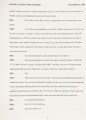
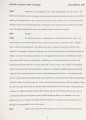
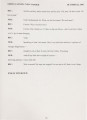
Show EDWI CANNO "NED' WI D R R 22 20 1 [turn off tape] NED: Swimming. Worry about the sharks. BEC: Yeah. NED: And worrying about the ship exploding and a lot of other things. And w were in the water for about an hour-and-a-half and watching the ship and things had quieted down. The Navy had a lot of repair tugs out from the perimeter of where we, from Kerama Retto and one had been radioed to come. Our ship was listing badly. And they came and started picking us up in the water. And then another repair ship came and they got on board and started draining the water, you know, that had come in, trying to keep the ship afloat, which they did. And it later was towed back into port. And then later it was damaged so badly that they thought they could repair it, and so it was towed back to Hunter's Point in San Francisco for repairs. And about that time the war had ended, so they never did repair it. BEC: Oh. NED: But that-then we were assigned to other ships. I was put on a big general communications ship that was, it was there in Okinawa. Most of them were assigned to other, different places. And in towing that, our ship back, they were in typhoons and they had the line part a number of times and it was quite scary. BEC: Oh, really. NED: But there were very few people on board then, but that was evidently quite scary. And then we were on a ship that went into Nagasaki, hauling Marines. That was where the second atomic bomb had been dropped on Japan. You know, Hiroshima was the first and Nagasaki came right after. Then not long after that, then the Japanese surrendered. And I mustered out. 33 |
| Reference URL |
https://collections.lib.utah.edu/ark:/87278/s6dr4tqp/1020325 |