| Title |
Bryan Blanthorn, Grouse Creek, Utah: an interview by Verna Richardson, May 11, 2001: Saving the legacy tape no. 264 and 265 |
| Alternative Title |
Bryan Blanthorn, Saving the legacy: an oral history of Utah's World War II veterans, ACCN 2070, American West Center, University of Utah |
| Creator |
Blanthorn, Bryan, 1919-2007 |
| Contributor |
Richardson, Verna; University of Utah. American West Center |
| Publisher |
Digitized by J. Willard Marriott Library, University of Utah |
| Date |
2001-05-11 |
| Date Digital |
2015-09-16 |
| Access Rights |
I acknowledge and agree that all information I obtain as a result of accessing any oral history provided by the University of Utah's Marriott Library shall be used only for historical or scholarly or academic research purposes, and not for commercial purposes. I understand that any other use of the materials is not authorized by the University of Utah and may exceed the scope of permission granted to the University of Utah by the interviewer or interviewee. I may request permission for other uses, in writing to Special Collections at the Marriott Library, which the University of Utah may choose grant, in its sole discretion. I agree to defend, indemnify and hold the University of Utah and its Marriott Library harmless for and against any actions or claims that relate to my improper use of materials provided by the University of Utah. |
| Spatial Coverage |
Grouse Creek, Box Elder County, Utah, United States; Guam; Japan |
| Subject |
Blanthorn, Bryan, 1919-2007--Interviews; World War, 1939-1945--Personal narratives, American; Veterans--Utah--Biography; World War, 1939-1945--Naval operations, American; World War, 1939-1945--Campaigns--Pacific Area--Personal narratives, American; Iwo Jima, Battle of, Japan, 1945--Personal narratives, American; Indianapolis (Cruiser) |
| Keywords |
U.S.S. Indianapolis; Iwo Jima |
| Description |
Transcript (54 pages) of an interview by Verna Richardson with Bryan Blanthorn on May 11, 2001. This is from tape numbers 264 and 265 in the "Saving the Legacy Oral History Project |
| Collection Number and Name |
Accn2070, Saving the Legacy oral history project, 2001-2010 |
| Abstract |
Bryan Blanthorn (b. 1919) of Grouse Creek, Utah, enlisted in June of 1944. He was assigned to the USS Indianapolis in November of that year. He was a gunner and saw action at Iwo Jima and Okinawa. He describes the torpedo attack and sinking of the Indianapolis, being in the water, experiences with sharks, the rescue, and being in the hospital in Guam. A second interview with Bryan and his wife, Bobbie, contains more details about the incident, his being picked up by the Ralph Talbot, and an Indianapolis reunion. 54 and 29 pages. |
| Type |
Text |
| Genre |
oral histories (literary works) |
| Format |
application/pdf |
| Extent |
29 pages |
| Language |
eng |
| Rights |
 |
| Scanning Technician |
Mazi Rakhsha |
| Conversion Specifications |
Original scanned with Kirtas 2400 and saved as 400 ppi uncompressed TIFF. PDF generated by Adobe Acrobat Pro X for CONTENTdm display |
| ARK |
ark:/87278/s6tf1wk6 |
| Topic |
Personal narratives--American; Veterans; World War (1939-1945); Military operations, Naval--American; Iwo Jima, Battle of (Japan : 1945); Indianapolis (Cruiser) |
| Setname |
uum_slohp |
| ID |
1018672 |
| Reference URL |
https://collections.lib.utah.edu/ark:/87278/s6tf1wk6 |
| Title |
Page 10 |
| Format |
application/pdf |
| Setname |
uum_slohp |
| ID |
1018593 |
| OCR Text |
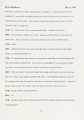
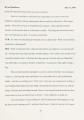
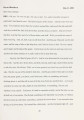
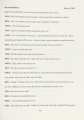
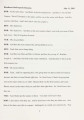
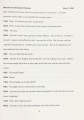
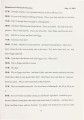
Show Bryan Blanthorn '20 And I know I was one of the last ones to jump. VER: So you were in the water, and this was at midnight now a little aft r midnight? BRY: Yes, yes. VER: And you were alone for awhile, or ... ? BRY: Well, you never knew. Like I say, it seemed like we were under water as much as we were on top of the water. The waves were really high. Whether it was just that the ocean was that way, or whether it was the explosions and the sinking of the ship. And I think there was more explosions even after it went down. Whether that was causing the water to be so rough, and the waves was high, but everyone knows that-that the waves were really high at the time until they would-and the waves was a coming over us, and we was under water for a time. And there was a lot of men in the water. And, so, yes, you was bumping into men, and then the next thing it seemed like you was off by yourself. And, like I say, I grabbed that ammunition can, and I hung onto that most of the night. But as morning come, and I was bumping into other people, and they was complaining about that can hitting them, and what not, and so I finally turned it loose. As the sea got calmer, why, I turned that loose. And then, like I say, as it come daylight, and as the day went along, the sea got calmer until there was no problem that way. But practically everybody was sick to some extent because of the oil and what not that was in the water, and the salt water that they had took in while the sea was so rough. VER: So you were throwing up all night? 9 |
| Reference URL |
https://collections.lib.utah.edu/ark:/87278/s6tf1wk6/1018593 |