| OCR Text |
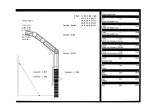
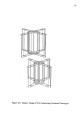
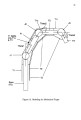
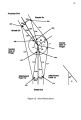
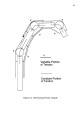
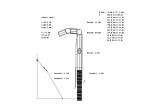
Show 46 position proprioception for the long limbs was partly provided by intramuscular receptors. (See Clark [9].) 5.4.1 Problem Definition This question of finger proprioception then may be stated: if the limbs perceive both movement and static position proprioception, and if finger joints perceive only movement position proprioception, and if components of skin receptors provide both static and dynamic sensory information, and if intramusclular receptors provide both static and dynamic sensory information, then why does the finger not experience only static position proprioception and not static position proprioception? What is it about the finger's anatomical construction and muscular configuration that makes it different from that of the limbs? There is an obvious complexity in the finger with its three joints that play off of each other when in motion in order to achieve the desired finger position which the limbs do not possess. It is shown that this geometrical complexity does indeed result in the loss of proprioception in the finger joints. The mechani~al finger model shows that there is more than one possible set of joint angles for a single set of tendon lengths. That is to say that applying a single set of forces from the muscles of the finger may result in more than one static position. Another way of saying this is that there is a one to many mapping of tendon lengths to finger positions. This revealing fact adds fuel to the argument that the reason static finger joint position cannot be sensed is that, unlike limbs, fingers are configured in such a way that they can (theoretically) achieve more than one position given a set of lengths, so it is not only the forces applied to the finger that determines the final static position of the finger, but other factors as well. The brain then cannot determine a position of the finger from a given set of muscle |