| OCR Text |
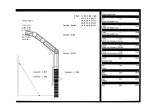
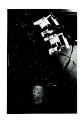
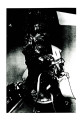
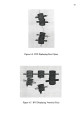
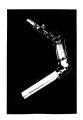
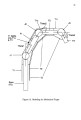
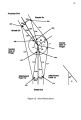
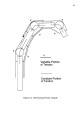
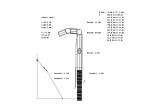
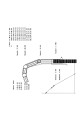
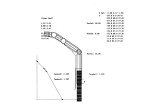
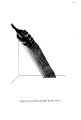
Show CHAPTER 5 APPLICATIONS: FINGER MODELING The hand is complex and functionally unique. Understanding the biomechanics of the hand and developing a model by which one can correctly simulate hand motion and predict such motion given applied forces and constraints would be extremely beneficial. (See Thompson and Giurintano for an example of a functional hand model [53].) Physicians, especially orthopedic surgeons, would be able to rely on the model when reattaching tendons or repairing a maimed hand. Unfortunately, such a model is extremely difficult to build due to the absolute precision required. The hand, due to its complexity, is still not well understood and is still a topic of research. (See Chao et al. [6] or Nordin [44] for a detailed look at hand biomechanics.) . This portion of research centers on the modeling of a mechanical representation of a human finger with the MFMS and determining some of the aspects of how finger movement is coordinated and controlled with respect to tendon length versus finger joint flexion. The simulation will be much like a simulation of the thumb implemented by Buford and Thompson [5] with the added emphasis on tendon length/finger position relationships. Due to the . complexity of modeling an actual finger, the mechanical prototype finger (provided by Prof. Clark of the Nebraska Medical Center) is modeled. This finger, shown in Figure 5.1, has metal phalanges (cylinders), joints (cylinders), wire sheaths (glued on), and polymer tendons. These components are connected so as to capture the basic anatomical features and |