| OCR Text |
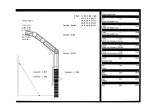
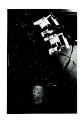
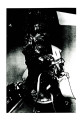
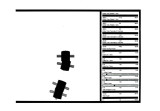
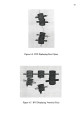
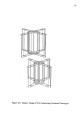
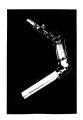
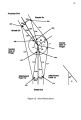
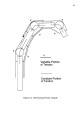
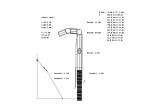
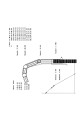
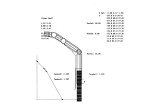
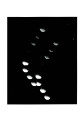
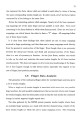
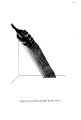
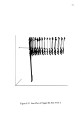
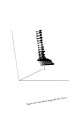
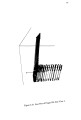
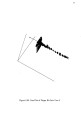
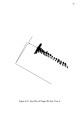
Show CHAPTER 4 APPLICATIONS: SPINE DATA In the area of spinal orthopedic surgery, one of the major interests to a physician IS to know how the spine will react and compensate given a set of constraints or restrictions, such as the fusing together of two vertebrae. The vertebra is of great importance because it is the principle weight-bearing structure of the skeletal system. (See Todd [54] and Moore [41].) Thus biomechanics and modern medicine rely heavily on research into the statics, kinematics and dynamics of the spine and intervertebral interactions. Figures 4.1 and 4.2 show photographs of a fresh human spine attached to the measuring device which is used to collect intervertebral transformation data. 4.1 Gathering Spine Data Current research utilizes spines freshly removed from a cadaver to measure the impact of these constraints. Dr. A. U. Daniels and his research group compiled the collection of spine data used by this project (see Daniels et al. [14]). The collection apparatus consists of three mutually orthogonal charged coupled device arrays ( CCDs) mounted rigidly to one vertebra and a three laser device (LD) is mounted to an adjoining vertebra. Each one of the three laser beam emitted by the three LDs strike a corresponding CCD plane which records relative movements with an accuracy of up to 30 microns. (See Dean et al. [15] for a more detailed discussion.) As the spine undergoes translation, rotation, compression and extension, the relative offsets and rotations are recorded. These data were then used to recover the |