| OCR Text |
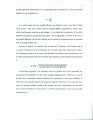
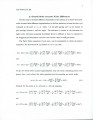
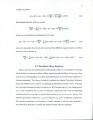
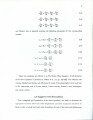
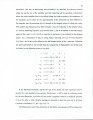
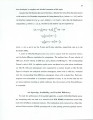
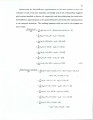
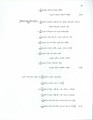
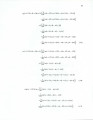
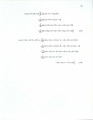
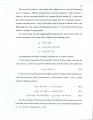
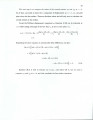
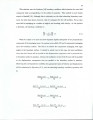
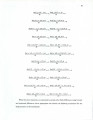
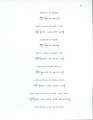
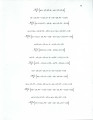
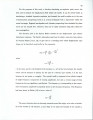
Show 55 This solution uses the Lindman [10] boundary condition which absorbs the wave field component that is perpendicular to the surface in question. This method is more clearly stated in Randall [13]. Although this is obviously not the ideal absorbing boundary treat-ment, the tests have shown, however, that it is adequate for the 3-D problem. For a scalar wave field ¢ impinging on a surface at angle () and traveling with velocity c in the positive x direction, the Lindman condition is : o¢ + _c_ o¢ = ot 0 cos() ox (C. I) When () is taken to be zero the above equation implies absorption of the perpendicular component of the impinging wave. So, assume a wave field of P and S components impinging upon the boundary surface. The idea is to absorb the components impinging with right angles to the boundary surface. It should be noted that, in this case, the wave oscillation vector for the P waves will be parallel to the displacement component that is perpendicular to boundary surface in question, whereas the oscillation vector of the S waves will be parallel to the displacement components that are parallel to the boundary surface in question. Observing this correspondence carefully, the appropriate values of velocity and displacement will be substituted in Equation (C.l), and the absorbing boundary condition equations will be ou(O, j, k, n) _ C ou(O, j, k, n) = at 0 p ox au ( N X - 1 , j, k, n) C au ( N X - I, j, k, n) _ at + p ox - 0 au(i, 0, k, n) _ C ou(i, 0, k, n) = at 3 oy 0 au(i, NY- I, k, n) C au(i, NY- I, k, n) _ at + 3 oy - o |