| OCR Text |
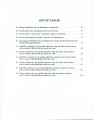
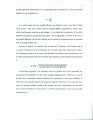
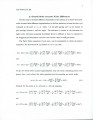
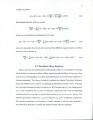
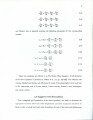
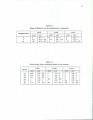
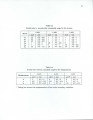
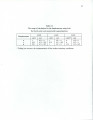
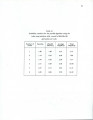
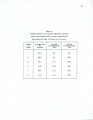
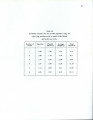
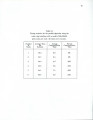
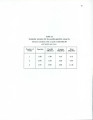
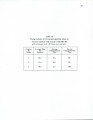
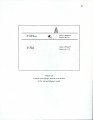
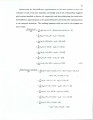
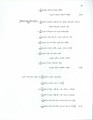
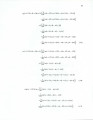
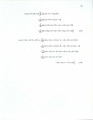
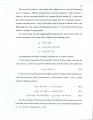
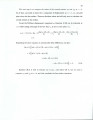
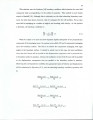
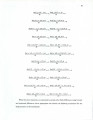
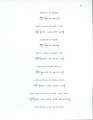
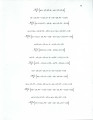
Show 13 second-order approximations can be used to compute the planes near the peripheries. The result of this extension is shown in Table 2.3. The next step is to implement the free-surface boundary conditions which will furnish stress values at the free-surface boundary and fictitious values above the surface. A full description of this procedure is presented in Appendix B. The implementation of the free surface boundary conditions will facilitate the calculation of u, v, and w starting from k = 0, k = 0, and k = 1/2, respectively, along the z-axis. Once the stresses have been updated they can be used along with the current and precious values of the displacements to compute new values of the displacements at the next time step, i.e., t = (n + 1) * t!r.t. This is done using fourth-order approximations to Equations (2.5) through (2.7), and the range of calculation is limited by the available stress values indicated in Table 2.3. This range is shown in Table 2.4. The second-order approximations will be used, in the same fashion as above, to fill the gap and bring the calculations closer to the boundary. The range of calculation for the displacements using both the fourth-order and second-order approximations is shown in Table 2.5. The final step in the solution is to apply absorbing boundary conditions to the dis-placement peripheries. A first-order radiation condition based on the work of Lindman [10] is used for this purpose and the details are shown in Appendix C. |