| OCR Text |
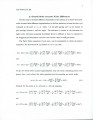
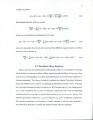
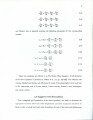
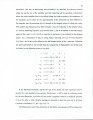
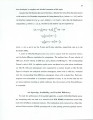
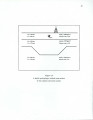
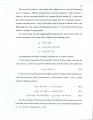
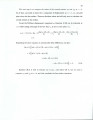
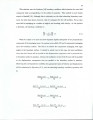
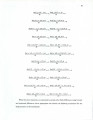
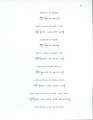
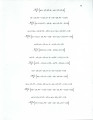
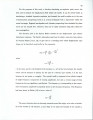
Show 52 The top of the model is a free surface with nothing next to it but the atmosphere and so it requires a different treatment from the other boundaries. This treatment is similar to the one previously alluded to by Levander [9] and Jastram [8]. It deals with the vertical components of the stress field and assumes that the computation domain is extended vertically above z = 0 by N grid points, where N is equal to half the width of the differencing star. The stresses and displacements above z = 0 are merely fictitious values needed to complete the computation. It is worth noting, from the staggered grid formulation that, near the free surface, the vertical components of the stress field are defined at the following points: Tzx --+ { i, j, 1/2) , Tzy --+ {i + 1/2, j + 1/2, 1/2) , Tzz --+ {i + 1/2, j, 0) . The appropriate free-surface boundary conditions can be stated as follows : a) The vertical components of the stress field vanish at the free surface, and since the normal stress Tzz is the only component defined exactly at the free surface, this implies that Tz z { i + 1 /2, j, 0) = 0 . (B.1) b) The vertical components of the stress field near the free surface exhibit antisymmetry across the free surface. Hence, normal stress Tzz and the shear stresses Tzx and Tzy should satisfy the following relations : Tzz(i+1/2,j,-k) = -Tzz(i+1/2,j,k), (B.2) Tzx(i,j,-(k+ 1/2)) =- Tzx(i,j,k+ 1/2), (B.3) Tzy(i + 1/2, j + 1/2, -(k + 1/2)) =- Tzy(i + 1/2, j + 1/2, k + 1/2) . (B.4) The above relations will determine the values of the fictitious vertical components of the stress field above the free surface and help calculate the u and v components of displacement at z = 0, and the w component at z = 1/2. |