| OCR Text |
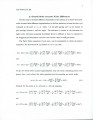
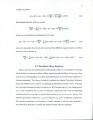
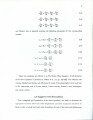
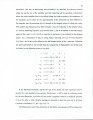
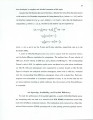
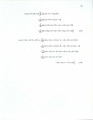
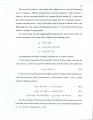
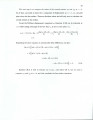
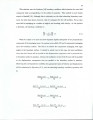
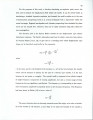
Show 5 parallel algorithm distributed over N computing nodes is denoted by Tp, then the parallel efficiency ~ can be defined as It is worth noting that the parallel efficiency was defined in such a way that its ideal value is unity. That way it will be easy to compare different algorithms or express their relative performance measures as percentages. A very important consequence of the above definition reported by Gupta and Kumar [5] is that an algorithm is scalable if and only if the parallel efficiency can be held constant as the number of computing nodes is increased with increasing problem size. Speedup is defined by Amdahl's Law as reported in Hennessy and Patterson [6] as a measure of improvement in performance due to using a particular enhancement feature. The enhancement feature in this case is the distributed parallelism and the performance can be taken as the execution time for the entire task. Speedup can be expressed quantitatively as S d _ execution time for the sequential algorithm pee up - executi.O n ti.m e ct ort h e paraI I eI a Ig on. t h m . In the above equation, it is imperative that the problem size of the sequential 1m-plementation be equivalent to that of the parallel implementation. However, it is quite possible that a sequential machine satisfying this requirement is not always available, in which case the execution time for the sequential algorithm will have to be computed indi-rectly by running a smaller version of the problem and then extrapolating the execution time to obtain the figures corresponding to a problem size equivalent to that of the parallel implementation. |