| OCR Text |
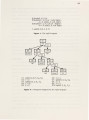
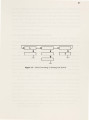
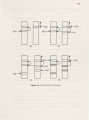
Show 3. The bandwidth of the network grows apprax1mately linearly with N. 4. It uses bit-routing, i.e., the destination address u niquely determ.tnes the path through the switch from any source to the destination. 5. Data transfers are bit-serial. 40 In conventional packet-switched networks, memory requests are routed along the switch pathways as packets of data; multiple packets can be in the network simultaneously. By contrast, circuit-switched networks set up memory request pathways in advance (usually at compile-time) so that no contention occurs in the switch by multiple simultaneous requests to the same memory. In packet-switched networks, such contention is a potential hazard which can severely impact the per - formance of any application. This phenomenon, which is called hot-spot contention [35], occurs when requests for some memory element need to wait for pre-vious requests for the same element to complete before they can proceed. In general, such requests must be queued and serialized, which can lead to serialization of the entire network when queues fill at one stage and then the preceding stages. The Butterfly employs a variation on the typical packet-switched network which can ease the hot-spot problem. A memory request on the Butterfly switch will first attempt to claim a pathway to its destination before the request is actually put onto the switch. If the pathway is found, then the request is guaranteed to be filled without any contention; no queues are needed, and therefore queue saturation and hot-spot serialization of the entire switch cannot occur. On the Butterfly, if a request which is seeking a pathway to its destination encounters a switch node which is already in use, the request fails. The processor which initiated the request resubmits it after a short wait. A network such as this which does not queue a re-quest which is hindered in its journey to a destination is called non-blocking. The manufacturer states that typical application programs experience a typical impact of 1% to 5% degradation in execution speed due to switch contention. Benefits of using the Butterfly switch are investigated further in [38]. The raw speed of the network is 32 megabits per second per path. Our benchmarks indicate that 28 megabits per second is realizable under ideal con- |