| OCR Text |
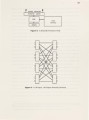
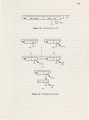
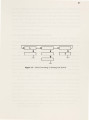
Show 39 MC68020 microprocessor, one megabyte of memory, and a processor node controU r (PNC) which incorporates the switch interface and several I/0 interfaces. Nodes may also be configured with four megabytes, yielding a total potential physical memory of 1 gigabyte. Figure 5 shows the components of a Butterfly n ode. The Butterfly used in this dissertation uses an MC68020 microprocessor with a M68881 floating point co-processor, and some nodes have four megabytes of memory. Each entire node is driven by an 8 MHz. clock. A clock doubler allows the processor to run at 16 MHz. The 68020 ts a powerful and fast microprocessor, with the approximate power of a DEC VAX 11/750: about 1 MIPS (m1llion instructions per second) when coupled with memory of an appropriate speed. The 68020 has an onchip instruction cache of 256 bytes, and instructions are pipelined. 3.1.1.2 The Processor Node Controller. Figure 5 illustrates the central position occupied by the PNC. All accesses to memory, including memory local to the processor accessing it, are routed through the PNC on each node. The PNC performs all memory operations, using the switch if the reference ts to remote memory. In addition to providing basic memory functions, the PNC microcode also implements a variety of atomic functions. These functions enhance the utility of the Butterfly for parallel operations such as queuing, semaphores and locks, and basic message-passing service. I/0 interfacing though up to 4 I/0 boards or the IEEE Multibus is also supported by the PNC. The PNC is based on a custom-microcoded 16-bit bit-slice 2901 processor and runs at 8 MHz. 3.1.1.3 The Butterfly Switch. Butterfly nodes are connected through the Butterfly switch, which is a non-blocking Omega network. An small example of such a network is shown in Figure 6. The switch connectivity is similar to that of a Fast Fourier Transform Butterfly, from which it takes its name. Important characteristics of the Butterfly switch are: 1. The switch is composed of four-by-four custom crossbar elements and, like all Omega networks, ts bit-address routed. 2. The number of switching elements used grows as N • log(N) where N is the number of nodes. |