| OCR Text |
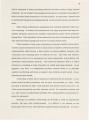
Show CHAPTER 1 INTRODUCTION The work reported in this dissertation occupies a murky middle ground between several different areas of current interest in Computer Science. The first area is logic programming. Logic programming is a declarative programming paradigm which has recently attracted considerable attention in the academic and artificial intelligence communities. The second area is multiprocessing, which deals with solving a problem more quickly by using several processors operating in concert. This work also touches on the practice of parallel programming, compilers and execution models for declarative languages, multiprocessor environment management, and memory management issues. The idea of combining logic programming with parallel processing is certainly not new. What distinguishes this work is that it reports on a real logic programming implementation on a genuine multiprocessor. The multiprocessor is the first representative of what may be a new generation of computer systems. It can comprise several hundred processing elements, and provides communication facilities which scale with the number of processors. It can contain a huge amount of physical memory, distributed throughout the system. The dissertation gives background information on logic programming concepts and the problems of parallel logic programming. It describes the target machine and its idiosyncracies. In describing the design of the logic programming implementation, a new binding environment method is developed. An initial implementation has been completed, and detailed data from benchmark programs yields insights into the performance of the execution model and the machine on which it is implemented. |