| OCR Text |
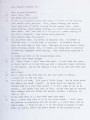
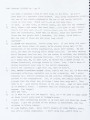
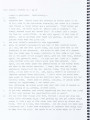
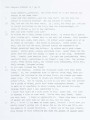
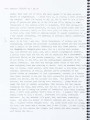
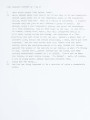
Show Joe l Shapir o 6 / 9 / 82 tp 1 pg 2 ti~e, a professional group of people. 1 Was there a group then between these businessmen? J S No, not that I'm aware of. A coalition? Coalescence? No . 1 Did they know each other? J S Gh, yes, they all knew each other. L Was there any way that one of them, from time to time , helped the other? J S Not that I am aware of. I wouldn't say that was out of the ques tion. But, I suppose, the mentality of retailing is , and of itself, a self realizing type of activity . Very competitive activity. Retailers cooperate with one another ; I don ' t know if they go around bailing one another out . It's not that kind --most retailers , in those days or these, runs --the margin of error is infintesi~al . So, nobody's got that much to lay over . 1 'What began to chip away at this group? JS Well, on reflection, I ' d say basically t wo things : the young people did not follow into their fathers ' footsteps so readily , because as we came into the 40 ' s and 50 ' s , financial opport un ites appeared greater with less work . And secondly , the whole world of merchan dising began to change, and competitive forces made it more and more difficult for small shop keepers to survive . That would in clude the growth of the chains, mass ~erchandising , and regional malls, all of those things . 1 So, they changed the character of the entir e downtown. JS Of course it changed the character of the whole downtown . Yeah , whether they were Jewish or non Jewish. Those economic forces didn't single out Jews. 1 Was the business here always here? J S Well, it would be an indicental question to your last one would be, with the--with the prevailing community was the Mormon community · kind, considerate, and respectful of Jewish businessmen . That would be a g ood question to explore. I think it was . I'm sure I ' m aware of various forms of prejudicial behavior against the Jewish businessman ·taking the form of just absolutely non - patronage, regardless of value. Well, non-patronage. There were, and are , and always were, and, perhaps, always will be, people who will not patron ize the Jewish merchant, for whatever reasons they choose to. |