| OCR Text |
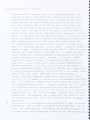
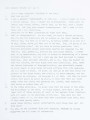
Show Joel Shapiro 5/26/82 tp 1 pg 11 or this effort or that,because there's enough trouble as it is. Whereas, rr.y mother became a social servant in the American community. So, you had both actions going on at that time. 1 whose philosophy tended to dominate in the house? JS Well, I don't know -- the differences in philosophy that occured in my home and my youth were in my ••• because .• if you want to say, on a Jewish level were, that my father belonged to both con gregations. Al ways did. And he attended both. He was, perhaps, to some degree, more at home at the Montefiore, which at that time, if you go back to the 20's, I remember going to visit my father in Montefiore and the rabbi was still giving the sermon in Yiddisn. Now, that's hard to realize,but the rabbi figures at that time, of course world war figures, and the fact that things ••• things were being ••• that he would deliver his sermon in Yiddish, was not pleasing to my mother, who believed that American synagogue ought to be an ~nglish synagogue. So, if I were a child in conflict, in Jewish conflict, it would be between those two extremes. So, out of it all, I learned respect, I suppose, and admiration for both sides. My mother tended to dominate the Jewish education because we were essentially Reform synagogue goers. And in the Reform synagogue, Reform temple, B'Naie Israel, in the 30's, when I was a child, I certainly didn't speak in Yiddish. I can't imagine anybody saying much of anything in Yiddish in that congregation at that time. And the amount of Hebrew used in the clergical service was minimal. 1 By minimal, that means practically non-existent? JS Well, I don't know. Those are relative terms. There wasn't much theological concepts, I would think, in the Reform synagogue ••• and were bent also to fit what was deemed to be acceptable by the larger community. Now, I don't mean to denegrate what happened in the Reform synagogue, because I think it did -- it fulfilled a function. L What was the function at that time? JS Well, it was integrated. These were -- the people of the Reform synagogue, in the 30's, were those Jews, in the city, who, by and large, were making it in America by being reasonably successful in whatever enterprises, economic enterprises they were doing. We |