| OCR Text |
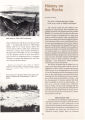
Show History on - the Rocks &, GARY TOPPING My name is Ozymanddiasd king of ' king, s: , - h k on my works, ye Mighty, and despair! 1891, Lehi Banner as " the finest on the famous Utah Lake" - are again high and dry in 1989, though littered with far too much human debris The ancient black willows, north shore sentinels for more than a century, were virtually destroyed by the high water of the 1980s. In a few years perhaps even the skeletal remains of those trees will be gone, and like an unattended grave in a forgotten cemetery, no marker will designate the site of the once famous Murdock Resort Richard S. Van Wagoner is the co- author of A Book of Mormons ( 1982) and author of Mormon Polygamy A History ( 1986). He is currently writing a history of Lehi, Utah, his hometown Trees mark site of Murdock Resort with Utah Lake beach in foreground. Photographed in 1987 by author. Thre ancht world was not modest in pro-d- g its achievements This heription, sup p d y m e p d to the English poet Percy Bysshe Shelley by a tlaveier who was struck by the irony of such a boast on the pedestal of a statue now bken aad half covered by sand, is probably ficti-tious, but examples of real ancient egotism crbound And historians of the ancient mrld depend heav-ily upon such messages carved in rock or metal as source% The Res Geist9eDiviAw(% e accomp lisbenb of the divine Au- 7, for example, an immense baipti~ noc cupying about thirty mod-em printed pages, is a summary by the Roman Emperor Augustus of his lifelong achievements in behalf of the Roman people and contains much of what we know about the creation of the Rman Empire. And an entire historical specialty - epigraphy - has developed to collect, translate, and interpret ancient inscriptions We modem historians lag far behind our col-leagues who study the ancient world in our use of epigraphic evidence. Why? Generally became our other sources are so abundant that we do not feel we need it Beginning with the Renaissance, which gave us the printing press, increased leisum time resulting from the development of tmm, capital-ism, and the general specialization of labor- and the development of modern egotism that finds itself compelled to record its achievements- we have seen a dramatic multiplication of historical sumes. Today, we have huge buildings like the 1 ~ ationaAl rchives, and small& b ut d lim pressive I ones like the Utah State Historical socieG, to col-lect and preserve the tons of records our civiliza-tion produces each day. m yFa& in Utal? Nm& d- Utah, btorim ought to be more ; interest& in kbric tmcdptions In . the first place, our state atmundts in them, particularly in the yam af - dre swlitheask And Mptions am fun: I 1 manyoftbm arehunnmus, and though thfq~ n8~ I I & at & rtAuce n wf ix@, hey add color to our histodcal writing Findy, there are instances 23 Denis Julien's May 3,1836, inscription in Hell Roaring Canyon on the Green River, photographed by Julius Stone, 1909. USHS collections. where, even in the modern world, we are depen-dent upon inscriptions for important factual information It takes a good while to carve your name in the rock, particularly if you make large, ornate letters, or if you add a lengthy message. ( You won't exper-iment to find this out, of course, in any permanent location in the canyon country! If you have to venfy what I'm saying, use a rock from your back yard) So the places where inscriptions abound are places where their authors had some leisure time. Caves where cowboys camped or archaeologists excavated are good prospects for inscriptions, and so are placid stretches of river where boatmen or trappers could easily stop to record their presence. Labyrinth Canyon below Green River, Utah, is a terrific place to find inscriptions, for it offers steep rock walls along the slow- moving river. Some interesting inscriptions can be seen in Cataract Canyon further down, but most boatmen had its huge rapids to worry about, and few wrote their names Grand Gulch, which was home to many families of prehistoric Anasazi, naturally attracted archaeologists who wrote their names in the rock after their dusty day's work was done, and so did the cowboys who found the caves as appealing for campsites as did the Anasazi. " Heap Hot" The irrepressible humor of the cowboys often came out in the inscriptions they carved or wrote with a fire- blackened stick Roy W. Johnson, cow-boy son of another famous cowboy, guide, and explorer, Zeke Johnson, no doubt expressed the feelings of his partners one torrid day when they took refuge from the sun in a cave near today's Hall's Crossing marina. After carving his initials, he carved a huge '' H" and added the letters to form two additional words " Heap Hotn Nearby at Green Water Spring, the cowboys' headquarters in that remote country they call " Lost Cowboy," another cowboy wit wrote, ' This is the country where the coyotes bark at strangem" Less humorous but more touching is a very faded inscription in Grand Gulch, so faded, in fact, that it almost impossible to make it out At a very remote location about equal distances from the mouth of the canyon and the nearest side canyon where one can get out, some early explorer, miner, or cowboy wrote, " May 12th 1900 Hoges Played Out" We have no record of " Hoges's" identity, but there is a tantalizing story behind his inscription, a story easily imagined today by tired backpackers who venture that far into the canyon and rest in the shade where Hoges " played out" Denis Julien Finally, there is the story of the French- Canadian fur trapper Denis Julien who, according to his biographer, " wrote a solidly backed autobio-graphy on the rock of the Colorado River Basin" And it is a good thing he did, for records of that intrepid explorer are otherwise very scanty; in fact, beyond a baptismal record and a few odd referen-ces in the records of fur companies, most of what we know of his activities in the Green River country comes from his penchant for carving his name and the date on the canyon walls. From fur trade records we know that Julien first crossed the Rocky Mountains into the Uinta Basin in 1827 with a party of trappers led by Francisco Anotner ~ nscriptionb y the French- Canadian trapper Denis Julien is about 10 miles south of Whiterocks. USHS collections. Cowboy Roy W. Johnson used a fire- blackened stick to express his feeling about the weather near Hall's Crossing. Photographed by author. Robidoux His continued presence there is demon-strated by an inscription near Whiterocks giving his name and the date 1831. Julien's most important and best- documented venture, though, is one we know of only through inscriptions. In 1836 he became the first white man of record to navigate Cataract Canyon and the lower reaches of the Green River, presumably on a trapping expedition. Our first record could be an inscription near the lower end of Cataract Canyon ( now under the Lake Powell reservoir) reading simply " 1836 D. Julien* The next, and most irnpor-tant one, is about two hundred yards from Laby-rinth Canyon of the Green River in the tributary known as Hell Roaring Canyon, far upstream from Cataract Canyon. This one reads " D. Julien 1836 3 Mai," and is accompanied by a drawing of a flying bird and a sailboat, thus suggesting that Julien was using wind power to assist him against the strong current of the spring runofE The last inscription in the series is nineteen miles above there, near Bow-knot Bend. It says, " D. Julien 16 Mai 1836," and indicates that he made only a little over one mile per day, a reasonable rate of speed considering that he was not only moving upstream against a power-ful current but presumably trapping as well. U. S. Bureau of Reclamation personnel carved their names in Labyrinth Canyon on the Green River. Photographed by author. the river to trap downstnxm through Cataract Canyon. The site of the 1836 inscription in Cataract would have made a good campsite in fall's low water. We have no record of the death of Denis Julien An 1837 inscription further down the Colorado River in Glen Canyon has been suggested as his work, but it is not in his characteristic handwriting, nor is a recent discovery of his name in Arches National Park with the date June 9,1844. Could Denis Julien have been not only the first explorer of Cataract Canyon, but its h t casualty as well? Miller, an associate of Cass Hite, was looking for gold in the Navajo Mountain area Photographed by author. Another Ju! ien inscription in the Green River country, photographed by Julius Stone, 1909. USHS collections. Thus the record unfolds of the first known white explorer of Cataract Canyon and the lower Green River. There is, however, another way to interpret the record. Julien could have entered the river canyon at the stillwater portion above Cata-ract Canyon's rapids, which would obviously have been rough going upstream, and traveled up to the head of Labyrinth Canyon before the summer ren-dezvous. Then in the fall, remembering his plenti-ful haul of beaver ( which are still abundantly pres-ent in Labyrinth Canyon), he may have returned to Dc Topping is curator of manuscripts for the Utah Stab Historical Society Library. For more information on Julien see Otis Dock Marston, " Denis Julien," in LeRoy R Hafen, ed, The Mountain Men and the Fur Trade of the Far West ( Glendale, California: Arthur H Clark, 1969), W, p. 177. |