| OCR Text |
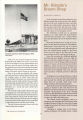
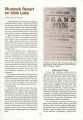
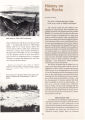
Show Murdock Resort on Utah Lake BY RICHARD S. VAN WAGONER Utah Lake, freshwater remnant of prehistoric Lake Bonneville, has been a popular recreational site since the earliest days of Utah Valley settle-ment Despite its murky water, the result of bottom silt easily whipped up by gusty winds, the shallow lake, close to many towns from Lehi to Payson, has spawned numerous resorts dating from the 1880s. Seeking relief from scorchmg heat and penis tent flies, Leh citizens not wanting to make the more strenuous trek up American Fork Canyon often sought summer camping sites on the north shore of Utah Lake where cool breezes hquently prevail. The fine white sand on those beaches is alluvial deposit h m Dry Creek which empties into the lake nearby. George W. Murdock, who in 1890 owned a section of lakeside property for pasturing his animals, recognized the commercial potential of his beach and nearby grove of black willows. In 1891 the twenty- three- year- old began making improvements to the area. The first order of busi-ness was removing the cattle and their spore. Next a dancing pavilion that could be shuttered during stormy weather was built Three artesian wells eventually provided culinary water, and a pier with bathhouses extending over the lake was constricted. Recalling the history of the resort, May M Lott remembered the grand opening on Saturday, May 30,1891 ( Decoration or Memorial Day): " The open-ing day came and a grand opening it was. People came in all kinds of vehicles and on foot Many h m other cities were willing to help make it a successful resort" Though virtually everyone called the place Murdock Resort, its original name was the Lehi Bathing Resort as can be seen in the introductory advertisement in the May 29,1891, Lehi Banner. Two weeks later Murdock advertised in the June 12,1891, Lehi Banne~ L: EM BATHmTG RESORT. Finest beach on the famous Utah Lake. Conveyan-ces run to and from the city at frequent intervals. Round trip 25 cents. All kinds of summer drinks and other refreshments can be obtained on the grounds at regular prices. Fine row boats for rent Grand baLl every Sa turdayNight Geo. W Murdock prop. Lehi. Banner, May 29, 1891, announced opening of Lehi Bathing Resort, popularly called Murdock Resort. Courtesy of author. People Enjoyed Walking In the 1890s Americans walked more fre-quently than they do today. MurdockResort was a paltry two- mile stroll south of Lehi's Main Street at 5th West Not all resort goers walked. Some pedaled bicycles or " wheels" as they were called then, and others rode horses or were conveyed in wagons, carts, or buggies. Excursions to the resort were regularly scheduled. The August 14, 1891, Lehi Banner reported that a " select company of ladies and gentlemen enjoyed a pleasure trip on the lake last evening on the steamer Florence." Dr. Seabright, a well known Lehi physician, arranged the outing which included " singing and music by the string band aboard ship and dancing in the Murdock pavilion until after midnight The Lehi Banner chronicles numerous old folks' outings, Sunday School parties, grand balls, sporting events, picnics, and family gatherings at the popular resort Two fun- filled days in the " Gay Nineties" depict the varied activities at Murdock's. On the afternoon of September 6, 1894, the Har- Boating on Utah Lake. USHS collections. mony Glee Club and friends played baseball and boated until 6: 00 p. m. After a picnic in the pavilion the group danced until 12: 30 a. m The September 20,1894, Banner reported that scores of " scholars and teachers" from the Lehi Sunday School had met early at the ward meetinghouse the previous Monday and climbed into wagons and buggies for the ride to Murdock's. Swimming, boating, picnick-ing, swinging, and baseball occupied most of the Lehi Silver Band, 1895. From Lehi Centennial History, 1850- 1 950. day. Lehi's Silver Band arrived later and " made the afternoon more enjoyable with their strains of sweet music." In addition to the resort's natural facilities, adequate washrooms and outhouses were also provided. An advantage over Saratoga Resort, just two miles southwest, was Murdock's excellent drinking water. Some " sporting gents," however, desired more than a cold drink of water to whet Lehi Banner, June 12,1891. Courtesy of author. their whistle, and C. A Hosier, Lehi saloonkeeper, built a grog shop at the resort prior to the 1895 Decoration Day opening. The water was yet too cold for swimming and boating, but the large crowd was not disappointed by the day's events. " Professor Harris" floated skyward in a hot air bal-loon and then thrilled spectators by parachuting from the passenger basket The exciting exhibition ended in near disaster when the professor was blown into a fencepost on landing. Dusting himself 06 the slightly shaken daredevil reassured the crowd that he was uninjured and the entertain-ment continued The evening fare consisted of a concert by Salt Lake City's " Temple of Music" followed by a dance. Many sports Baseball, horseshoe pitching, foot races, and football attracted the interest of many younger resort goers The August 1, 1895, Lehi Banner reported a football game between the Lehi Foot-ball Club and the Lehi Cricket Club. The Football Club won the grudge match 6 to 0 and claimed the fivedollar purse. The rough- and- tumble game, played without protective equipment, injured sev-eral Lehi boys. Murdock's continued to be popular until 1897 despite the competition from the nearby Saratoga Resort which had superior swimming, lodging, and eating facilities. When George Murdock's health failed he closed the resort and moved to town where he died in 1899. Some of the resort buildings were moved elsewhere, and the remainder were tom down The area again became pasture and hayfields. The grove of black willows stood as the single reminder of the fun spot that had once existed there. In 1926 the Lehi City Council briefly considered establishing a recreation park at the old Murdock Resort, but this was never done. During the 1930s Clarence Holmstead leased the Murdock property from John Southwick An avid outdoorsman, Holmstead rented rowboats and other gear to fishermen from the site of the old Murdock pier. The Holmstead Boat Camp with its rowboat facilities, picnic tables, and restmoms - though enjoyed by hundreds of sportsmen, Boy Scouts, and others until the late 1950s- never attained the popularity of Murdock's, but the older resort had not had to compete for the public's interest with numerous other outdoor facilities eas-ily accessible by automobile. The shoreline of Utah Lake is always at the mercy of the elements. The beaches are particu-larly vulnerable to fluctuating water levels. In the early 1930s, the driest period in Utah history, the lake, with only 12,000 acre feet of water, practically disappeared The Homestead Boat Camp was miles from what little water remained in the shrunken lake. An article in the October 4, 1934, Lehi Free Press quoted deputy state game warden Joseph J. Madsen as saying the average lake depth was only 7- 14 inches and sunburned carp were burrowing into the muddy lake bottom to survive. Utahns who witnessed the record wet years of 1981- 84 may find it difficult to believe that the March 21, 1935, Lehi Sun ran an article entitled, " What Will a Dry Lake Mean to Utah County?" A week later the March 28,1935, Lehi Sun reported that the drought was so serious that some citizens had initiated a Save Utah Lake campaign. But the dry cycle had ended The lake quickly proved it needed no help from man, returning to its normal level through increased precipitation. Weather patterns have continued to affect the shoreline. Rising lake water in 1952 submerged the Holmstead Boat Camp until July 23, and the site remained completely underwater during the 1981- 84 high water years The white sands of the old Murdock beach- advertised in the June 12, History on - the Rocks &, GARY TOPPING My name is Ozymanddiasd king of ' king, s: , - h k on my works, ye Mighty, and despair! 1891, Lehi Banner as " the finest on the famous Utah Lake" - are again high and dry in 1989, though littered with far too much human debris The ancient black willows, north shore sentinels for more than a century, were virtually destroyed by the high water of the 1980s. In a few years perhaps even the skeletal remains of those trees will be gone, and like an unattended grave in a forgotten cemetery, no marker will designate the site of the once famous Murdock Resort Richard S. Van Wagoner is the co- author of A Book of Mormons ( 1982) and author of Mormon Polygamy A History ( 1986). He is currently writing a history of Lehi, Utah, his hometown Trees mark site of Murdock Resort with Utah Lake beach in foreground. Photographed in 1987 by author. Thre ancht world was not modest in pro-d- g its achievements This heription, sup p d y m e p d to the English poet Percy Bysshe Shelley by a tlaveier who was struck by the irony of such a boast on the pedestal of a statue now bken aad half covered by sand, is probably ficti-tious, but examples of real ancient egotism crbound And historians of the ancient mrld depend heav-ily upon such messages carved in rock or metal as source% The Res Geist9eDiviAw(% e accomp lisbenb of the divine Au- 7, for example, an immense baipti~ noc cupying about thirty mod-em printed pages, is a summary by the Roman Emperor Augustus of his lifelong achievements in behalf of the Roman people and contains much of what we know about the creation of the Rman Empire. And an entire historical specialty - epigraphy - has developed to collect, translate, and interpret ancient inscriptions We modem historians lag far behind our col-leagues who study the ancient world in our use of epigraphic evidence. Why? Generally became our other sources are so abundant that we do not feel we need it Beginning with the Renaissance, which gave us the printing press, increased leisum time resulting from the development of tmm, capital-ism, and the general specialization of labor- and the development of modern egotism that finds itself compelled to record its achievements- we have seen a dramatic multiplication of historical sumes. Today, we have huge buildings like the 1 ~ ationaAl rchives, and small& b ut d lim pressive I ones like the Utah State Historical socieG, to col-lect and preserve the tons of records our civiliza-tion produces each day. m yFa& in Utal? Nm& d- Utah, btorim ought to be more ; interest& in kbric tmcdptions In . the first place, our state atmundts in them, particularly in the yam af - dre swlitheask And Mptions am fun: I 1 manyoftbm arehunnmus, and though thfq~ n8~ I I & at & rtAuce n wf ix@, hey add color to our histodcal writing Findy, there are instances 23 |