| OCR Text |
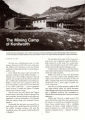
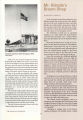
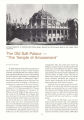
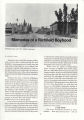
Show Kenilworth, Utah, September 191 0. When theauthor lived hereadditions and remodeling had joined two stores on the left behind a single facade and a long veranda Hotel is on right Shipler photograph, USHS collections. BY MAXINE N. LlVSEY My first view of Kenilworth came on a late summer afternoon in 1930 when I was nine years old. Mother and I had been on the road all day, starting from Salt Lake City. She was answering an ad for a cook From Thistle the canyon road narrowed and stretched endlessly toward Soldier Summit - a desolate place where Mother stopped to fill and soak the canvas bag of water she always carried in the car. Miles later it seemed the road could go no farther. A solid rock wall cropped out from the mountainside like a giant gate. I learned later that it was called Castle Gate - a most appropriate name because it created the illusion of barring entrance into Carbon County. Past this gate the road dipped into Helper, wound under a green film of trees in Spring Glen, and continued upward through scrub pines and sagebrush to its final destination of Kenilworth Here the mining camp and mountains flowed together. Kenilworth, the story goes, was named by an early miner with a poetic heart He had looked at the middle towering mountain and seen the crumbling ruins of the ancient Castle Kenilworth in England. The tree- lined main street of the camp ran a total of two very long blocks, neatly divided by a gully referred to as the wash. The cement side-walks ended abruptly on each side of this wash; a slanting boardwalk provided passages across. I would learn to roller- skate across that board-walk without pitching head over heels, and I would climb that castle mountain. Mother was hired as cook in the Kenilworth Hotel, a two- story, yellow frame building where single miners stayed to eat and sleep. A tiny post office, complete with neat rows of mailboxes, each emblazoned with a metal eagle, occupied one comer of the hotel. One day my mother stepped outside to find me, dress tucked inside my black bloomers, roller- skating over the hotel's smooth cement porch, past a delighted audience. She rearranged my dress in about one minute flat and sent me to skate elsewhere. Mother and I lived in a single room in the annex behind the hotel. When she married one of the miners, we moved into a standard, four- room frame house painted green, with a matching outhouse. Next door a Greek neighbor tended a patch of greenery for a yard, tiny trees, and the traditional bleating lamb - destined for Easter dinner. Kgnklwm HQMC, tQlat The autbar andl her mothiert Ifwed in an adcfitl~ no n the rear aft he howl when they first arrived in town. Shipler phaWgrsrph, WSHS oulI8y: tIons. IGmilw* b $ t d b u s s in * G= k Town" and " lap TQWQ' " amtim-$ Ie- wash" houses, back mw and h tmw howm, and an apwtment bdt lib jN& s Ark fop sdmdba& em a d fadlies waTm b 1- u Sunhgra, we worshipped in the schoa, Ihow and all drankhm the 101~ d8: w ~ sra mmenM cup lAkJcday4 cbklrenthrough the eighth pde went to the schoolhouse far reading, writing, and iUit) lmeac Reaxis ww mmebes ~ o~ Samebody was dways jwpirq a! ttii3etsr- tutter at the mng Ue3. F'lyhqj swdngs w m horn to bmak noses At the edge of the dirt pl8: ygmuad was a stem1 pole with aawral lea* of && I, each mdiq in a metal hmd@ p, h mhm t he top. Taking turns, five or six uf us muld latch mto a handgrip and tun in mewidem circles and l ~ aupn l all w m & bme. Too bad if yowr hand baam slippery with perspiration - you flew ofl into ~ paoert nd hit the & s e dy d sa way. The Meax Hed EvmyWq KmtilwoA Mer~ sntilea~ t upper end of the main streex m sa long yeflow wo~ denb uilding, witb a long wooden porcb and Qltepon either sida You could get a h& ut for e quarter ( or free if you tended the barber's children), a & oi; oe of penny candyI a new dress, groceries or meat- all at the Men The miners paid for their me& 14th dthar company snip or s charge account Prices were high Mother ddom sp~ nhte r new husband's paycheck them, and we'd stme bebore she wouM chaxg~ I,. on the othm- waa happy to spmd dl my pennies in the candy wdectioeryry and clicke-ty- clack a c m that wooden parch on my h t s s Across from the Men=, balanced on the brink of a small canyon, was the camp's entertainment center. Under a single roof were the sunny one-room library where I made an acquaintance with the Wizard of Oz an upstairs movie house, a downstairs dance hall, and an ice cream shop. Miners' children were treated to a he- movie every Thursday afternoon Flying pinenut shells and stomping feet helped pass the time until the lights went out and the whirr of the film began Evening shows were for grownups only. Winter brought snow piled almost to the doorsteps. Many a Flexible Flyer swooped all the way downhill from Kenilworth to Spring Glen. Bonfires lit the return. Cold toes were warmed by the fires and roasted potatoes pulled from the ashes warmed cold hands. Candy pulls were an anytime favorite. How-ever, it was understood that if you were invited, you brought a cup of sugar or a can of milk Another treat was a shivaree. The cry, " Shivaree!" brought every kid in town running with a pot and some-thing to bang on it - Shivarees were designed to heckle newlyweds. Such a clamor of banging, clanging pots! It never stopped until the reluctant bridegroom led everyone to the confectionery for a nickel candy bar. We seldom noticed the shrill mine whistle sig-naling mine shifts. Only when we heard it repeated over and over in wailing urgency did it take on a terrible meaning - a mine cave- in! I remember the day in seventh grade when I heard that whistle for the first time. We all froze into silence, wonder-ing whose father or brother was trapped in the mine. By nightfall we knew it was the father of one of our classmates. It was very quiet at school the next day. The teacher wept with us. ". . . We moved into a standard, four- room frame house. . . . " Kenilworth, 1910. Shipler photograph, USHS collections. Kenitworth auditorium Shipler photograph, USHS collections. A fifty- year class reunion brought me back to Kenilworth in the 1980s. The narrow canyon mad is now broad Highway 6. It by- passes Helper, once the busy center for smoky, belchmg engines pul-ling gondolas of coal from surrounding mines, then whistling out of the canyons to thousands of busi-nesses and homes beyond. Helper is quiet now. Price, to the south, once bustled with miners wno had paycheck.. Carbon High hummed with the morning arrival of school buses from th camps. Carbon's Dinosaurs were a fearsom ball team, and the high school's blue- and-marching bands gathered honors afar. Price, too, quiet now. The miners have been forced to elsewhere for a living and most camps ha I r disappeared. , . , The road still winds uphill to Kenilworth, past unchanging pine scrub and sagebrush. A few peo-ple still live in the camp, but most of the houses are gone, along with the school, hotel, the Merc, show house, and hospital. My old house remains, sagging and weed framed. I half expected to see a rusty pair of roller- skates tossed over the porch railing. The only thing remaining as it ever was is the Castle Kenilworth mountain - - ME Livsey lives in Salt Lake City. BY MARLOWE C. ADKINS. JR As the sun began to crest the rooftops, two very different people moved toward the same destina-tion. From the west, exiting his home, came Ray Kienzle who walked with a strong step in spite of his sixty- plus years. From the east came a four-year- old boy to whom the world of the mid- 1940s was still a place of ever- changing wonder. The destination of both was an unpainted building in an alley. Inside thls small structure crowded with machinery was a world of liveli-hood and fascination. It was Mr. Kiede's broom shop. Raymond Kienzle ( known locally to his cus-tomers as Ray Kensell) was born in Philadelphia, Pennsylvania, about 1878. The son of a broom maker, he learned the bade early, although his real love was baseball. From workers in the broom factory he heard tales of the West and he read every western novel he could lay his hands on Even after marrying his childhood girlfriend and fathering their daughter and only child, his dreams of the West continued. Finally, in 1919 the family moved " west" to Chicago. When he became a buyer of broom corn for factories, he moved to Oklahoma, which was then one of the best areas for growing broom corn. During the next few years the family slowly migrated south, west, and then north until they eventually arrived in Salt Lake City, Finding that a broom shop in Murray, south of Salt Lake City, was for sale, Mr. Kienzle bought it and resumed the craft he had learned from his father. Since he was both a hard worker and a skilled craftsman, his business prospered. In his spare time he successfully taught broom making to students at the Utah School for the Blind. He also tried teaching broom making to the mentally handicapped at the State Training School, but this effort failed. It literally reduced him to tears of hsbation and sorrow when he could not teach his skill to the latter group. The Kienzle family's prosperity came to a temporary end during the Great Depression. As his daughter Myrtle put it, the day came when " people bought bread instead of brooms, and the business went kerplop!" Managing to salvage some of his broom-making machinery, Mr. Kienzle found a shack |