| OCR Text |
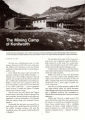
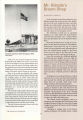
Show Kenitworth auditorium Shipler photograph, USHS collections. A fifty- year class reunion brought me back to Kenilworth in the 1980s. The narrow canyon mad is now broad Highway 6. It by- passes Helper, once the busy center for smoky, belchmg engines pul-ling gondolas of coal from surrounding mines, then whistling out of the canyons to thousands of busi-nesses and homes beyond. Helper is quiet now. Price, to the south, once bustled with miners wno had paycheck.. Carbon High hummed with the morning arrival of school buses from th camps. Carbon's Dinosaurs were a fearsom ball team, and the high school's blue- and-marching bands gathered honors afar. Price, too, quiet now. The miners have been forced to elsewhere for a living and most camps ha I r disappeared. , . , The road still winds uphill to Kenilworth, past unchanging pine scrub and sagebrush. A few peo-ple still live in the camp, but most of the houses are gone, along with the school, hotel, the Merc, show house, and hospital. My old house remains, sagging and weed framed. I half expected to see a rusty pair of roller- skates tossed over the porch railing. The only thing remaining as it ever was is the Castle Kenilworth mountain - - ME Livsey lives in Salt Lake City. BY MARLOWE C. ADKINS. JR As the sun began to crest the rooftops, two very different people moved toward the same destina-tion. From the west, exiting his home, came Ray Kienzle who walked with a strong step in spite of his sixty- plus years. From the east came a four-year- old boy to whom the world of the mid- 1940s was still a place of ever- changing wonder. The destination of both was an unpainted building in an alley. Inside thls small structure crowded with machinery was a world of liveli-hood and fascination. It was Mr. Kiede's broom shop. Raymond Kienzle ( known locally to his cus-tomers as Ray Kensell) was born in Philadelphia, Pennsylvania, about 1878. The son of a broom maker, he learned the bade early, although his real love was baseball. From workers in the broom factory he heard tales of the West and he read every western novel he could lay his hands on Even after marrying his childhood girlfriend and fathering their daughter and only child, his dreams of the West continued. Finally, in 1919 the family moved " west" to Chicago. When he became a buyer of broom corn for factories, he moved to Oklahoma, which was then one of the best areas for growing broom corn. During the next few years the family slowly migrated south, west, and then north until they eventually arrived in Salt Lake City, Finding that a broom shop in Murray, south of Salt Lake City, was for sale, Mr. Kienzle bought it and resumed the craft he had learned from his father. Since he was both a hard worker and a skilled craftsman, his business prospered. In his spare time he successfully taught broom making to students at the Utah School for the Blind. He also tried teaching broom making to the mentally handicapped at the State Training School, but this effort failed. It literally reduced him to tears of hsbation and sorrow when he could not teach his skill to the latter group. The Kienzle family's prosperity came to a temporary end during the Great Depression. As his daughter Myrtle put it, the day came when " people bought bread instead of brooms, and the business went kerplop!" Managing to salvage some of his broom-making machinery, Mr. Kienzle found a shack owned by a family of Dutch immigrant. Times being hard, this family was happy to rent the shack to him for a small amount of money. This arrange-ment changed when the owners found them-selves unable to make their house payments. Con-cerned about having to deal with new owners over the rent of the building, Mr. Kienzle purchased the property at 1443 Lincoln Street and moved his family into the house in front of his broom shop. From then until he died in the winter of 1960, this would be both home and work place as he pro-duced and sold his brooms to businesses through-out the Salt Lake Valley under the name of Inter-mountain Broom Blind workers sorting broom corn. Mr. Kienzle taught his broom- making skills to blind workers. USHS collections. A one- man broom- making operation presents many physical and mental challenges that form a synchronized beauty. To me, at age four, the com-bining of broom corn ( the " straw" in a straw broom) with a wooden handle and associated wire, nails, thread, and label proved endlessly fascinating. The narrow alley was paved with the clinkers and ashes of countless coal fires in stoves and furnaces. I can still hear their " crunching" beneath my shoes. At the door of the shack I waited for Mr. Kienzle's acknowledging nod that a visit was allowed Stepping up at the doorway, I first peered into a barrel full of blue vitriol ( copper sulfate) and water solution used to soften and color the broom corn. If the barrel, located just outside of the door and constantly seeping a minute amount of its contents into the muddy ground, was not full of soaking broom corn, bits and pieces would still be floating on the surface offering a tempting but forbidden target for my inquiring hands. A Mixture of Smells Especially on a summer day the smorgasbord of smells made an immediate impression on me. The undefinable smell of the blue vitriol and water barrel, the fresh odor of the broom corn, the mix of paint and fresh wood coming from the broom handles, the mild pungency of the leather drive belts, and the acrid smell of grease in the grease cups used to lubricate the machines all combined to create a unique experience. Inside the door Mr Kienzle turned on the switch that lit three bare lightbulbs hanging from the rafters. Another movement turned on the elec-tric motor that began the wondrous ballet of crea-tivity. A single electric motor started the overhead powershafts spinning. From the powershafts hung leather belts waiting to transmit energy into several machines arranged in a block U formation. The belts attached to each machine looked like dan-ghng umbilical cords. Mr. Kienzle could operate all of his machinery from one motor through the power shaft system, a direct carryover from an earlier age when power originated with a windmill or waterwheel Moving with experienced and deliberate motions, Mr. Kienzle sorted broom corn that had dried for a day after being removed from the vitriol solution. On a broad table he divided the broom corn into various categories. The most coarse, or handle corn, he placed next to the wooden handle. Increasingly finer grades ( side corn, turnover corn, and inside and outside hurl corn) that would be added to the broom layers he placed in its respec-tive location on the table. When he was satisfied with the arrangement of the corn, Mr. Kienzle inserted a handle ( usually painted red or, occasionally, pale blue) into the first This machine shop photograph illustrates the overhead power shaft and belt system used to operate several machines as in Mr. Kienzle's small broom factory. USHS collections. Woman displays broom corn and brooms, 1930. Shipler photograph, USHS collections. of the machines. With a quick movement he drove a nail into the handle, wrapped the end of a wire around it, and engaged the power belt While the broom handle rotated, his trained hands rapidly selected the proper corn, positioned it, and bound it into place. It is impossible to do justice to the ballet of motion that took place during this process. His rapidly moving hands, instant judgment as to which type of broom corn and what quantity fit into each place, the sharp rap of the hammer, and the flash of the trimming knife provided a visual experience that will be lost forever should this craft ever be totally replaced by modem methods Reaching for the proper lever, Mr. Kienzle dis-engaged the drive belt and briskly rapped a second nail into position and clipped the wire. He then placed the partially completed broom- resem-bling a witches broom with its round, ragged end shape- in a rack until the day's run was £ hished. The Shop Was Small Since the shop was quite small, Mr. Kienzle took only a few steps to reach the next operation. Before he engaged this machine, he always gave me a very stern warning to remain well away for it could be a dangerous device. The seeder, in a way that remains mysterious to me, removed any remaining seeds from the broom corn. His prac-ticed movements belied the skill this task required The brooms were rapidly inserted and removed from the mouth of the machine, then placed in yet another rack to dry for two or three days to prevent mold or mildew from forming within the broom After the seeding machine was disengaged fmm the powershaft, the sewing machine clattered to life, accompanied by the constant whappa-whappa of the leather belts Deftly, Mr. Kienzle took one of the dry brooms and without a bit of wasted motion sewed the broom into its familiar flattened shape with the twine. As soon as the twine was cut, he placed the sewn broom in a rack next to the cutter with one hand while his other hand plucked the next broom to be sewn. Disengaging the sewing machine, Mr. Kienzle moved to another machine I was forbidden to come to close to- the cutter. When he pulled back on the appropriate lever, the cutter began its r h y t h c swish- clunk By inserting a broom into this machine, Mr. Kienzle completed the broom-making process as the cutting blade squared off the sweeping ends of the broom con Thus, after a three- or- four day journey ( including drying times) the wood, broom corn, wire, nails, and twine had completed the creative circuit and awaited only their labels before delivery to his customers. Advertisement in Polk's Salt Lake City Directory. As I waved goodbye and crossed the alley to return home, Mr. Kienzle's car with its bundles of brooms in back throbbed to life, and with the distinctive crunching sound of tires on cinders another wondrous visit to the broom shack came to an end Those days are long gone. Only two active corn broom manufacturing facilities remain in the West, one being the Utah Industries for the Blind Broom corn, once a major crop in parts of the United States, is now grown primarily in Mexico. Most brooms, both household and commercial, are now . made of synthetic materials. But in the televi-sion of my mind there will always be the sights, sounds, and smells of Mr. Kienzle's broom shop. Mr. Adkins, a high school history teacher, lives in Richmond, Utah. |