| OCR Text |
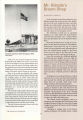
Show Richfield, Utah, June 191 7. USHS collections. BY HORACE J. GUNN Situated in a land of red hills and green valleys, with the Sevier River winding through the area, Richfield is a picturesque town located some 160 miles south of Salt Lake City. As a southern Utah community claiming 3,500 residents in 1940 we thought of ourselves as a rather large city. In fact, on the license plates many of the natives attached a slogan that proudly stated, " Metropolis of Southern Utah" Nearby, in the town of Elsinore, Wilhelmina Jensen clerked in her father's store. A sheepherder by the name of F. Horace Gunn, who was tending his flocks in the Beaver Mountains, came to Elsi-nore for supplies. He spotted Minnie, as she was called, and they were soon married. I was one of the offspring of this Danish and English union. Horace and Minnie moved to Richfield arid bought a farm on the west side, next to the upper canal. There I was born. We moved from the farmhouse to a home at Second West and Second North in Richfield when I was in second grade. It was common practice for the larger farms to have a hired man who stayed at the farm full time and was in charge of the basic farm work A hired man was especially important to us because Dad was away much of the time buying lambs and appraising sheep for financial loans. We boys went to school in the winter and then spent the summer on the farm or with the sheep. My father fed about 2,000 farm- raised lambs during the winter. In addi-tion, he maintained another 2,000 head of sheep that grazed year round on public range. Horses were our means of transportation. Every morning we bridled them before taking them to a utility shed where we placed a collar and harness on them At noon we removed their bridles and turned them into the corral so they could eat and drink The advantages of horses at that time were evident in that they were reasonably inex-pensive to purchase and maintain, and they pro-vided fertilizer. Their good points were offset by the fact that when they kicked you with their iron shoes you could suffer considerable damage. In addition, teams of horses would often bolt and run away while you were trying to drive them One day I was cutting hay with a mower and one of the reins slipped from my hand. Startled, I called " whoa" in a loud voice. This panicked the horses and they took off at a run. I was thrown away from the mower, but the horses, pulling equipment with fast cutting blades, kept on running uncontrollably around the farm. I was lucky not to have been thrown into the mower and cut to pieces. A Large Family The Gunn homestead consisted of seven children - three girls and four boys - and our parents, too many for us all to eat at one time in our small kitchen Mother and the girls prepared and served the meals. Since Dad maintained a large garden behind the house, we were able to have fresh corn, picked only a few minutes before it was eaten We four boys tried to outdo each other as to how much corn we could eat It was not uncom-mon for each of us to eat 12 ears - that was our entire meal On summer Sundays we would make eight quarts of ice cream and eat all of it My sister Edith Ann would mix it, and I would then take a 50- pound block of ice and ( it seemed) turn the old hand freezer all by myself It was important to put salt on the ice in order to keep the ice at its maxi-mum coldness. I remember turning the crank for an hour and a half one day, and the cream would not freeze. Disgusted, I put a piece of the ice in my mouth - I had been using sugar instead of salt With seven children we never had the lwnuy of sleeping alone. We boys slept downstairs. You can imagine the difficulties that arose with having only one bathroom The girls always seemed to get into the bathroom first and lock the door behind them. Since all seven of us were getting ready for school at the same time, I would go outside to relieve myself On school days we awoke to our usual break-fast of oatmeal mush and cocoa. Mother also made us take cod liver oil in orange juice daily. To this day, when I drink orange juice I still smell cod liver oil. We also swallowed a lot of mineral oil to pre-vent constipation. The first school bell in the old tower rang at 8: 30 am., and the final bell rang at 980 a. m Each class lined up outside of the school. We marched into our room to a tune played on the piano. We stood by ourseats, and, when the teacher signaled, we all sat down together. When we were listening to the teacher we sat upright at our desks with our arms folded behind us. The principal was Miss Sophia Gulbrandsen, a stern old spinster. She also taught the sixth grade. Her office was next to the classroom, and students sometimes heard her slapping unruly boys she had taken into the office to discipline. We had a potato pit ( a covered, underground storage area we climbed down into by means of a ladder) where we stored enough potatoes to last us through the entire winter. In addition, Mother bottled all her fruit and dried corn for cooking. I watched her make her own soap in big tubs over an enormous bonfire. We kept milk in pans in a refrigerator. When cream rose to the top we skimmed it off. We poured this thick cream over our h i t and cereal. We also spread it on bread and then topped it off with sugar. A coal furnace heated the house. We also had a small stove called a monkey stove that heated the water. This stove had to be kindled every time we wanted hot water. We all had chores and mine was Harmonica band of Richfield school children. Courtesy of author who is third from left on the front row. to cut the wood and bring in the coal for the stoves. My mother was not competitive and disliked controversy. A tender- hearted woman, she was dedicated to her husband, family, and church Dad was a hard worker, a devout churchgoer, and a dedicated family man In business his word was his bond He did not consider himself sophisti-cated, but he had numerous comrnon- sense state-ments that he used frequently " One good shirt will do him." " Every dog has his day," " Poor people have poor ways." ' We does not know enough to come in out of the rain" ' There is always something to take the joy out of life." Our clothing was basic. We wore blue bib overalls for work and striped bib overalls for school. During the summer we often went barefoot As we grew older we had a pair of white shoes for dress during the summer, and we would dye them black for winter. Horace Gunn, center, and two friends. Courtesy of author. I received a 25- cent weekly allowance, which was finally raised to $ 1.00 when I became a high school senior. I joined the National Guard to have some pocket money. The pay was $ 1.00 for each weekly drill. The Guard had a two- week summer camp, which paid $ 15.00. I had seen a pair of western boots in the J. C. Pemey window that I admired My two weeks' military pay would just " I joined the National Guard to have some pocket money." Courtesy of author. cover it However, during the time I was at camp, Congress reduced the two weeks' pay to $ 12.50. Dad refused to make up the difference, and I never did get my boots MY Sheep - P Days During my junior and senior years of high school I spent my summers at our sheep camp high up in the mountains west of Marysvale, Utah. I didn't come home during these summers so I never saw any girls or went to any dances. I had only the sheepherder to talk to, and he was much older than I was. As the sheep moved from range to range every five days or so we moved with them. It was my job to strike the tent and pack all the supplies on horses. We never saw anyone except an occa-sional bootlegger, prospector, or a lost fisherman. Our reading material consisted of western sto-ries published in so- called pulp magazines. These magazines, printed on cheap wood- pulp paper, sold for about ten cents each. Since the sheep went to bed at dark, so did the sheepherders. Old Mel, the herder, liked to read the westerns at night by candlelight He had a thick head of hair, and I warned him that someday it would catch on he. One night I awoke to the smell of smoke - his hair was in flames, He was so engrossed in his western that he wasn't even aware of the fire. I quickly rolled him in the bedding and put out the flame. We had no fresh h i t , vegetables, or perish-ables on our menu We ate mutton twice a day. We slaughtered the sheep at dusk and hung the meat in a tree at night to keep it from the wild animals, During the day we kept it in a tightly woven bag that we rolled up in the bedding to keep it cool. Once in a while we got bold and killed a deer for venison. This was known as " government mutton." We had to keep a close lookout for the U. S. Forest Service ranger. If we spotted him our dogs had a banquet as they gobbled up the venison. Dogs and horses were considered the lifeblood of the men who tended sheep. With saddles and saddle packs we transported ourselves and all our supplies. We turned the horses loose after a day of work They were h e to roam, although they had hobbles on their front legs. Even then, they could outrun a fast sheepherder. We sometimes chased them for miles in the high mountain country. Dogs were the sheepherders' mainstay. With-out them the sheep would ignore their tenders. The dogs were trained to climb the sides of steep moun-tains. The sheepherder, by a wave of his hat, would get the dogs to go higher into the mountains and bark at the sheep until the sheep were turned. When the herder dropped hls hat and walked off the dogs returned to camp. Dogs were like human companions to sheepherders. The important thing was to prevent losses. A group of sheep could easily stray off and become lost For this reason about one sheep in twenty had a bell around its neck There was no way to count the whole herd, which would vary from 1,000 to 2,000 sheep; however, the bell sheep were counted. In addition, we had another check In every herd of white sheep there is a certain percentage of black sheep. The sheepherder frequently counted the bell sheep and the black sheep to see if any of his flock were lost There was a reason for all this counting and additional activity, namely to make a living for the sheep owner. This was provided through two annual crops - lamb and wool. The lambs were born in the spring, usually on the range. Most ewes cared a great deal for their offspring; however, some just went off and left their lambs to become " dogies" or orphans. The ewes recognized their lambs among the herd by smell. If a lamb died it was not uncommon for the sheepherder to take the skin from a dead lamb and tie it on a dogie. The ewe without a lamb would soon adopt the camou-flaged lamb, and eventually the extra coat could be removed. Sometimes the orphan lambs were never claimed. Then they would be taken to the sheep owner's home where they would be fed cow's milk with the use of a bottle and nipple. Each year we sheared the sheep in the spring. We brought the herd to the shearing corrals where they were shorn of their fleece. A good shearer would shear as many as 125 sheep in one day. As the shearer finished his operation, it was my duty The author, second from left with sheep, as a student at Utah State Agricultural College. to tie the fleece. Using my legs I would assemble the wool and then tie it securely with twine. I placed these tied fleeces in large sacks, ten to. twelve feet in height Then I would get in the sack, which was well over my head, and tromp the fleeces down Handling all of this wool every day made me the object of attack by sheep and wood ticks. I removed a half- dozen of these little crawling crea-tures from my body every night One day a tick crawled into my ear, and the noise it made was driving me crazy. Finally, shearers got me on the floor. One of them spit chewing tobacco in my ear and the tick backed right out Another operation proved to be a real ordeal - branding and docking. Each sheeprnan had to be able to identify his sheep if they became mixed with another herd. Therefore, each sheepman had his own brand recorded with the State Department of Agriculture. After being sheared, the sheep were branded on the back with an asphalt- like liquid. Our sheep were branded F- H for Frank arid Horace Gunn, brothers and owners. Docking lambs was a bloody mess. I held the lambs while my father cut off their tails. Since the tails had no value and collected manure, we removed them. The life of a young sheepherder was a long way from that of the Biblical shephed. In southern ~ t aiht w as a rugged, tough assignment, sometimes frustrating and often lonely. However, it also pro-vided a peaceful experience for us as we watched the sheep graze. Thls was the time for a high school boy to plan his future. This was the time that I leaked responsibility and how to meet life's chal-lenges. Times were tough, since it was the depres-sion, but we did our duty and took our licks. Now sheepherding is a fond memory for me. Mr. Gunn, who was executive manager of the Utah Chapter of Associated General Contractors of America, is retired and lives in Salt Lake City. |