| OCR Text |
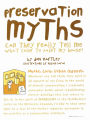
Show My+ hs. Lore. Urban legends. Whaqwer you call he^, . they exis+ in a(( arpec+ r of our li~ esI. n + he world u hir+ oric buildings + ha+ jus+ refuse + o die. So in + he spirR of SUOPES. COM or + he w+ hBusferr series on + he Discovery Channel, I'd ( ike + o shed sohe ligh* on a few of + he w+ hr I regularly encounjer in ~ y brac+ ice as a prese~ a+ ion archi+ ec+. U T A H P R E S E R V A T I O N 61 look like The old orre, buT iT NMw w Pga9" w @? a4 & y + he M*& Fdi m& w w% W- ha* l coo 4@ WRh a auadtp~ w ~ ~ $ ~ f " i g f W ~ U E T B Contrary to rumors, there are no restric-tions associated with having your private property listed in the National Register of Historic Places. Owners do not have to open buildings listed in the National Register to the public, nor do they need anyone's approval for anything they do to their buildings. National Register list-ing does not affect property taxes or how buildings may be used. On the other hand, listing in the National Register can make federal and/ or state income tax credits mailable to owners who rehabilitate their historic buildings. In an effort to protect historic neigh-borhoods, some local governments have adopted preservation ordinances that reg-ulate buildings listed on local registers. The few cities in Utah that do impose restrictions on historic buildings usually limit their control to building exteriors. Contact your local planning department to see what, if any, rules apply to local historic register designation. And what is the effect of those restric-tions? Anyone familiar with protective covenants on exclusive subdivisions will recognize their power to encourage pride-in- ownership and sustain property values. Local preservation ordinances have the same effect. All property owners can be assured their investment will be protected because all the neighbors are held to the same standards for repairs, remodeling, and additions. FF k ehwm * + - e4~ ew n w 4 d f & T~ W wd re&@@$ 3 d 8 a ewbbsm# sff * Tm @ P * c dd en& Generally speaking, the cost for reha-bilitating an historic building, including seismic improvements, is comparable to new construction. Yes, historic preservation can cost a lot of money, especially for high-end public or commercial buildings with elaborate interiors that require extensive structural, mechanical, plumbing, and elec-trical upgrades. And, yes, you can build a new building at a lower cost per square foot with low- quality materials. But generally speaking, the costs for new construction and rehabilitation are comparable. On the plus side of the balance sheet for historic preservation are financial incen-tives, such as federal or state income tax credits for rehabilitation or low- interest loans through groups like Utah Heritage Foundation. On the negative side of the balance sheet for new construction are ever-increasing demolition and disposal costs for existing buildings that have to be added to the price of a replacement building. Don't forget the costs for the embodied energy in the existing building materials, either. For example, when an historic building was constructed, non- renew-able natural resources and energy were expended to mine the clay and fire the bricks, ship the bricks to the site, and erect the building. The value of this embodied energy is lost when the build-ing is demolished and the materials taken to the landfill. And this loss of embodied energy is made worse when the old mate-rials are replaced with new materials that are extremely energy intensive and envi-ronmentally unfriendly to produce. And finally, there are hard- to- quantify values, such as the historical or commu-nity significance of a building or its aes-thetics, that are lost whenever a historic building is demolished. d can rave 1~ 91.5 0. F ~ o n e y bv ~ ~ ~ ( a ~ iband' gw ot~ d wFnd~ ws w2h new9 enern eMc? ens winld ~ W F * To File% new wjn $ a w P 3v Bat+ tbcksetv'er in e o e ~ g ~ tsaa/ iogg l New windows, especially standard-grade replacement windows, will not pay for themselves before they wear out and have to be replaced. Here's what I learned when I did the math on my own house a few years back. 62 UTAH P R E S E R V A T I O N My 1916 house has 21 existing win-dows ( a combination of double- hung, casement, and large, fixed " picture" win-dows). I received bids averaging around $ 12,000 for replacing these windows with decent- quality clad- wood windows with insulating low- e glass. The cost to refinish, weather- strip, and install storm windows was about $ 5,000. Thus the cost differ-ence between replacing and repairing the windows was $ 7,000. Like virtually all Utahans, I use natu-ral gas for space heating, water heating, and cooking. My annual gas bill, at that time, was about $ 1,000. According to the U. S. Department of Energy, space heating accounts for 36 percent of residential ener-gy use, or $ 360 per year in my case. Also, according to the Department of Energy, I could reduce my heating costs by about 25 percent by replacing my existing windows with new " energy efficient" windows. With a savings of only $ 90 ( 25 percent of $ 360) per year, it would take more than 77 years to recoup the cost of the new windows. Of course, that payback time could be reduced to around 40 years by today's high natural gas prices, but I'm confident most replacement windows cur-rently being manufactured will not last 40 years, let alone 77. By rehabilitating historic wood win-dows, you can save energy, save money, and maintain an important character-defining feature of your historic building. f cae $ 1 ~ d $~~$ gehdr~ + effe brick sand/ sr make WV old bviek bwaridi~(~ o; e~ bk wafe " his+@ riC 9' BY f @ V Q P?=~ P ~ wi+ h % tacco* The current architectural fashion is " traditional" and stucco is the building material du jour. But don't even think about installing it on your historic brick building because it will destroy the archi-tectural integrity and likely cause severe damage to the historic masonry. Stucco, whether modern synthetic stuc-co or traditional cement- based stucco, is prone to failure because it allows mois-ture into walls through cracks caused by shrinkage, building movement, or poor workmanship. Stucco does not breathe well, so moisture vapor generated inside the building gets trapped inside walls. The moisture caught under a layer of stucco will erode the masonry it is attached to or cause decay in wood studs or joists. And contrary to popular belief, modern stucco is not a maintenance- free solution. Drivit, one of the earliest manufacturers of synthetic stucco, has had to develop a full line of repair services and products to help building owners avoid the catastrophic failures ( and resulting lawsuits) that are all- too- common with the product. The brick used on most of Utah's his-toric buildings is a durable, quality mate-rial. Most failures with it can be traced to concentrated water from leaking or miss-ing gutters and downspouts, spray from lawn sprinklers, etc. Fix the water problem and the damaging effects will go away. Repairing a few areas of damaged brick will cost less than covering a whole build-ing in stucco and last longer, too. Don't attempt to resolve problems by covering them with stucco. You'll likely ruin the architecture of the building and introduce on- going maintenance issues down the road. for removing paint from building materials - chemical or mechanical. Chemical meth-ods use solvents or caustics to soften paint so it can be removed from building surfaces. Mechanical methods employ various types of abrasive blast media to physically knock the paint off a building wall. Chemicals are " smart." They know the difference between paint and soft- fired brick, for example, and can get paint to release its bond to the brick without dam-aging it. On the other hand, mechanical methods are " dumb" and can't tell the difference between paint and what it's applied to. Once the blast medium pen-etrates the paint film, it doesn't know to stop, so it raises the grain on wood or removes the tough outer shell from his-toric brick. UTAH P R E S E R V A T I O N 63 Don't be fooled by claims about certain abrasives being safer than sand or even harmless. Abrasives are abrasives and they can damage your historic brick and wood, even in the hands of the most skilled blasters. The Presence oP any asbes-for or lead in an historie Gui( ding po, ser s revere heaC+ ls hazard. Asbestos and lead were used in a wide variety of building materials in the nine-teenth and twentieth centuries. But what sort of problem do they actually represent? According to the Consumer Product Safety Commission ( CPSC), " Even if asbes-tos is in your home, this is usually NOT a serious problem. The mere presence of asbes-tos in a home or a building is not hazardous. The danger is that asbestos materials may become damaged over time. Damaged asbes-tos may release asbestos fibers and become a health hazard. " Asbestos- containing mate-rials can also be a problem when they are disturbed during remodeling and release fibers that can be inhaled into the lungs. Lead can be a serious health problem for certain high- risk groups. Fetuses and young children under the age of six years are at the greatest risk of lead poisoning because they are growing rapidly and absorb lead efficiently. Lead poisoning also increases blood pressure, so adults with high blood pressure can be especially vulnerable. Lead was widely used as a pigment and drying agent in oil- based paint until it was banned from use in 1978. But when is lead paint a problem? Again, according to the CPSC, lead only poses a hazard when dust is created and can be ingested or inhaled. Like asbestos, lead- based paint in good condition is typically NOT a health hazard. So how do you handle asbestos and lead in your home? The best advice for potentially hazardous materials that are in good condition is to LEAVE THEM ALONE. Disturbing asbestos- and lead-bearing materials may create a health haz-ard where none existed before. Asbestos fibers and lead dust commonly remain behind after professional abatement proj-ects. They can re- enter the air through sweeping and vacuuming or as people move throughout the house. If you remove or disturb small amounts of asbestos or lead- based paint, take simple precautions such as wearing an appropriate face mask ( not a paper filter mask) and gloves, wetting the material beforehand, and thoroughly wet- clean-ing afterwards. If you have to remove or disturb large quantities of either material, the CPSC recommends hiring a profes-sional removal contactor. If you have potentially hazardous condi-tions in your home, especially with lead-based paint, or have been remodeling and are concerned about your health or the health of other occupants, get screened. That way you'll know for sure if a prob-lem exists. Online brochures published by the Consumer Product Safety Commission and the Environmental Protection Agency are available at www. cpsc. gov. They con-tain reliable information to help you evaluate the actual health risks of asbestos and lead in your home. They also provide recommendations for simple procedures to take during cleaning and remodeling projects to reduce the risk of exposure. Are there other historic preservation myths? Sure! Like the one about the historical society being able to tell you what color to paint your house. To my knowledge, not a single community in Utah regulates paint colors in historic districts or for individually- listed proper-ties. That's not to say that preservation professionals don't have opinions about color and love to offer them, but only in the spirit of dispelling another persistent myth about historic preservation. Don Hartley is an architect with the Utah State Historic Preservation Office and has been advising historic building owners in Utah since 1984. 64 UTAH PRESERVATION |