| OCR Text |
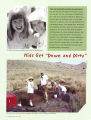
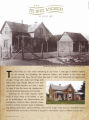
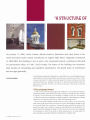
Show WHERE HISTORY N AT U R E LIG HAVE YOU STARTED PLANNING NEXT SUMMER'S VACATION YET? DO YOU J1 7 YEARN FOR THE SOLITUDE AND SPLENDOR OF UTAH'S BACKCOUNTRY? OR ARE YOU LOOKING TO ENGAGE WITH UTAH'S RICH PAST AT A FASCI-NATING HISTORIC SITE? COMBINE YOUR LOVE OF NATURE AND PASSION FOR HISTORY BY VISITING THE HERITAGE RESOURCES MANAGED BY THE USDA FOREST SERVICE IN UTAH'S NATIONAL FORESTS. FROM THE ALPINE HIGH UINTAS TO THE CAN TRAVEL BY FOOT, BICYCL VISIT PREHISTORIC ROCK ART, CLIFF DWELLINGS, MI 4G CAMPS, TIE HACK CABINS, CIVILIAN CONSERVATION CORPS STKUC- RES, HISTORIC ROADS, AND MORE. r 1 T L Rent a Historic Mountain Hide In the first half of the twentieth century, the Forest Service built ranger stations within a day's horseback ride of each other. Many of these cabins became obsolete as roads were constructed and vehicles replaced horses. The Forest Service retained some of these cabins and now makes them available to the public for short- term rental. The cabins' settings, typically characterized by beautiful scenery and solitude, are essentially unchanged since the early 1900s. Some cabins offer modern conveniences and amenities like furniture, appliances, and dishes. Others have no running water or electricity and may appeal to those of you who like to " rough it." In the Ashley National Forest in northeast Utah ( see map of Utah's National Forests . on page 28) you can rent the 1933 Colton Guard Station and the 1934 Trout Creek Guard Station. George Lee Nichols, a Forest Service architect in Ogden, designed cabins with a nod to the Classical Revival Style. Their gable- front facades include full- width porches, a perfect place to enjoy the twilight after a day of hiking or fishing. The Colton and Trout Creek cabins are open most of the year. Each has beds for four people and a furnished kitchen. From mid- June to mid- September, they have running water, flush toilets, showers, and refrigerators. Although these are turned off during the cold season, you will still have amenities such as outdoor vault toilets, propane cook stoves, and wood- burning stoves for heat. 24 UTAH P R E S E R V A T I O N -..,...-.., --..-..--. a- s- r anger stations in the 1930s, the historic Colton Guard Station ( left) and Trout Creek Guard Station ( right) in the Ashley National Forest are now available for rent much of the year. Ir il The picturesque South Bunk building is part of Gooseberry Administrative Site in the Fishlake National Forest. The extensive complex can accommodate up to 250 people. A third cabin on the Ashley National Forest, the 1922 Paradise Guard Station, will be available after it is restored in the near future. Located near remnants of the historic Bartlett Sawmill, it is one of few remainjng Forest Service cabins from the pre- New Deal era. Further south in the Fishlake National Forest, large groups can stay in several historic cabins at the Gooseberry Administrative Site, about 15 miles southeast of Salina. The extensive compound, first developed in 1908, served as a ranger station, experiment station, a CCC camp, and, more recently, a youth camp. The site can accommodate up to 250 people although only 50 beds are provided. The Gooseberry Administrative Site is especially pleas-ant in the summer, given its location on the north- facing slopes of Mt. Terrill, abundant aspen, and proximity to Gooseberry and Sheep Creeks. The 1934 Warner Lake Guard Station east of Moab in the La Sal Mountains is another great escape from the summer heat. The two- room cabin in a beautiful aspen setting is a popular destina-tion for visitors to the Manti- La Sal National Forest. Omero Torres, recreation staff officer for the Vernal Ranger District, is an enthusiastic supporter of the rental program. He reports, " We rent out the cabins to the public so they get a chance to experience a part of the Forest Service legacy. The rental pro-gram also encourages us to maintain these facilities and retain their historic character. Otherwise, these facilities could possibly fade away and fall into disrepair." Wing s i W y in the tmwtam, canyam, and riuer valleys of our natianak km& s and gadiwds are tha remnants d p& cultwes that Wmnt us md mrraind ua of the c& urksdd relationship , ! he? wemp eoale and the lad. These Wire sources hoM clues b Qwt& wsgsbma dd richftessmd depth to ow la~ dwpesp, rovide tinkst~ fi viq W W i m , and help ~ ramsfwma beautiful wetlk in the ' woo& into an omn& g@ able eftcwriteii with history. - = A & rest Swrvice YVational Hmfkage SW& gy F BW a Trail throtrgh the Past luumerous routes on Utah's National Forests help us under-stand the fundamental relationship between people and the land. Some of these routes are historic while others are modern trails or roads that pass through historic areas. All allow you to travel through time to experience our ancestors' diverse uses of the state's terrain, waterways, minerals, and grazing range. The historic Carter Military Road follows the old Lodgepole Trail of the Utes and crosses the Ashley National Forest. Judge William Alexander Carter constructed the military route in 1881 to transport supplies from Fort Bridger to Fort Thornburgh near Vernal. Hiking along the Carter Military Road, you will see log segments of the road across marshy areas and remnants of the adjacent telegraph line. You can also learn about the route's historic significance from signage erected by the Uinta Basin Archeology Club and from a Forest Service interpretive brochure. In the Fishlake National Forest, you'll find evidence of the once- vibrant mining industry in the Tushar Mountains. Use the Bullion Canyon trail system to hike or ride a horse past abandoned miners' cabins and equipment, a historic sawmill, and old adits. Motorists can pick up a brochure for the 2.5- mile Canyon of Gold Driving Tour that begins just west of Marysvale. Along the way, you will see remnants of a historic toll road, the Witt Tate Mine, the Dalton Mill, Bullion City, and a rail bed for mule- drawn ore carts. The drive ends at Miners' Park which UTAH PRESERVATION 25 Top: Hikers can explore the Carter Milltary Road through the Ashley National Fwest. These Passport m lime wlun~ eersa re tnwstigating remnants of the toad. Wttan left: The Canyon of Gold Drrving Tour p a s s remnants of a once- vibrant mining industry In the Tushar Mountains, rnciud~ ngth is battery- powered looomotiw from the 1930s. Baftem rim Built by the CCC, the Ute Mountain Frre Lookout is Utah's only live- in lookout tower. The twer is open to the public dur~ ngth e summer. I you can stop at the historic Great Basin Experiment Station in Ephraim Canyon. ~ h~ ~~~~~ st ervice first developed the site YOU can see the historic Seely Creek Guard Station high atop the Wasatch Plateau as you drive . Drive Scenic Byway. in 1912 and the Civilian Conservation Corps constructed many of the existing buildings in the 1930s. This restored com-pound, listed on the National Register of Historic Places, now serves as an envi-ronmental education center for Snow College. The Seely Creek Guard Station is situ-ated a few miles east of the Great Basin Experiment Station, just off Skyline Drive at an elevation of 9,840 feet. Historically, forest rangers used the station as a sum-mer base of operations. It consists of a house, barn, and garage set in a meadow surrounded by ponderosa pine and aspen. Since 2005, the Manti- La Sal National Forest and students from Snow College's Traditional Building Skills Institute have worked to restore the station's buildings. I , he young men of the Civilian Conservation Corps ( CCC) made signifi-cant contributions to the national forests. They terraced eroded mountainsides, built roads and trails, constructed campgrounds, and planted thousands of trees. Their work w - m + m m Signs in the Granite Flat Campground interpret I history. is interpreted at the Stuart Guard Station located along the Energy Loop Scenic Byway in Huntington Canyon ( State Road 31). Built by the CCC in the 1930s, the restored station serves as a visitor center for The former Great Basin Experiment Station includes several charming white cabins with green roofs. nishings and offers glimpses into the duties of early forest rangers. Signage and historic equipment in an adjacent garage illustrate the work and life of the young CCC men. The CCC built the Ute Mountain Fire Lookout in 1935- 1937 to aid in forest fire detection. As the only live- in lookout in National Forests. of the ranger's house has historic office fur-tower in Utah, it is listed on the National The Manti- La Sal National Register of Historic Places. The unique Forest is home to numerous cliff structure consists of 14 by 14- foot room ~ a ~ ~ ~ ~ ~ ~ c ~ ~ ~ e t , " e ~ C ~ ~ ~ ; or " cab" on a 50- foot tower and provides interpretive trails. UTAH P R E S E R V A T I O N 27 a panoramic view of the Ashley National Forest. Open to the public in the summers, the Ute Mountain Lookout Tower is equipped with a historic fire finder, stove, and other furnishings. If you visit, take advantage of the hiking trails that begin at the lookout's parking lot. Utah's first CCC Camp, established in 1933, was in American Fork Canyon in the Uinta National Forest. The former camp is now the site of the Granite Flat Campground, which has four loops named to honor the CCC legacy: Tree Army, Mess Hall, Spike Camp, and Barracks. Interpretive signs at the campground discuss CCC slang and the enrollees' contributions to the area. You can find other CCC- constructed features in and around American Fork Canyon, including the Mutual Dell and the Theater- in- the Pines amphitheaters, as well as the South Fork and Timpooneke guard stations. & ang tar S For a touch of wnlmsy, visit the Poaunk Ranger Station. The one- room cabin, built in 1927, is unique not only for its name but also for its steeply pitched hip roof. One ranger reported its peak was so pointed that it would " split a raindrop." The Forest Service restored and moved the abandoned cabin to the Red Canyon Visitors Center in the Dixie National Forest. While enjoying the nearby red sandstone formations, you can get a sense of early forest rangersf living conditions in this diminutive building with period furnishings. If you're in the Moab area, visit the Pinhook Battlefield, site of an 1881 conflict between early settlers and Utes. The battlefield, at the north end of the La Sal Mountains, is listed on the National Register of Historic Places. Further south in the Abajo Mountains you can follow interpretive trails to prehistoric sites. From the Nizhoni Campground north of Blanding, hike the trail to Dry Wash to view ancient cliff dwellings. Discover a link to Ogden's architectural history at a lime kiln on the Wasatch- Cache National Forest. James Moroni Thomas built the stone structure located at the Indian Trail trailhead in scenic Ogden Canyon in 1865, taking advantage of the plenti-ful limestone on nearby slopes. The kiln produced lime used in the construction of Ogden's early buildings. In recent years, the Forest Service worked with the Weber County Heritage Foundation and other groups to restore the collapsed kiln and interpret it for visitors. If you want to do more than just visit a her~ tage site, the Forest Service can put you to work. Under its " Windows on the Past" initiative, the Forest Service provides opportunities to people wanting hands- on experiences with prehistoric and historic resources. Volunteers in the Passport in Time ( PIT) program work with professional archeologists and historians on a variety of sites. As a PIT volunteer, you can help excavate Finch Draw near ATTENTION, NONPROFITS & GOVERNMENTS? Do you have a historic preservation project that involves planning or education? The National Trust for Historic Preservation offers grants! For information, call ( 303) 623- 1 504 or write mpro@ nthp. org. NATIONAL TRUST 28 UTAH P R E S E R V A T I O N Manila, locate artifacts on the Carter Military Road with metal detectors, develop interpretive plans for the Old Spanish Trail, or document prehistoric and historic sites south of Tooele. Other ongoing projects include restoration of the Swett Ranch home-stead near Dutch John and reopening historic trails in the Tushar Mountains. Gail Carbiener of Oregon is one of many volunteers who par-ticipate in several PIT projects every year. After a recent assign-ment on the Ashley National Forest, he noted, " Our PIT project helped the Forest Service with interpretation and I learned from the archaeologist how he determines the stories of the artifacts I find." The Utah Site Steward program offers the public long- term involvement with a prehistoric or historic site. Stewards regularly visit and document sites to monitor them for vandalism and nat-ural deterioration. The Utah Division of State History, the Forest Service, and other public land managers work closely with these dedicated volunteers who receive training in field techniques, mapping, and safety. According to Manti- La Sal archaeologist Don Irwin, " Utah's pilot program in the San Juan County area has been very suc-cessful. We have volunteers providing stewardship for a number of important sites and have worked with the Edge of the Cedars Museum to train site stewards in identifying archaeological arti-facts and completing site documentation." Your Trip .. eritage resources in Utah's national forests are the links connecting people, past and present, to the land. They enrich our lives, enhance our sense of place, and help us understand continuity and change. This article describes a few, but there are many more throughout the state. Whatever your interest, the diverse heritage opportunities on Utah's National Forests offer something for everyone. For more information about the heritage resources on Utah's National Forests, contact your local Forest Service office or visit www. fs. fed. us/ r4/ about/ utah/ shtmlT. h is website also provides links to volunteer opportunities, brochures, and current condi-tions. You can find details about rental cabins at www. fs. fed. us/ r4/ maps/ brochures/ rusticcabins. pdfM. ake reservations for rental cabins and campgrounds at www. reserveusa. com. or sign up for a PIT project at www. passportintime. com. @ Richa Wilson is the Regional Architectural Historian for the Intermountain Region of the USDA Forest Service. With degrees in architecture and historic preservation, she previously worked in private practice and as a Peace Corps Volunteer in Malawi, Africa. I We see history in your future.. . . Join the Utah State Historical Society. Members receive Utah Historical Quarterly, Utah Preservation, and Histoy Curren is-for only $ 25 per year! ($ 20 for seniors and students.) Call 801 / 533- 35 1 7 or see h i s t o r y . u t a h . g o v . $ mm SHIrnR - -- - - - - - UTAH STATE HISTORICAL SOCIETY UTAH P R E S E R V A T I O N 29 |