| OCR Text |
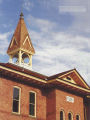
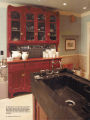
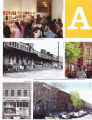
Show Gallery strolls attract crowds to Plerpont galleries. Artspace's Pierpont project transformed the historic Free Farmers' Market Building from languishing to . . . a ilveiy community. From auto parts . . . to art galleries. to favorite gathering place. TRANSFORMATION ~ 1 PIERPONT AVENUE west of downtown Salt Lake City was an eerie, somewhat desolate place in the late 1970s. On some days, tumbleweeds blew down Fourth West. Grain from overfilled trains sprouted between the tracks and lent an air of the open prairie to the neighborhood. It wasn't advisable to leave your car there overnight. The warehouses and streets around Pierpont were largely forgotten. KIRE rn HUFFAKI Fashionable galleries and retailers occupy the first floor of the Rubber Company Building. More than any other single factor, Artspace changed the fate of Pierpont Avenue and the west side of downtown Salt Lake City. In fact, the organization's name has become synonymous with the neighborhood. Artspace is a nonprofit community development organization founded in 1980 to foster to the arts and culture by providing affordable artist stu-dios and galleries. Over the last 25 years, its projects have catalyzed the develop-ment of west downtown into one of the hottest real estate markets in Utah. Rising property values, however, aren't Artspace's greatest achievement. Through historic preservation, neighbor-hood revitalization, urban design, and public- private partnerships, Artspace has helped build a vibrant communi-ty of artists, unique local retailers, res-taurants, professionals, and nonprofit organizations. Utahns like the results. Monthly Gallery Strolls consistently draw hundreds and housing construc-tion in the neighborhood is booming. If you build it, will they come? Artspace was born when sculptor Stephen Goldsmith was searching for an affordable studio near downtown that gentrification would not reach in the foreseeable future. Goldsmith and a handful of artists envisioned a commu-nity where they could both live and work in a supportive, affordable environment. " Even though artists create individually, A dramatic skylight brings light to the interior of the A sleek loft kitchen in the Rubber Company Building. Rubber Company Building. they want to be in a community with other people like them. That was realized from the beginning and continues to be the value of Artspace in the community," explains Jackie Skibine, Artspace's direc-tor of development. The languishing historic Free Farmers' Market Building on Pierpont Avenue seemed like the perfect site for this com-tion of the project. Goldsmith says the key to the organization's success was " to lead by listening." The result was a cohesive small neighborhood that held garden parties, reduced neighborhood crime, cleaned up Pioneer Park, slowly rehabilitated a building, and provided livelihoods for artists. Community out-reach and programs for artists were part munity. Built in 1910 by the Eccles- of Artspace programming during these Browning Investment Company, the Free early years. Farmers' Market was intended to house It took about 20 years of on- and- off local truck farmers. The truck farmers, construction to complete the Pierpont however, didn't want to leave their down- project. Long- time Artspace Board town carts for a central market. So the Member John Milliken fondly recalls, building was home to various businesses " Today it's impossible to replicate this until 1983 when Artspace leased the prop- with the building codes and how they erty. Selecting the Free Farmers' Market used to just have their friends come down Building for its home linked Artspace to here and do rehab. You can't do rehab like historic preservation early on. Support for the project began to grow. The community design center, ASSIST, developed a plan to integrate the Artspace concept into the city's west side. City Council Member Sydney Fonnesbeck championed the creation of Artspace at the city level. Other early support-ers included Lon Watson of the George S. and Dolores Dore Eccles Foundation, Stephanie Harpst, and Bonnie Phillips. Several architects participated over the life of the project including Max Smith, Ranch Kimball, Roger Borgenicht, and Prescott Muir. that anymore." The concrete Acropolis The Jennings- Hanna Warehouse, more commonly known as the California Tire and Rubber Company Building, sits just one block west of Artspace's Pierpont project. The 1915 building was designed by Richard K. A. Kletting, the renowned architect of the Utah State Capitol Building. Sculptor Bruce Lindsey called it the " concrete Acropolis," a nickname that inspired an architectural vision for Goldsmith and launched Artspace into the housing development business. Artspace's Pierpont project involved Artspace embarked on the difficult proj-many people working together rather ect of converting a building with little than a few individuals dictating the direc- natural light into a residential building 52 UTAH P R E S E R V A T I O N with first floor retail spaces. Completed in 1995, the Rubber Company Building provides 53 affordable apartments for households earning 34 to 54 percent of area median income. The building's $ 5.8 million renovation cost involved a com-plex financial structure and public- private partnership, including Artspace's first use of low- income housing tax credits. Residential units in the Rubber Company Building filled up quickly. Artists, retailers, and coffee outlet Cup of Joe leased the inviting first floor retail spaces. A neighborhood evolved between the two Artspace buildings as private investors opened restaurants and galleries. By the time the Rubber Company project was successfully completed, Artspace was already planning its next project. Ahead of the curve Artspace purchased a site and historic building at 500 West and 200 South in 1997. Its new project included two phases. The first phase involved the construction of a new building on the corner and the second phase focused on rehabilitating the historic ZCMI Warehouse just south of the new building. The site was perfectly located to take advantage of the evolution of west down-town. Salt Lake City passed the Rail Consolidation Plan in 1996, combining many of the underutilized rail lines west of 400 West into just two lines. The rail consolidation led to shorter freeway via-ducts and a west side transportation hub. This new landscape spurred thoughts of development that would have been laughable only a few years earlier. Seemingly always ahead of the curve, Artspace was the first to take advan-tage of the new development oppor-tunities. As Artspace Executive Director Jessica Norie puts it, " Artspace pioneered A corner entry welcomes visitors to galleries at the Bridges. The historic Rubber Company Building offers 53 affordable apartments for artists and others wishing to live in a vibrant downtown neighborhood. The Patrick Moore Gallery at the Bridges features the work of a wide range of Utah artists as well as unique gifts made by local artists. Splashes of red give the Bridges a lively appeal. UTAH P R E S E R V A T I O N 53 The historic ZCMl Warehouse is home to Artspace's new City Center project. TIlr rrl. ll.. . lrlluux. ulllrlus bsanuen ~ I ~ IIIUI~ U I I~ I ~ d c kwa s This City Center townhouse serves as both a home and a gallery for local artist Madison Briggs. transformed into an indoor garden space. development on the west side. Our third project, the Bridge Projects, was underway before there was even a thought of The Gateway." The Artspace Bridge Projects opened in 2001 to great acclaim in a new build-ing designed by Salt Lake City architect Prescott Muir. Bridges includes 62 afford-able apartments with modern convenienc-es for households earning 35 - 55 percent of area median income, galleries, offices for two nonprofits, and retail spaces. Bridges' four- story height is compatible with the scale and massing of the historic warehouses in the area. The welcoming design of the corner entry feature, the rhythmic break- up of the fagades with bump out bays and small porches, and the splash of red gives the building a liv-able appeal that many modern buildings could learn from. These features surely contributed to Artspace's success in filling the building with tenants. a4;~ e d ~ The second phase of work, called City Center, proceeded in 2005 when Artspace secured financing for rehabilitation of the historic ZCMI Warehouse. ZCMI used the 1905 building as its main warehouse facility until 1960. This unique structure is bisected by a central loading bay where trains entered to unload. Because of its historic significance and unusual design, the building was listed on the National Register of Historic Places in 2005. With the help of architect Max Smith, Artspace adapted the 70,000 square- foot warehouse for 18 rental live- work town-houses of 1,300 square feet each, offices, galleries, retail space, and 20 underground parking spaces. The $ 8 million project has a complex financial package that includes Artspace's first use of federal rehabilitation tax credits and New Markets Tax Credits. 54 UTAH P R E S E R V A T I O N To qualify for the rehabilitation tax credits, Artspace retained the character- defining features of the historic warehouse, such as interior arches and support beams and the exterior truck loading docks. An atrium over the central train loading dock has pre-served it as an indoor garden. Art Access, a popular gallery with diverse programming, recently moved to City Center from Pierpont. When considering their options, Executive Director Ruth Lubbers states, " We definitely considered what was available around the developing arts and cul-ture block downtown. But the storefront space, ADA accessibility, extra square footage to hold workshops, along with the great ambiance that only artists in a historic build-ing like City Center could create was what ultimately attracted us to move to the new Artspace project." The challenges of success Amid Artspace's success, founder Stephen Goldsmith's fear that gentrification would push artists out of the neighborhood is beginning to be realized. Property values in the area have risen substantially and it is unclear what the owners of the Pierpont building will do when Artspace's lease on the property ends in 2008. Many current tenants are seeking new spaces. Pierpont artist Lyndsie Orgill explains, " It seems to happen in every city, whether it's Tacoma or Salt Lake. So we have a bit of an uncertain future." Artspace has continued to evolve as an organization meeting the needs of artists- its main constituency. Projects are becoming increasingly difficult as financing becomes ants. The biggest challenge for Artspace, however, may be to keep a stable tenant mix and stable rents in their existing buildings in a gentrifying neighborhood. As Artspace moved from project to project, it brought the public along in thinking that the west side is the place to be. Gone are the days of auto parts stores and tumbleweeds on Pierpont Avenue. Now the west side offers a place to buy your Bose surround sound system and a soy latte down the street from the stu-dios of some of Utah's best artists. Early Artspace programs produced art through the artists that lived and worked in its buildings. Over the years, Artspace has mastered the art of creating community through the buildings it constructs and the architecture it preserves. e more complex, more community partnerships are needed, and property values are sky- Kirk Huffaker has been an advocate for historic preservation with Utah Heritage Foundation since rocketing in the target neighborhood. But with every new challenge comes new oppor- 1998, He spends his other time enjoying music, tunities. Artspace's success has opened doors to new banks, partners, and potential ten- outdoor sports, and his brown Lab, Cassidy. ATTENTION ANTIQUE SHOPPERS! Honest Jon's Hills House Antique Gallery " The antique shop in a museum setting in the heart of downtown Salt Lake City" 126 South 200 West across from the Salt Palace next to the Expomart 801.359.4852 m UTAH P R E S E R V A T I O N 55 L 1 1 > l d C e Q r J Flourish Art & d ~ esigmSt udio * 801.983.7526 |