| OCR Text |
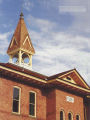
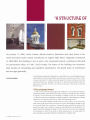
Show " A STRUCTURE OF On January 11, 2006, Cache County officials hosted a dedication and open house in the newly- renovated Cache County Courthouse on Logan's Main Street. Originally constructed in 1882- 1883, the building is one of only a few nineteenth- century courthouses still used for government offices in Utah. Until recently, the future of the building was uncertain. After decades of remodeling and expedient maintenance, this grand dame of courthouses had not aged gracefully. By Korral Broschinsky The building was targeted for demolition in early 2000 but was saved through the coop-erative efforts of state and local officials, preservationists, and concerned citizens. After a two- and- a- half year, $ 2.1 million renovation project, the historic courthouse now looks as fresh and lovely as a debutante. The title of an 1883 Logan Utah Jo~ rrnaal rticle is as apt today as it was then, " The New Court House: A Structure of Which our County May Well be Proud." " A Fine and Imposing Structurew In 1881 Cache County selectmen approved a design for a new courthouse to replace a small frame building, which had served as office, repository, and jail since 1867. Truman 0. Angell, Jr. was the architect for the building ( see sidebar on page 45). On September 12, 1883, the Utah Journal published a lengthy description of the building as it neared completion. The reporter pronounced it " a fine and imposing structure." The two- story brick building provided space for county offices on the main floor, court spaces on the second floor, and rooms for cells in the basement ( though the jail was later built behind the courthouse.) Ceremonial spaces included the entrance hall, second- floor parlor, and a spacious courtroom which doubled as an auditorium. The reporter praised the building, declaring, " On the whole the court house is well adapted to the purposes for which it was built, its offices, apartments, etc. are large, light, airy and commodious, and will be finished and furnished in excellent style." 40 UTAH P R E S E R V A T I O N A " call to actlon" at a crit~ calm oment during a legislative session and the result~ ngc ommunity support were key to saving the historic Cache County Courthouse. UTAH PRESERVATION 41 By 1905, the county government had outgrown the once ample courthouse. An addition was built on the west end, dou-bling the size of the facility. Expansion occurred again in 1917 with the addi-tion of projecting wings at the northeast and southeast corners flanking the main entrance. The first threat of demolition came in 1938 when a building and trade organization suggested constructing a new courthouse as a way to stimulate employ-ment. This proposal eventually died from lack of interest and funding. C1 Sureet Old Lady in a Tattered Old Dress As the county's population expanded after World War 11, there were renewed calls for a new courthouse. However, building conditions were not favorable, and the county continued to repair and modernize with a new roof in 1947 and a coat of white paint in the 1950s. Inside, the large rooms were divided, the ceilings dropped with acoustic tile, and air con-ditioning units installed in the windows. While these changes addressed the needs of patrons and employees, they were made with little regard for the preserva-tion of architectural features. Beginning in the late 1960s, the courts system and several county offices were moved from the over- crowded historic courthouse. By the 1990s, the building had become, as one letter to the Logan Herald journal described, " a sweet old lady in a tattered old dress." A quaint pioneer relic, it was a serviceable government building, but just barely. The " fine and imposing structure" had been modified into a labyrinthine, inaccessible night-mare with a history of leaky roofs, sewer backups, and electrical problems. With little money for renovation, county offi-cials felt they had run out of options. ( L Few Days m February The moment of decision came in early February 2000. The Cache County Council agreed to a land swap with state courts so that a new courts facility could be built on the site of the historic courthouse. This pro-posal gave the county land for construct-ing a much- needed county administration building and passed the decision for demol-ishing the historic courthouse to state. Dr. Newel Daines was a driving force in the Cache Counly Courthouse renovation. Numerous insensitive alterations and years of deferred maintenance transformed the once- grand Cache County Courthouse into " a sweet old lady in a tattered old dress." Contractors corrected a three- degree tilt in the courthouse's cupola. 42 UTAH PRESERVATION As news of the trade appeared in the Logan Herald Journal, concerned citi-zens contacted the newspaper to express support for preserving the old courthouse. But demolition remained a strong pos-sibility as an appropriations bill made its way through the state legislature. This bill tied funding for a new courts facility to the historic courthouse site. When Utah Heritage Foundation ( UHF) learned of the proposed land swap and appropriations bill, it mobilized resources to save the courthouse. UHF contacted State Representative Ralph Becker, a member of the appropriations committee, who confirmed that the State Courts Administration had only recently decided the old courthouse was the pre-ferred site and had not fully considered the option of rehabilitation. On Valentine's Day, UHF issued a " Call to Action" via the Internet, urging those interested in saving the courthouse to contact their legislators. The response was overwhelming. UHF Interim Executive Director Kirk Huffaker recalls, " UHF reached out to our members in Cache County and legislators immediately start-ed hearing requests from their constitu-ents to keep the historic courthouse and build the new courthouse somewhere else in downtown Logan." Rep. Becker drafted language for the appropriations bill that allowed funding for the new courts facility to proceed without reference to the historic court-house site. The new language passed in committee on February 16. The appropri-ations bill was later passed with language assigning responsibility for the site of the new courts building and the fate of the historic courthouse to local officials. The bill also included $ 2.7 million to fund design work and the purchase of a site, giving the old courthouse a temporary reprieve. At a meeting called by the Cache County Preservation Commission on February 17, local officials and preservationists met together to discuss options for the court-house. They decided to undertake a feasi-bility study to investigate alternatives and cost projections for the seismic retrofit and renovation of the historic building. GSBS PC 1 Restoration Architects of the Union Pacific Depot - 2 J*' .& . . - 1 ARCHITECTURE I LANDSCAPE ARCHITECTURE I INTERlOR DESIGN I PLANNING A Creative Solution In late 2000, the feasibility study concluded that the courthouse could be renovated at a reasonable cost. The study also concluded that the best possible use for the build-ing would be to continue as county office space. While reviewing the situation, Cache County officials noted the response to the proposed demolition had been overwhelm-ingly in favor of saving the courthouse. The majority of negative responses had not opposed to saving the building, but expressed concerned about funding the project. Meanwhile, the courts decided to build at the corner of 100 West and 100 North, leaving the county to address its own space needs. One part of the creative solution emerged as county administrators were planning to move the motor vehicle registration department from the old courthouse to the Wilkinson Supply Building just south of the courthouse on Main Street. In April 2001, former Logan mayor Dr. Newel Daines and his son, George, owners of the Wilkinson Building, presented a proposal to the Cache County Council suggesting their property be used for the construction of a new county administration building. In May, the Cache County Council accepted the proposal and made plans for a multi- phase building proj-ect that included the new building and renovation of the historic courthouse. A year later, the county approved a bond to pay for a new jail and the administra-tion building. The bond also provided $ 1 million toward the restoration of the historic courthouse. In August 2003, after the county moved its offices into the new red brick administrative building, renovation of the old courthouse began in earnest. A Collaborative Mort The renovation project was a collaborative effort involving county officials, local pres-ervationists, architect Lanny Herron of Architectural Nexus, and numerous sub- contrac-tors and vendors, including Burton Lumber and Hardware, who supplied many of the building materials at cost. More funding help came as Newel Daines stepped in to serve as fundraiser and unpaid renovation supervisor. Nearly $ 1 million in additional funds were raised through pri-vate donations, including a generous grant from the George S. and Dolores Dore Eccles Foundation. Accomplishing the seismic retrofit and providing ADA accessibility without compro-mising the historic integrity of the building were the most important components of the renovation. The National Trust for Historic Preservation provided Cache County a grant for a seismic study through the Utah Preservation Initiatives Fund in 2002. Based on the results of the study, the county employed Spindler Construction Company to install an interior frame of studs tied to the masonry and locked in place with four levels of horizontal diaphragm. Contractors lowered the basement floor ten inches, reinforced the footings, and cor-rected the three- degree tilt of the cupola. Other ceilings were raised and lowered as needed to consolidate floor levels from five to three and provide space for the necessary mechanical, plumbing, and electrical systems. With the bulk of county offices in the UTAH P R E S E R V A T I O N 43 administration building, there was now room for a ADA accessible entrance on the south side of the building with access to an interior elevator. The exterior was restored to its 1917 appearance. As years of paint were removed, the original contrasting sandstone and cast concrete emerged. The masonry was revealed to show the three colors of brick on the main building and the additions. The origi-nal 1882 portion of the building was con-structed of buff- colored brick that had been stained red in the historic period. The deci-sion was made to re- stain the brick to match the wings. ' l'hree types of foundation surfaces, long hidden under a coat of gray paint, are now distinct. A new portico was built on the west elevation to provide a secondary entrance from the main parking area. Because few elenlents of the historic interior had been preserved through the years, a faithful recreation of thc historic interior was not possible. Instead Daines and his team of designers and artisans focused on creating functional and cere-monial spaces inspired by the woodwork, carpets, and light fixtures of other historic buildings of the period. Fine craftsman-ship is apparent throughout the build-ing, from the mahogany finishes of the woodwork and cabinetry, to the marble counters and period tile in the restrooms. Many of the fabrics and furnishings were imported from Italy. The building features many amenities, including a new spiral staircase to replace the long- missing access to the cupola. Metal screens hidden in box panels can be pulled out to secure the offices dur-ing evening council meetings. Concerned about obscuring the arched windows with horizontal blinds, Daines designed special hollow casings for thc windows on the south and west elevations that hide the blinds when not in use. A visitor familiar with the pre- renova-tion condition of the courthouse will be most impressed by the grand feeling of the space, from the 14.5- foot ceiling height to the number of uncluttered and impressively furnished nooks. While sit-ting at his desk in a corner office which once housed three- plus employees, Cache County Executive Lynn Lemon jokes, " It's true, we don't use the space as efficiently as we used to." munwny nw- t r a t ~ nra srrw an. hlmkhrngs ldDm me oeminorna~ s paces in the renovated courthouse - The restored 14.5- foot ce~ lingsc ontr~ butet o the grand feeling of the courthouse. A new spiral staircase provides access to the cupola. 44 UTAH P R F S F R V A T I O N ourte~ yo f State Hlrtoi detal screens hidden in ~ anels can be pulled out to se ~ ffices during evening council meetings. - rn - - - C . . ---- - - - - I - - - I s Truman 0. Angel], Jr. -- - . I_ Truman Osborn Angell, Jr. IS often c c - - ~ fused w ~ t hh ~ fsa mous father, Tri - 0. Angell, Sr, architect of the Salt Lake - - Temple of the Church of Jesus Chr~ sto f Latter- day Sa~ nts( L DS Church). Truman Jr. was born In Salt Lake C~ tyo n Februa~ - The renovated courthouse and new administration building consolidate county services in the heart of Logan's historic downtown. A Credit to the County Lynn Lemon is justifiably proud of what the county and its citizens have accom-plished, far beyond the preservation and renovation of a deteriorating old building. Once located in five different buildings, all county offices and services are now consoli-dated in two buildings in the heart of Logan's downtown historic commercial district. Overall, the renovation project was a bargain thanks to Newel1 Daines and his family, private donations, and the many contractors and consultants who worked to keep costs down. The historic courthouse looks brand new and is a delight to residents and tour-ists alike. Mr. Lemon looks forward to hosting downtown events on the plaza between the courthouse and new administration building. The county is proud to be " a con-tributor in maintaining and keeping the downtown area vital," Lemon explains. Once again dressed in her finery, this grand old lady is poised to serve Cache County for another hundred years with pride. As the anonymous writer in 1883 remarked, " It is a credit to [ those] who built it, and to our county, and a structure of which our citizens may well be proud." @ Lorral Broschinsky is an architectural historian living in Murray, Utah. She has worked on numerous projects in the Cache County, including a resurvey of the Logan Center Street Historic District in 1999. 27, 1852, the son of Truman 0. Angell - 1810- 1887) and Susan Eliza Savage ( 1825- 1893). The son learned the archi --- - tectural trade from his fa th- e- r.. T0ruman I Angell, Sr. served as official architect for -= the LDS Church. In 1867, Truman Angell, z- - Jr., was appointed assistant for the LDS Church and in this capacity collaborated- - with his father and other architects on b numerous Church buildings including the = Salt Lake Tern~ lea nd LDS Church taber- . nacles in Brigham City, Coalville, Logan, and Paris, Idaho. -- - - p- -. -- Several sources credit Truman 0. A n g e l l , Jr. with the design of the Logan Temple. ' 4 It was during a work stoppage at the tem- -- - - ple site ( due to lack of funds), that Cache County paid Truman 0. Angell, Jr. $ 150 " -- for designs and specifications for the -- PC == iFsz county courthouse. The temple construc----- - tion crew followed the architect to provide a labor for the courthouse construction. The Logan LDS Second Ward's United Order Manufacturing and Building Company completed the courthouse in the fall of 1883. Truman 0. Angell, Jr. was also an Y accomplished musician and artist. He - moved to Butte, Montana, in 1908, where .. he lived until he died on April 10, 1933. -- - - = - - - - I - - - - - UTAH P R E S E R V A T I O N 45 = - - - - - - - - - - -- 4 REPLACING YOUR CEDAR ROOF AND SIDING FOR LIFE .-- -+-- 2. 2 -, - , - - 3R? v; g s . 1 ": ?* a;&? :&* 2 makes ) mder- vvlly do roofs last sometimes hundreds of years in Europ~ ? k c Hedden, a roofs. 46 UTAH PRESERVATION Paid Advertisement Why did roofs built hundreds sf years ago iast so long? Well, you have to consider the tools available and the cir-cumstances of the people at that time. They didn't just go to a store or a contractor and buy a new roof. They had to fell a tree and split it into small sections, sometimes with only an axe and their family to help. So people didn't just replace a roof when it didn't look as good as it once did. A roof was a functional system and its only purpose then was to hold itself together and hold out water. It was never about looks. People replaced only the sections that needed replacing and then, every once in awhile, they took the leftover renderings from making wax and soap from an animal, or even just the fat, and applied that to the roof on a schedule handed down through genera-tions". To be fair, those old roofs are often oak or another hard-wood that grew right in their back yard. We use softer woods today. Also, they didn't have acrid air and pollutants to wear away at their roof. They didn't just throw things away when it didn't please them either. We are a throw- away society, but times are changing and people shouldn't be tossing out a superior product and replacing good cedar roofs with inferior asphalt roofs or using new, thinner, softer cedar shakes than the better ones you already have ( normally, only 5% of cedar shakes need replacing on a restoration). What can people today do to make their residential cedar roofs and siding last a lifetime? The problems often start from the way the roofs are built. In an effort to save money, roofers often chose a thin ? h" or %" butt shake and then lap it for a 10" or 11" reveal ( the amount of the shake that shows), while a ? h" butt shake is specified for half that. This results in about 45 percent fewer shakes and a lot less labor- but it will bite you in 6- 12 years. Pay attention and you will see how much curling is common on newer homes with thin shakes. As already mentioned, if you're lucky, you have a home with good old thick shakes. Just like getting a great thick shake at the soda fountain, you will never find that earlier quality of cedar shake that you currently have ever again, period. Those older and bigger cedar trees are gone, so to replace it you will end up with vastly inferior shakes from the start. So your hands are tied! You either have a great 30 year- old roof that's in rough shape or you have a 10 or 15 year- old roof that's rougher. Either way, you're thinking replacement, you're looking at $ 30,000 for a cedar roof and you really don't want a cheap roof. So what can kameowners facing this dilemma do? At ' 777 Coating Corporations', we use proven, high qual-ity, tested, cutting- edge, brand name products, along with methodologies and ingredients which have been around for decades. These include nano- scale materials, such as ceramic micro- spheres. Be aware that others pretend to have the same answer, but I often see the damage from doing things wrong. Chlorine on your roof, aggressive power-washing, cheap stains, waxes and oil treatments all have problems and/ or risks. And speaking of risks, wood shake roofs are, quite simply stated, a major fire hazard. Wood is UTAH PRESERVATION 47 Paid Advertisement extremely flammable in the first place. The wood on your roof dries out and over a period of time it can become very susceptible to the elements, such as lightning and even sparks from a nearby fire. You can eliminate the inherent risk to your home through the use of advanced fire and wear protection products and techniques. The U. S. Forest Service and BobVila. com warn against the use of wax andlor cheap stains. Chlorine or over- powerwash-ing takes years off the life of the roof in a vain effort to make it look " new" again, but this won't last. Oil is an extension of what they did in anc~ enti mes. The most obvious problem with oil is the fact that you are putting a flammable product on a very dry and exposed roof. There is no end to the reports of death and property destruction in relation to oil and cedar roofs. So what is the answer? We clean and mend in a way that protects the roof and we only apply products that result in a fire retardant roof. In the best cases, we achieve a " Class A" fire-resistant roof and extend the life another 10 years. The ceramic micro- spheres help to prolong maintenance cycles by reducing heat build- up through reflection of radiant heat from the sun. Preserve what you have and replace ONLY the small percentage of the cedar that needs replacing. Then, have it treated so that the cedar will stop wearing. Work with someone who will provide a built- in sacrificial wear layer and won't damage your roof. This is the key! Otherwise, you will continue losing about 118" of your shingles per decade. Keep in mind that if you see a 1" butt, the area towards the back where it wears is only 314" thick when new and this is the area of concern. It is far less expensive to maintain a cedar roof than it is to allow it to fail, leaving an ecologically disastrous mess to clean up and a high replacement cost. What can horneawkaen e x w t when they ca!! " 777 C e ~ i k dW rcRi% gkdura1C aiating~ & rwrafiionF for heip with their rwf? ' 777 Coatings Corporations' motto is " Follow the science.. . smart money always does". Our application experience and relentless research have made us experts in our field. We only use " Class A" fire retardants which work very well as a maintenance formula. The chemicals that make up the fire block are a wood " preservative" by their very nature. In other words, this will freeze your wood's decline and only require an inexpensive refreshing service once every decade to keep the roof going for decades more. ' 777 CoatingsCorporations'can provideall thedetailed infor-mation you need about our qualifications and training. We can be traced back two decadesas contractors without complaint. It might be an over- simplification to say this, but what makes ' 777 Coatings Corporations' different from 95 percent of the contractors out there is our true desire to satisfy the customer. Our standards are very high and we simply won't accept the job if we can't do it right! We hope you will find this out for yourself. start seeing - H W R I ss& h - C LANDSCAPES 48 UTAH P R E S E R V A T I O N Traditional Building Skills Institute Celebrating 10 Years of Restoration & Preservation Snow College . Ephraim, UT 1 ~ 3w1 O rKsnops m " Preservation Matters9'** TBSI workslzops provide a unique, lzands- on I r experience in restoration & preservation skills. - ( Call 435- 283- 7572 for a schedule) Adobe Blacksmithing Masonry Millwork/ Woodwork I Ceramic Tile Stained Glass I Decorative Plaster Stained Glass I1 Faux Painting Stonework Furniture I & I1 Timber Framing Furniture Refinishing Wood Carving Log Cabin - Wood windows Old World Traditional Building Skills - Europe , A Invitation to the Public From TBSI ... I bp? K , Wales, United Kingdom Kathryn & Brian Pritchard Gibson, qorthern Wales, UK, are coming to Sanpete : ounty and Snow College this fall as guest I t turned out to be Pen Y Bryn, the Prince's rower and last known residence of Llywelyn he Last and his daughter Gwenllian, the first ~ ndla st trueborn Princess of Wales. Traveling to Europe and Pen Y Bryn is , art of the Old World Traditional Building a a ~ - y c afi~ no W C ~ I C C L" I, C. nestoration & Preservation Bryn is also the site of the fictional novel ** Preservation Matters is a discussion Contact Russ Mendenhall Here Be Dragons by Sharon Kay Penman. series scheduled for Wednesday nights at russ. mendenhall@ snow. edu - 435- 283- 7575 Snow College in Ephraim. I For additional information on any of' these The series is free to the public. programs, contact Joan Larsen. www. traditionalbuildingskillsinstitute. com joan, Larsen@ snow. edu - 435- 283- 7572 Topics follow the works PLANNING YOU CAN TRUST I BUSINESS PLANNING ESTATE PLANNING TRUSTS I UTAH P R E S E R V A T I O N 49 |