| OCR Text |
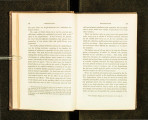
Show 176 ATROCIOCS JCDGES. [A. D. 16SO when he was put into the box, before any evidence had been given to discredit him, was tlm::, aluted by Chief Ju tice Scrogg. :- '' 'Ve will not hoodwink ourselvc" again~t ,'uch n fellow as this, that is guilty of such notorious crime~. A 1nan of n10ucsty, aflcr he hath been in the pillory, would not look a 1nan in the face. Such fellows as you arc, ~irrah, hall know \\'e are not afraid of you. It i: notoriou. enough what a fellow thi · i. . I will shake all uch fellows b fore I have t1one with them." Dange1jield.- '' ~Iy lord, this i.· enough to discourage a man from ever entering into an hone~ t principle." Scroggs, C. J.-" What! Do you, with all the mi·chief that bell hath in you, think to have it in a court of ju ·tice? I wonder at your impudence, that you <lar · look a court of ju"tice in the face, after having been made appear .. o 11otorious a villain. Come, gentlctncn of the jury, tbi .. i, a plain case; here is but one witness in a ca. e of treason ; therefore lay your head · together, und say not gu£lty." J\.Irs. Collier wa set at liberty, and Dangerfield wa com· n1itted to occupy her cell in N cwgate. \Vhen holdiug a~ ..:izes in the country, he took every oppor· tunity of proclaiming his ·lavi-;;:h doctrine . Going the Oxford circuit with Lord Chief Baron Atkyns, he told lhc grand jury that a petition from the loru 1nuyor an<l citizens of London to the king, {or callinbo- a Parliatncnt was hio-h trea on. Atkyns, ' 0 on the contrary, affirn1ed "that the people n1ighL petition the king, and, so that it was <lone without tumult, it wa lawful." Scrogg", having peremptorily denied thi ·,went on to ay "that the king 1night prevent printing and publishing whatever he cho ~c Ly proclamation." Atkyns n1ildly r c1narked, "that such n1n.tter-- were fitter for Parliament, and that, if the king A. D. 10 0.] WILL IAl\1 SCROO GS. 177 could do this work of I>arlimncnt, we were never like to have Parliament · any n1or ." Scrogg .. , highly in<lig nant, sent o(F a despatch to the king, tating the un ·on ·titutional and trca onable ~angunge of Chief Baron Atkyn:. This virtuous judge was In con equcnce su persede<.l, an <.I remaine<.l in a. pri ,·ate station till he wa reinstated in his office after the revolution. Before Scrogg- wa him. elf pro:ccutcd nnd di:Sini ·: cd fron1 his office with di ·grace, he swelled the nutnbcr of h i:-3 <lel inquencies by an attack on the liberty of the press, w hidt wa8 more violent than any that ha<.l ever l><.:cn attmnpted Ly the Star Chamber, and which, if it had been acquiescccl in, woulu have effectually c tal>li hc<l despoLi 111 in thi , country. IIcre he was directly pr01npted by the govennncnt, and it is surprising that this proceeding ~hould o little have atLra ·ted the notice of hi torirtns who have dwelt upon the arbitrary measures of the reign of Charlo "' II. 'fhe object was to put down all fre~.., di ·ct1 s· , 1· 0· n., ancl a1 1 comp l ~u·n ts aga1·n . t n11· ' rule, by ~laving, in addition to a licenser, a process of inJunct£o,~, agalnst printing- Lo Le sununarily enforced without the . ' mterventiorl of' n • 1. i' . . . n .JUry, uy Jne, lill]H'l ·onment, p1llory, and whipping. There wa then in ex len. i vc C'ireulation a newspaper called "l'he \Veekly I)acqueL of Advice fron1 Itome, or .tl~e I-Iistory of Papacy,'' wl1ieh reflected ·everely upon the religiOn now openly professed hy the Duke of York and secretly embraced Ly the king himself: In Triuity term, 1BG 80, an application bcinrr 1nadc to the Court of J(inO''s o o 1 ench, on the ground that this newspaper was libellou ', Scroggs, with the a. ·cnt of hit3 l>rothcr judges, grante<.l a rule ~bsolute in the first in t.ance, forbidding the publication of iL 111 fu.turc. The editor and printer being served with the rule, the JOurnal wa., suppressed till the nuttter was taken up in the I-Iou·s e· of Co mmons, nn<l Scroggs was u. npcuched. |