| Title |
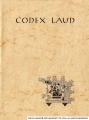
Codex Mexicanus caractere hieroglyphi |
| Call Number |
F1219 .B645 1966; Record ID 99858630102001 |
| Date |
1966 |
| Description |
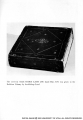
Codices from 15th and 16th century Mexico. These Mesoamerican manuscripts described wars, victories, famine, pestilence, religious events, and other elements of ancient Mesoamerican culture. The codices often consisted of one long extension or band of paper called amatl, produced from the bark of a type of fig tree. Glyphs, or pictorial representations, were used for the text. |
| Publisher |
J. Willard Marriott Library, University of Utah |
| Subject |
Manuscripts, Mexican-Pre-Columbian -- Facsimiles. Indians of Mexico -- Religion and mythology. Manuscripts, Nahuatl -- Facsimiles.; Indigenous peoples--North America |
| Contributors |
Series Editors: Francisco Sauer; Josepho Stummvoll. Introduction: C. A. Burland. |
| Source Physical Dimensions |
17 x 22.5 cm |
| Type |
Text |
| Format |
image/jpeg |
| Identifier |
laud |
| Source |
Codex Laud Bodleian Library Oxford. Introduction: C. A. Burland. Graz, Akademische Druck - u. Verlagsanstalt, 1966 |
| Language |
deu; eng |
| Coverage |
15th Century, Mexico |
| Collection Name |
Rare Books Collection |
| Holding Institution |
Rare Books Division, Special Collections, J. Willard Marriott Library, University of Utah |
| Rights |
J. Willard Marriott Library, University of Utah |
| Scanning Technician |
Bin Zhang; Kelly Taylor |
| ARK |
ark:/87278/s6vf074f |
| Setname |
uum_rbc |
| ID |
236106 |
| Reference URL |
https://collections.lib.utah.edu/ark:/87278/s6vf074f |
| Title |
Codex Laud, p. 16 |
| Subject |
Manuscripts, Mexican (Pre-Columbian) -- Facsimiles. |
| OCR Text |
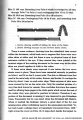
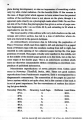
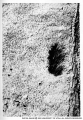
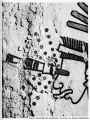
Show Folio 14 This was the end page of a skin, and the tool marks made when smoothing the surface are coarse and heavy. This is repeated on the dorsal surface of the page so it is presumably due to rapid drying of the white paste on a too absorbent piece of skin. Folio 15 Shows irregularities in the plaster which resulted in too rapid drying of the surface, thus producing a small crack which has penetrated the paste. Folio 16. There are some cracks on the lower edge of the folio which appear to be the result of mis-folding in the past. This shows on the dorsal side of the folio as the beginning of a greyish dusty area of the Codex. Folio 17. Bodleian Library stamp. The painted surface has flaked a little in the lower left quadrant. Folio 18. The cracks in the lower register were caused by misfolding in the past. The white abraded areas near the joint have a glossy surface. This may be due to a smoothing process. If this was ancient the deposit of fine grey dust on the surface ocurred before the Codex came to Europe; but equally it might be due to pressure by glass at a later period, or even to the application of a transparent varnish, though this is unlikely in view of the absence of colour and the lack of any sign of depth in the glossy areas. Folio 19. Shows similar abraded white areas to those on 18, and equally they have a light-reflecting glossy surface. There are some brown splashes on this page which appear to be water-colour pigment. They have dried with a matt non-reflecting surface. Folio 20. Has a hole in the upper right edge which was present in the original skin before it was prepared for painting. This folio shows a few small brown pigment spots on the surface. The lower part of the |
| Contributors |
C. A. Burland |
| Type |
Image |
| Format |
application/pdf |
| Identifier |
016.tif |
| Source |
Codex Laud Bodleian Library Oxford. Introduction: C. A. Burland. Graz, Akademische Druck- u. Verlagsanstalt, 1966. |
| Coverage |
Mexico, 16th Century |
| Collection Name |
Rare Books Collection |
| Setname |
uum_rbc |
| ID |
236076 |
| Reference URL |
https://collections.lib.utah.edu/ark:/87278/s6vf074f/236076 |