| OCR Text |
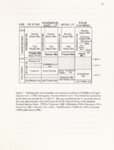
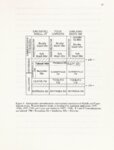
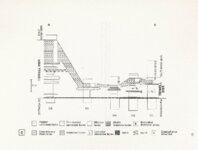
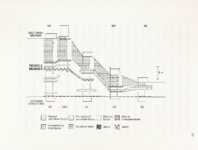
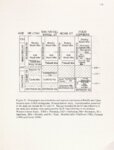
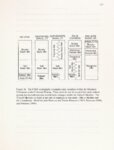
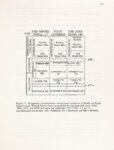
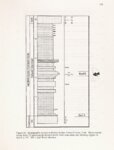
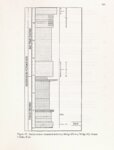
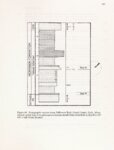
Show 126 include the upper part of the Wanakah Formation Member of the Morrison Formation (USGS the Summerville Formation and may be overlying Morrison Formation is as well as stratigraphy), young interpreted as to be as the Bluff Sandstone overlies and interfingers with late Oxfordian in age. The Kimmeridgian to Tithonian in age. Anderson and Lucas (1998) suggest that the Tidwell Member and the Bluff Sandstone are likely temporal equivalents, but they acknowledge that non-existent" by the J-5 (p. 59). These authors also identify the are duration of the hiatus "poor to represented unconformity as being only "poorly constrained" (p. 39). Lithologic and Stratigraphic Arguments The main argument in support of this alternate distinction between the San Rafael lithogenetic, and these authors depositional origin (Anderson of this time constraints stratigraphy Group and the is that the primary overlying Morrison Formation recognize Middle to Upper Jurassic Upper Jurassic under arid conditions in eolian, coastal flat, and Group. sediments that were sabkha-type environments Anderson and Lucas is formations based and Lucas, 1992, 1996a, 1996b, 1997, 1998). A is that all Middle to included in the San Rafael stratigraphy on premise deposited should be (1992, 1994, 1995, 1996a, 1996b, 1997, 1998) and Lucas and Anderson (1997) contend that the fluvial-dominated sediments of the Morrison Formation Rafael Group deposits and are are lithologically distinct from the underlying San indicative of deposition under more humid climates related to the northward drift of North America from the Middle to Late Jurassic. Anderson and Lucas in the measured type section (1995, 1996a, 1997, 1998) near note that gypsum is not present Morrison, Colorado (Waldschmidt and Leroy, 1944) and thus argue that it should not be included in the Morrison Formation elsewhere. |