
Contents | 85 of 241






























































Page 85


| Title | Stratigraphy and sedimentology of the tidwell member, upper jurassic morrison formation, East-Central Utah |
| Publication Type | thesis |
| School or College | College of Mines & Earth Sciences |
| Department | Geology & Geophysics |
| Author | Bernier, Julie Christine |
| Date | 2003 |
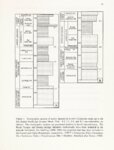
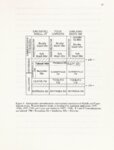
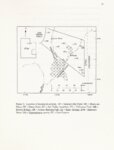
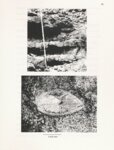
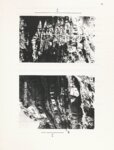
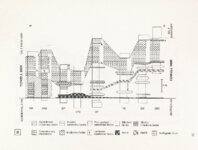
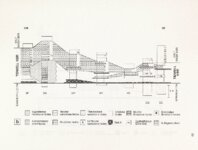
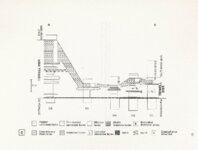
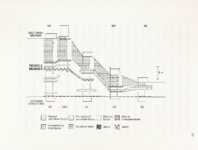
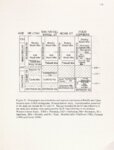
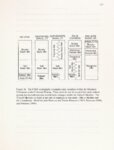
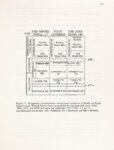
| Description | The Tidwell Member (Upper Jurassic Morrison Formation) in east-central Utah contains the type specimen of the oldest known sauropod dinosaur from the western United States (Dystrophaeus viaemalae Cope 1877; USNM 2364). Because of its stratigraphic position, this species may be an important evolutionary link between the diverse sauropod faunas of the Upper Jurassic Morrison Formation and their Middle Jurassic ancestors. Some controversial studies recently proposed that the Tidwell Member be included at the top of the Middle Jurassic San Rafael Group on the western Colorado Plateau. However, detailed stratigraphic studies of the Tidwell Member presented here concur with the conventional stratigraphy and constrain the stratigraphic age of the Tidwell Member with the D. viaemalae type specimen to the basal Morrison Formation. The Tidwell Member consists of nine lithofacies in the study area: rippled sandstone; thin-bedded sandstone; gypsiferous mudstone; siltstone; lenticular sandstone; mudstone; micritic limestone; and brecciated limestone. These lithofacies were deposited distal to the Salt Wash Member alluvial complex and are dominated by floodplain deposits with small local streams and ponds. Some fluvial sheet sandstones were likely ephemeral. Petrographic analysis shows that Middle and Upper Jurassic sandstones are typically quartz arenites and subarkosic arenites, but composition alone cannot distinguish different stratigraphic units in the study area. Petrologic composition and paleocurrent data indicate that Tidwell Member sediments were derived from a western recycled orogenic source (Elko highlands and/or early Sevier orogeny thrust belt) and were transported northeastward onto the distal alluvial plain. The D. viaemalae type specimen (USNM 2364) is preserved in a thin fluvial channel sandstone of the lenticular sandstone facies. The partially articulated remains suggest that transport prior to burial was minimal. This rare fossil occurrence in the Tidwell Member may be related to: (1) a scarcity of vertebrate faunas in arid alluvial plain environments; (2) early depositional and diagenetic conditions that were unfavorable to the preservation of organic material; or (3) historical sampling biases related to poor exposure of the slope-forming Tidwell Member. Facies analysis and interpretation of Tidwell Member depositional environments provides a context for future studies investigating early Late Jurassic sauropod paleoecology. |
| Type | Text |
| Publisher | University of Utah |
| Dissertation Name | Master of Science |
| Language | eng |
| Rights Management | © Julie Christine Bernier |
| Format | application/pdf |
| Format Medium | application/pdf |
| ARK | ark:/87278/s68d4x9d |
| Setname | ir_etd |
| ID | 2354140 |
| Reference URL | https://collections.lib.utah.edu/ark:/87278/s68d4x9d |
Page Metadata
| Title | Page 85 |
| Format | application/pdf |
| Setname | ir_etd |
| ID | 2354225 |
| OCR Text | Show |
| Reference URL | https://collections.lib.utah.edu/ark:/87278/s68d4x9d/2354225 |