| OCR Text |
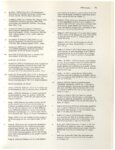
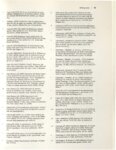
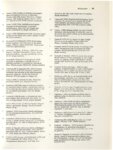
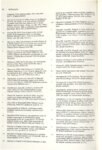
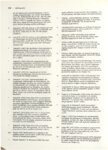
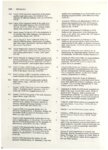
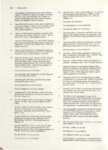
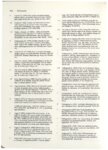
Show 598 I Index Facial nerve palsy (see Corneal damage; Misdirection syndromes) Facial and jaw infections, 1305-6 Facts and fancy in the clinical literature, 1255-63 Familial congenital insensitivity to pain, T38-3 Familial congenital simple anhidrosis, T38-3 Familial dementia with spastic paraparesis, T35-I Familial dysautonomia (Riley-Day) (see Dysautonomic conditions in children) Faradic pupillary reflex, 189, 404; FJ-70; TJ-21 Fatigue and arousal (see also Consciousness; Sleep and awakening) autonomic equilibrium and levels of consciousness, 76-77, 123, 176, 480-81 definition of "fatigue," 480, 490-91; Fl0-7 pupillary behavior during fatigue in healthy individuals in alert subjects, 76, 176, 480, 482; FJ-60, Fl0-1; TJ0-1 during diurnal changes of tiredness, 485-86; TJ0-2 pupillary fatigue waves, 76, 480, 482-85, 1190-91, 1195-96, 1223, 1251, 1381; F2-1, FJ0-2, 3, 4, 5, 6, 11, F14-25, 26, 29-1; T29-1 individual variations of, 77, 483-87, 775; F2-I light reflexes during, 76, 176, 48 l, 1190; F2-1, F3-60, F14-27, F26-2 mechanism of fatigue waves central source of pupil oscillations, 480, 492; FJ0-17, F14-26, 27 efferent mechanism of fatigue waves, 480-81, 491; FJ0-17 similarity among species, 483; FI0-10 similarity among twins, 483; FI0-4 pupils in pathologic fatigue age and fatigue, 77, 176, 481-83, 487, 1190-91, 1195 chronically tired individuals, 481, 483-85, 487; FJ0-5, 6, 14, 16, F26-12; TIO-I general illness and fatigue, 481, 496-97, ll90; FI0-24 (see also Sleep disorders) Filtration angle (see Chamber angle) Fisher's syndrome (acute ophthalmoplegic polyneuritis), 1124 Fixed pupil, 1247 Flatau's neck response (mydriasis), 1247, 1301; T32-13 Flying spot scanner (see Methods for pupil testing) Foix's syndrome, 1247 Forced lid closure (see Lid movements) Fourth cranial (trochlear) nerve, 608-9; Fll-27; Tll-21 Fovillc's (anterior inferior cerebellar artery) syndrome, 1247; F25-1; T25-2, 11 Frey's syndrome (see Gustatory sweating) Friedreich's ataxia, 1352; T35-1 Fuchs's cleft, 33; Fl-2 Fuchs's heterochromic cyclitis, 1247, 1420-36 appearance of ocular defects in early iris discoloration, 907, 1420; T41-l, 8, 14 insidious development of mild inflammatory signs, 1420, 1422-28; F41-1; T41-4, 5, 6, 7, 8 late onset of cataract, 1420; T41-1 occasional mydriasis, distorted pupil, poor pupil reactions, 1420; F16-6; T41-1, 8 proof of iris disease, 1422; T41-5, 8 discovery of syndrome, 1420-22 erroneous theories about the cause of Fuchs's syndrome assumed hereditary nature of, 1433-36; F41-2, 3; 1'41-12, 13 assumed sympathetic dysfunction in, 910-11, 1428-33; F41-2, 3; T41-2, 3, 8, 9, 10, 11 Barre-Lieou syndrome and, 1431 n; T41-JJ status dysraphicus and, 1437-38; T41-14, 16, 19 trophic sympathetic nerves and, 1431-33; T31-11 Fuchs's and Michel's pigment spurs, 6, 23, 417; Fl-2, 12 Fundus glow contamination of stimulus color by, 116; F3-17; T3-6 by tapetum in animals, 116; T3-3, 6 defective fundus or tapetal pigmentation, 1392-94; T39-3, 4 pupillomotor effectiveness of fundus glow, 1394 pupil measurement using fundus glow, 870-71; F3-12, F/5-54 Fusional convergence (see Convergence in near vision) G Galassi-Gifford reaction (see Lid movements) Galen's cover-uncover test, 917, 924 Galen's theory about iris movement, 7-8; Fl-3 Galen's theory about vision, 193; TJ-22 Galvanic pupil response, 189-93; F3-70; T3-21 Gar<;in's syndrome, T42-2 Gasserian ganglion (see Trigeminal nerve) General paresis Argyll Robertson syndrome and, 957, 958, 975, 1266; F19-6 spastic miosis and, 1266-67; F20-4; T31-1, 2, 3 syphilis and, 958, 975, 1266-72; F19-6, F31-6; T31-l, 3, 5, 7, 11, 12 Genetic factors conditions that run in families: see Index references for albinism amyloidoses cervical ribs color deficiencies or blindness cystic fibrosis degenerative diseases (T35-1) dysautonomia dysautonomic conditions in children iris malformations Marfan 's syndrome migraine variants muscular atrophies and dystrophies (T35-4) narcolepsy (see Sleep disorders) night blindness ocular pigmentation, 809-22 psychiatric conditions refractive errors simple central (see-saw) anisocoria (see Anisocoria) simple heterochromia (see Iris color and markings) Waardcnburg's syndrome twin studies on genetic transmission of eye color, 44-45; Tl-17, 19 similarity among twins of iris age changes, 44, 507; Tl0-5 iris detail, 44; Tl-17, 19 light reflexes, 483; FJ0-4, F43-13 pupillary drug sensitivity, 818; Fl4-42; Tl4-36 pupillary fatigue patterns, 77, 483; FJ0-4 pupillary unrest oscillations, 187; F3-68B reactions in cognitive pupil tests, 676 German measles, rubella (see Nonspecific infections, viral) Gianelli's phenomenon (see Tournay's phenomenon) Glare discomfort 107; TJ-4 Glaucoma drug treatment for, using adrenergic agonists and blockers, 1396, 1398-1403; T40-l, 2 anticholinergic drugs, 1396, 1398; 1'40-1, 2 |