| OCR Text |
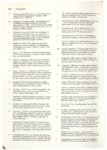
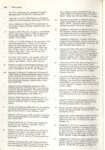
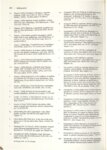
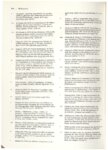
Show Bibliography iris:an electron microscopic study. Amer.J.OphthaL 48:397-417. Tousimis,AJ & Finc,BS (1959) Ultrastructure of the iris: interccllular stromal components. Arch.OphthaL Chicago62:974-976. ' Tous~is,AJ &_Fin~,BS (1961) Electron microscopy of the pigment cptthcbum of the iris. Pp. 441-452 in: The Structureof the Eye. G.K. Smelser, Ed.; New York· Academic Press. · Touzet,-. (1922) Anisocorie d'origine gastrique. Arch. Ophlal,Paris 39:44-48. [Nonsense a la Roque; see Chapter 30.) Tovi,D; Schisano,G & LilieqvislB (1961) Primary tumours of the region of the thalamus. J.Neurosurg. 18: 730-740. [Ocular signs probably due to involvement of the colliculi and midbrain: 1 had no upward gaze, 16 pupils unequal, 14 with dilated pupil reacting poorly or not at all to light; 3 had 3rd nerve palsy.) Towers,SS (1932) The effects of sympathetic denervation of the mammalian tissues during the period of post-natal growth. Amer.J.PhysioL 295-300. [The decentralized superior cervical ganglion did not develop normally; see Chapter 11.) •p Towers,SS (1940) Unit for sensory reception in cornea; with notes on nerve impulses from sclera, iris, and lens. J.Neurophysiol. 3:486-500. cV Tower,SS & Richter CP (1931) Injury and repair within the sympathetic nervous system. I. The pregaoglionic neurons. Arch.Neurol.PsychiaL, Chicago 26:485-495. [See next entries. J Towcr,SS & Richter,CP (1932) Injury and repair within the sympathetic nervous system. II. The postganglionic neurons. Arch.NeuroLPsychiat.,Chicago 28:1139-1149. [Galvanic skin response of cat's paw; Homer's syndrome mentioned; see Chapter 11.) Tower,SS & Richter,CP (1932) Injury and repair within the sympathetic nervous system. III. Evidence of activity of postganglionic sympathetic neurons independent of the central nervous system. Arch.NeuroLPsychial., Chicago28:1149-1152. [Discussion of results of parts I and II (previous entries).] Towle,VL; Moskowitz.A; Sokol,S & Schwartz,B (1983) The visual evoked potential in glaucoma and ocular hypertension: effects of check size, field size, and stimulation rate. /nvest.OphthaL 24:175-183. [Caution that pupils are often small because of use of miotics, and this affects the results; sec Chapters 3 and 15.) MaV Townes,PL (1976) Ectopia lentis et pupillae. Arch. Ophlhal,Chicago 94:1126-1128. (2 brothers.] MaV Towncs-Andcrsoo,E & Raviola, G (1976) Giant nerve fibers in the ciliary muscle and iris sphincter of Macaca mulatta. Cell Tisue Res. 11:33-40. • Townes-Andserson,E & Raviola,G (1981) Development 521 of the blood-ocular barriers in the rhesus monkey (ARVO ~bstract # 29) lnvesLOphthal. 20:78-. . ~o~rad1sh peroxidase study of permeability of the ms mcluded. J * ;ownsencl,D (1930) Ophthabnoplegic migraine. Trans. >phthaL_Soc.U.K 50:642-643. (Case with 3rd and 6th nerves mvolved.J * To~send,J?J & Brubaker,RF (1980) Immediate effect of epmepbnne on aqueous formation in the normal hu~an eye as measured by fluorometry. Invest. Ophthal 19.2_56-266.(Young human eyes: topical doses; no pupil, but outflow increased; see Chapter 40.J Mcv Toyokura,Y (1977) (Argyll Robertson sign (pupil)· Japanese.) Nippon Rinsho 35, Suppl.1:458-459. (ve~. IM, 19, 1978, 4366.) * Tran~s,A_ (1893) Opbtabnoplegie totale et autres complications oculaires dans les polysiousites. Arch. OphtaL,P~ 13:358-362. (Oculomotor palsy with large, fixed pupil; motor functions improved after surgery but was left with visual impairment. J * Trantas,A (1920) Manifestations oculaires dans l'encephali~e lethargique. Gr~ce med. 22:113-115. [30 ca~~• 26 ~th 3r~ or _6thne~e impairment, including m10~1s(wi~ pupil_sstill reacting to cocaine), loss of pupil reactions, distorted pupils.] * Trantas,N (1958) Discussion of a paper by G. Georgiades: "Les informations gooioscopiques dans le syndrome de Fuchs. Acta 43.Concil.ophtal.,Brux. II: 1149-1158; discussion:1157-1158. [Sympathetic deficit or uveitis? Saw fragility of iris vessels; see Chapter 41.) *p Trantas,N (1959) Quelques cas d'atropbie du trabeculum sclerocorneen. Bu/LMtm.Soc.fr.OphtaL 72:73-96. (Pp. 85-96 on: "Heterochromie de Fuchs." Patients bad "iridocyclitis"; no mention of sympathetic; see Chapter 41.) * Trantas,NC (1961) Discussion of a paper by A. Huber: "Das Glaukom bei komplizierter Heterochromie Fuchs." Ophthalmologica,Basel 142: (66-113); discussion:115-. [Saw hemorrhage upon insertion of contact lens; see Chapter 41.) Toussaint,D (1959) Contribution a l'etude du syndrome de_Raeder o~ syndrome paratrigeminale du sympath1que ocula1re. Acta neuroLpsychiat.belg. 59:892-914. V / V Tranzer,JP & Thoenen,H (1968) An electron microscopic study of selective, acute degeneration of sympathetic terminals after administration of 6-hydroxy dopamine. Experientia 24:155-156. (ver. IM, 1968, 9:8705.) [See Chapter 11.) * Traquair,HM (1948) Clinical Ophthalmology for General Practitioners and Students. Sl Louis: C.V. Mosby Co., 264 pp. [See pp. 7, 48-49 for pupil; and :168-169 for iris. J * von Trautvetter,D (1866) Ueber den Nerv der Accommodation. von Graefes Arch.Ophthal 12,1:95-149. [Pupil reactions described: dilation upon cervical sympathetic stimulation; miosis on puncturing the anterior chamber; also described enlarged pupils in a dog who accommodated; but the dog was hungry and was looking at a sausage nearby.] Travers,B (1824) A Synopsis of the Diseases of the Eye, and their TreaJment; to which are Prefixed a Short |