| OCR Text |
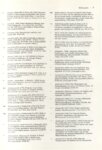
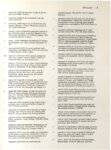
Show 152 I Bibliography * Foix,JA; Chavany-. & Bascourret,M (1925) Syndro~e thalamique avec troubles vegetatifs. Rev.neurol.,Pans 11:124-127.[It's left hemiplegia with right-sided Homer's, mistaken for left-sided stimulation of the sympathetic.] * Foley,J (1953) Cortical blindness and spastic quadri~ paresis following apnoea in an asthmatic attack. (Jomt Meet.,roy.Soc.Med.,Sect. Neurol.& Canad. neurol.Soc., 1 Sept.) Proc.roy.Soc.Med. 47:296-297. (1954) [Pupils and fundi normal.] * Foley,JO (1941) Origin of the nerve fibers in the cervical sympathetic trunk following ablation of its preganglionic axons. Anat.Rec. 79 (Suppl. #2):21-. [Cats; fibers originated in superior cervical ganglion, recurrent postganglionic.] 902; and Brit.Museum Cat. Vol.:18.) [Cited by many authors (Baker, Blumenbach, Budge, Domling, Donders, Drouin, Eckhard, Faber, Gradle, Hirschberg, Leeser, Mazzolini, Raehlmann & Witkowski).] V Fontana,G (1935) Azione de! dory! sulla tensione endoculare e diametro pupillare. (Ricerche clinichee sperimentali). Rass.itaLOttaL 4:640-656. V Fontana,G (1937) Azione dell'estratto epifisario sull'occhio. (Nota preventiva) Lett.oftal.,Pistoia 14:4346. [Pupils mentioned.] * Fontana,G (1948) Azione della prostigmina sulla tensione endoculare e diametro pupillare. Arch.Otta/. 52:165-181. * Foote, WE; Pierce,ET & Edwards,DL (1979) Projections from the retina to the nucleus raphe dorsalisin the cat: an autoradiographic study. Anat.Rec. 187:580-. [See Chapters 3 and 4.] • Forbes,A & Morison,BR (1939) Cortical responsesto sensory stimulation under deep barbiturate narcosis. J.Neurophysiol. 2:112-128. [No pupil; see Chapter 9 on central integration.] * Foley,JO (1945) The components of the cervical sympathetic trunk with special reference to its accessory celJs and ganglia. J.comp.Neurol. 82:77-91. [Cats; very interesting paper.] * Foley,JO & Du Bois,FS (1940) A quantitative and experimental study of the cervical sympathetic trunk. J.comp.Neurol. 72:587-603. [Cats, dogs, rats.] •o Folk,JC; Thompson,HS; Farmer,SG; O'Gorman,MS & Dreyer,RF (1987) Relative afferent pupillary defect in eyes with retinal detachment. Ophthal.Surg. 18:757-759. • Ford,FR (1924) Cholesteatoma of the third ventricle, with bilateral Argyl] Robertson pupils. J.amer.med.Ass. 82: 1046-1047. * Folk,JC; Thompson,HS; Han,DP & Brown,CK (1984) Visual function abnormalities in central serous retinopathy. Arch.Ophthal 102:1299-1302. [Pupils included.] • * Folk,ML (1926) Ocular disorders in encephalitis epidemica. Amer.J.Ophthal 9:677-679. Ford,FR (1929) Degeneration of the cerebral cortexin the course of pertussis. Amer.I.Dis.Child. 37:1046-1050. [Did not respond to visual stimuli; pupils large, reacted well to light; autopsy showed gross loss of cortical neurons in all areas, including occipital.] * Folkow,B & von Euler,US (1954) Selective activation of noradrenaline and adrenaline producing cells in the cat's aderenal gland by hypothalamic stimulation. Circulation Res. 2:191-195. [See Chapter 6: variable content of the two hormones from stimulation of different hypothalamic sites.] * Ford,FR (1933) Paroxysmal lacrimation during eating as a sequel of facial palsy (syndrome of crocodile tears). Report of four cases with a possible interpretation and comparison with the auriculotemporal syndrome. Arch.Neurol.Psychiat.,Chicago 29:1279-1288. (See Chapter 11.] *p Folkow,B & Hamberger,CA (1956) Characteristics of sympathetic neuro-effectors in man. J.appl.Physiol 9: 268-270. [Electric stimulation during surgery in man; pupils recorded photographically.] * Ford,FR (1952) Diseases of the Nervous System in Infancy, Childhood and Adolescence. 3rd ed.; Oxford: Blackwell, 1181 pp.; and 6th ed, 1966.) (Pupilsmentioned in several connections throughout the book.] *p FolJin,E & Duplay,S (1875) Maladies des regions. Vol. 4 in: Traite Elementaire de Pathologie Exteme. Paris: G. Masson, 6 Vols. (1861-1888) [Work begun by Follin and continued after his death by S. Duplay who retained Follin's name on title page of each Volume; picture of pupil-measuring device on p. 206.] * Ford,FR & Walsh,FB (1958) Raeder's paratrigeminal syndrome. A benign disorder, possibly a complication of migraine. Bull.Johns Hopkins Hosp. 103:296-298. [Cluster headache; see Chapter 25.] * Ford,FR; Walsh,FB & Jarvis,JA (1937) A case of extensive injury to the cerebral cortex followingnitrous oxide-ether anesthesia. Bulllohns Hopkins Hosp. 61: 246-257. [Pupils reacted well.] • Ford,FR; Walsh,FB & King,A (1941) Clinical observations on the pupillary phenomena resulting from regeneration of the third nerve with especial reference to the Argyll Robertson pupil. Johns Hopkins Hosp.Bull 68:309-318. (Misdirection dyskinesia.] *p * CV Follin,FAE (1863) Lec;ons sur /'Exploration de l'Oeil sur les Applications de l'Ophtalmoscope au Diagnostic des Maladies des Yeux. Paris: A Delahaye, 304 pp. [Pupils dealt with pp. 14-22; Pupillometer was a simple row of black dots, 2-8 mm.] Fontaine,M (1952) Les symptomes oculaires de la myasthenie. Arch.Ophta~Paris 12:157-169. ("Never found" changes in pupil reflexes, but accommodation was involved.] Fontana,F (1765) Dei moti dell'iride. Lucca: Nella stamperia Jacopo Giusti, 106 pp. (ver. Ind.Cat. 2S 5: • Ford,FR & Woodhall,B (1938) Phenomena due to . misdirection of regenerating fibers of the cranial,spmal and autonomic nerves. Clinical observations.Arch.Surg., Chicago 36:480-496. [See Chapter 11.] |