| OCR Text |
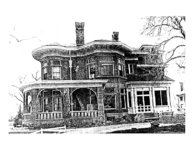
Show GENERAL LIFE SAFETY into the front entrance. In addition to the specific items discussed above, the following general recommendations are noted: The access or clearance on either side of the doors is Modification of all doors that serve an occupant load of also an issue. Doors that have both a latch and closer SO or more to swing in the direction of exit travel. are required to have 18"clear adjacent to the door Location of exit signs to be clearly visible from the on the latch side of the door when it is being pulled, primary corridors and show the direction and entry to and 12" on the latch side of the door when it is be- the exit doors or the egress stairways. ing pushed. If the door lacks the closer or the latch it Seismically brace all mechanical andlor suspended ceiling systems that will remain in the building. only has to comply with the pull side requirements. In addition. depending on the approach, a clear space of 48 or 60 inches is required directly in front of the door. Seismically brace all parapets, cornices, or large orna- The areas noted for having the most problems were mental stone work that could pose a potential falling entrances into the rooms from the corridors. In some hazard. cases, the required clear space is not possible given All accessories around the sink should be mounted None of the room signs or exit directional signs meet within required reach requirements. accessibility requirements_All room identification In the men's restroom at least one urinal should be mounted at 17" and have a clear space of 30x48 inches. the narrowness of the historic corridors. Braille. Rooms specifically required to have accessible ACCESSIBILITY IN RESIDENTIAL OCCUPANCIES signs are restroom, conference rooms, exit stairs, the Depending on the use of the building the following elevator, and doors into the different departments. discussion focuses on accessibility for a residential use. The current code states for R-1 occupancies that ~Where or added, the requirements. . for accessible or Type A units and. . for accessible alarms apply:' (lSC 2006, 3409.8.7) Specific to the R-1 occupancy, 1 accessible 4 or more dwelling or sleeping units intended to be ACCESSIBLE RESTROOMS IN PUBLIC SPACES ON MAIN LEVEL physical disabilities as "the inability to walk, difficulty There is a small restroom on the main level and a larger walking, reliance on walking aids, blindness and restroom on the second level in the historic mansion visual impairment, deafness and hearing impairment, that do not meet the current requirements for acces- incoordination, reaching and manipulation disabilities, sible restrooms. The primary recommendations for the lack of stamina, difficulty interpreting and reacting to public restrooms on the main level are as therefore as sensory information, and extremes of physical size." follows: (ANSI 117.1-98, 1) occupied as a residence, every dwelling and sleeping unit ... shall be a Type B unit." (IBC 2006, 1107.6.1.2) bUilding accessible to and usable by people with such units should comply with the minimum clear widths required, "Doorways shall have a clear opening of 32 inches (8l 5 mm) minimum. Clear opening of doorways with swinging doors shall be measured between the face of door and stop~(ICC/ANSI Al17.1-1998, 404.2.3) The following recommendations should be considered: With the assumption that all restrooms will be rebuilt, All portions of the building that are public or accessible stroom), for each restroom that meets the size requirements for accessibility (56x60 inches). to the public are required to be accessible. To be acces- The placement of the toilet is to be lS"from the side sible to all levels of the bUilding, access into the build- wall to the center of the toilet. ing and to all public spaces in the building is required. Grab bars are to be provided behind (36") and on the Areas such as janItor's closets, mechanical rooms, and attic and basement spaces are not required to be accessible. The primary accessibility deficiency that was noted is the lack of an elevator. The majority of the wall side ofthe toilet (42'1. handles on both sides of the door. The latch is to be lever style. door hardware in the building is knob style. All door hardware to spaces considered public is required to The supply and waste plumbing under the sinks are to be lever style. Accessibility upgrades into the building be insulated. should be evaluated. An inconspicuous ramp could be The mirrors are to be mounted no higher than 40~ installed that meet all accessibility requirements. Since they are in the corridors, they need to be installed so as not to be considered an obstruction. The easiest way to accommodate this is to recess the fountain so that a maximum of4"i5 protruding from the face of the corridor wall. An alternate option is to provide a wing wall. LIFE SAFETY RECOMMENDATIONS The egress system of a bUilding includes elements such as stairs, corridors, exit signs, lighting, doors, and hardware. The stairs and corridors should be upgraded to comply with current code and meet fire rating, smoke control requirements, and collapse prevention these systems are existing, further study should be as part of the individual room restorations, at least one made to determine what upgrades are required (if any) fully accessible unit should be prqvided on each of the to make these systems work at the desired fire rating 2nd and 3rd floors for a total of two accessible units as level. The general recommendations should include defined by ICC/ANSI A 117.1-1998. (Please see Appen- upgrading to code mandated fire rated assemblies dix 2 for further specification on Type liN Units) as required, however. Any penetrations in rated wall exception of the accessible units as described above assemblies are to be rated assemblies (1 -hour for stairs. and 20 minute for corridors), this includes doors and should be Type B units as defined by ICCIANSI All?l- jambs. 1998. (Please see Appendix 2 for further specification The doors along egress routes are to swing in the di- on Type '"S'" Units) rection of egress travel and are to have hardware that allows use of the door without any special knowledge installed to the large porch which would allow access 52 in the building. New drinking fountains should be requirements. Since the walls and ceilings for both of With the assumption that all restrooms will be rebuilt All residential dwelling and sleeping units with the The door to the accessible stall is to be self closing with There are currently no drinking fountains installed Further, the doorways to the individual dwelling provide at least one toilet stall, and urinal (in men's reACCESSIBLE ACCESS AND EGRESS DRINKING FOUNTAINS .. dwelling or sleeping units are being altered ing and Sleeping Units. Futhermore, "in structures with The purpose of accessibility is to make the site and inches above the floor, have raised characters contrasting with the field color of the sign, and have grade II unit is required per Table 1107.6.1.1, Accessible Dwell- ACCESSIBILITY signs should be mounted between 48 inches to 60 CR SII ROOM SIGNS Fisher Mansion HSR. FINAL DRAFT 01-11-10 or device. 53 |