| OCR Text |
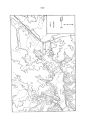
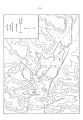
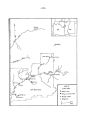
Show -163- travelled through the Southwest in 1867-6 8. Although he, himself, never travelled through Zuni, he published the accounts of members of his expedition that did. They visited the springs at Ojo Caliente, another farming area of the Zunis, and not only failed to mention any irrigation ditches, but also stated categorically that Zunis did not irrigate (1869:224)-. However, in 1881 Captain John Bourke reported (Bloom, 1936:111): this Nutria valley contains I should say about 4,000 A. of arable land. 400 A. being irrigated by ditches laid out with wonderful skill. There is no reason to interpret these two later statements to mean that the Zunis decided to irrigate their grain fields after 1869 and before 1881. Zuni contact with the outside was limited to the American military, who did not interest themselves in the improvement of the Zuni. Rather, the difference is probably due to the fact that Bourke's report is our first observation of the Nutria valley, the most inaccessible farming district. The Nutria springs may also have been the most abundant aquifers, as they were at the turn of the century (interview). They may have been the only springs suitable for irrigation development at that time. Considering all the early reports from the American period, the Zunis probably were practicing ditch irrigation on a very small scale at the close of the colonial period. |