| OCR Text |
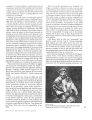
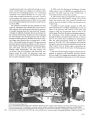
Show outside business had to be conducted through an interpreter. Trotter's plan was to appoint six members, three from each of two contending factions, to a "nominating committee" who would hold office for two years, after which others would be elected every two years. Trotter's system worked well, except the original six members of the nominating committee were in office for over eight years, during which period their members varied from six to two in 1940. The committee consulted with the nominees for their approval, whereupon they informed the k9akwe mossi of their selection. Two names were submitted for governor at a public meeting where the "men stood up" (women, although not officially excluded, did not participate) for the nominee of their choice for governor. The one getting the most standup votes became governor and the other became lieutenant governor. Members of the three outlying villages were consulted for two names each-a total of six-who would become the council. The governor and lieutenant governor had some influence on the choice of their council. The terms of office have varied among one year, two years, and four years. The k9ak"e mossi installed them ceremonially, and they became the yan9uI9ona. The job of governor and councilman was unpaid, except that when "the governor's word was broken," a fine was imposed on the offending individual that was split among the council. In 1958, under the direction of the Bureau of Indian Affairs agent, a salary of $6,000 was established for the governor. The funds came out of the "Tribal Fund," a fund collected from various fines and fees. In 1965 women fully participated for the first time in the election of the tribal council. Voting was by secret ballot, for the first time. The governor's position was salaried, but only on paper for there was no money in the Tribal Fund. A number of major changes occurred in 1970. The Zuni Constitution was ratified, establishing the terms of office of the governor and council at four years and setting a salary for the governor equal to that of the Indian agent. Funds for the salaries, including salaries for the councilmen, were allotted annually to the tribe through the Bureau of Indian Affairs. On July 1, 1970, as part of the overall Zuni comprehensive development plan, the tribal government, based on a federal law passed in 1834 (25 U.S.C. 48), applied for and received the right to control the reservation and all functions of the tribal council with an Indian agent representing the secretary of the interior in the status of tribal programs advisor. It was not until these major changes in salaries that the position of governor and lieutenant governor became actively sought. The changes that started in 1958 when a salary was established culminated in the 1974 elections 490 Pueblo of Zuni, Zuni Archeol. Program, N.M. Fig. 7. Zuni Pueblo Council in the governor's chambers. Members are (left to right): Chester Mahooty, councilman; Dorson Zunie, It. governor; Edison Laselute, governor; Fred Bowannie, councilman; Quincy Panteah, councilman; Chauncey Simplicio, councilman; and Virgil Wyaco, councilman; (Councilman Lowell Panteah not present). Hanging on the wall directly behind them are photographs of Palowahtiwa (taken on the same occasion as "Zuni History, 1850-1970," fig. 4, this vol.) (left) and of Wayhusiwa (fig. 6). Photograph by Barbara J. Mills, Oct. 4, 1978. L A DD |