| OCR Text |
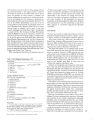
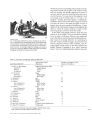
Show final initiation into one of the six mens' groups or kivas (sg. kotikanne) (table 1). The original choice is made by the father or mother at the child's birth, but in future years, for personal or social reasons, a member can change membership to another kiva; membership in one kiva is not binding for life. Women are generally excluded (there was only one female member of the he9i'kwe kiva in the 1930s). Membership in any one of the 12 curing societies {tika-we) (table 1) sometimes called "the cult of the Beast Gods" (Bunzel 1932a:476), is by choice through illness or trespass, and is open to men and women. Although some individuals "quit," membership is usually for life. The 9a-siwani, the Rain Priesthoods (called by Bunzel the cult of the 9uwanammi, which is the ritual term for the rain-bringing beings), of which there are 16, is also open to men and women but is limited by clan affiliation. Membership in the 9a-pi9ki 9a-siwani, the Bow Priesthood (cult of the Gods of War), is limited to male members who have taken an enemy scalp. Each of these organizations performs various ritual and ceremonial rites, both public and secret, throughout the year to assure the spiritual well-being of the tribe (see also "Zuni Religion and World View," this vol.). When a young man joins the kiva he acquires a new set Table 1. Zuni Religious Organizations, 1977 Kiva Groups 1. he9ikwe 2. he9k9apa-kwe (sa-pipi-k*e) 3. cupa-kwe CJ^CS^J 4. muhe-kwe WCIVJJLX-*- 5. 9ohe-kwe 6. 9upc9ana-kwe Curing or Medicine Societies J* jJk'o**lbJ ttu^ Societies of the Completed Path 1. makk 9e Iana-k*e 2. makk9e c9ana-kHe 3. siwana-kwe 4. cikk9ali-kwe 5. 9uhuhu-kwe 6. pesacilo-kwe (3 male members) 7. halo-kwe 8. newe-kwe Other Societies 9. saniyaka-kwe (sutikanne) 10. suma-kwe 11. k9o-si-kwe (2 inactive members in the 1960s) 12. lewe-kwe (2 members) Priesthoods 1. 9a-siwani (16 priesthoods): 6 Daylight Priests, including the Bow Priest (nadir) and the pekwinne (zenith), a position vacant since the 1940s; and 10 Night Priests 2. 9api9ki 9a-siwani (2 members) of "older and younger brothers." The kiva leaders he calls 'father', the older men 'grandfather'. He calls his sponsors 'father' and 'mother', and they call him ca9le 'child'. This relationship is only between the young man and his fellow kiva members and sponsors and does not include any other members of his household, the sponsors' household, or the households of his fellow kiva members. The same pattern is true for membership in any of the other religious or ceremonial organizations (Kroeber 1919:186>r Clan System The Zuni clan system overlaps and interlocks with the kinship and religious systems to enforce, regulate, and, to a degree, control the socioreligious behavior patterns. Every Zuni is born into a clan and is the child of its father's clan. Cushing (1896) recorded 16 active clans in the early 1880s; Kroeber (1919) listed 15 active clans. In 1977 there were 14 matrilineal, totemically named, ex-ogamous clans (table 2) (Kroeber 1919:table 2). The Zuni clan system is in a continual state of flux. Since 1896 there have been nine clans that have become extinct or inactive. Stevenson (1904) reported only one male member in the Antelope clan in 1904. By 1916 when Kroeber was working in the area, it had become extinct. Kroeber (1919) reported only one household for the Yellowwood clan (talupc9rkwe); it became extinct in 1975 when its last member died. Both of these were not subclans but separate and distinct units. Subclans are recognized more frequently in the larger clans. This may have been forced by circumstances as discussed by Kroeber (1919:101), but it may also provide a mechanism for the "creation" of new clans as some die off. Those clans reported as being extinct by Cushing (1896:368) and Stevenson (1904:292) were actually subclans that became inactive or ignored as the clan of which they were a subdivision became smaller and there was no longer any need for them. It is explicit in Zuni teaching that one does not marry anyone from one's own clan, even if the individual is from another lineage segment. This does not mean it has never happened, as Kroeber (1919) records a situation in which the people involved didn't realize their relationship, married, and later found out they were from the same clan. This is an exception rather than the rule. Marriage with members of one's father's clan or their children is severely condemned but does occur. Marriage with members of one's father's household is absolutely forbidden, since such people are blood kin, not merely clan kin. Marriage between subclans, such as Macaw and Crow of the picci'kwe clan, is condemned but does occur. Marriage is an agreement between two people. When a woman welcomes the advances of a man, after a few preliminary meetings, she consults with her mother to make sure the young man is acceptable to the household. 485 Z U N I S O C I A L A N D P O L I T I C A L O R G A N I Z A T I ON |