| OCR Text |
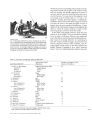
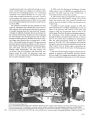
Show 484 Smithsonian, NAA. Fig. 2. Young Zuni girl carrying a small child, probably her younger brother. The boy is held on her back with a wrapped shawl, the usual way of carrying very young children. Photograph by Jesse L. Nusbaum, 1911. papamo, suwemo; kakamo, k9assemo; nanamo, toslemo; 9alemo, 9uwakamo (Newman 1965:62-63; Kroeber 1919:70-71; Bunzel 1930:762). There are some questions concerning the type of kinship system the Zuni have. Eggan (1950:182) says "there is a marked structural resemblance to the Crow type in general and the Hopi system in particular"; Murdock (1949:247, 346) has called Zuni kinship "Normal Crow"; and Schneider and Roberts (1956:22) say the Zuni system "can best be described as 'modified Crow.' " Clarification awaits additional field study. In the center of the system are the true blood kin; peripheral to this are the close clan kin of mother's and father's lineages. As observed by Kroeber (1919), true blood relationship and clan relationship are never confused. Because of this recognition, there are no wrong or incorrect uses of terms. In actual usage, then, the relationship term selected by the user depends on this recognition but it also depends on how close the speaker wishes to bring the person into the circle of kin-blood or clan. "Irregularities" center in the third to fifth degree of remoteness-"that is to say, these irregularities do not center primarily on distant members of Ego's own clan, or Ego's mother's father's clan, but instead seem to occur randomly among all tertiary or more remote relatives" (Schneider and Roberts 1956:12). The rules for selection of available alternate terms for these secondary relatives are entirely dependent on the user's knowledge of the system and the situation. There are no explicit rules or laws but rather broad general guidelines that are implicit in the selection of the "proper" term. Special Kin Terms Kinship terms and their application to the various kin categories have been documented in detail (Kroeber 1919; Eggan 1950; Schneider and Roberts 1956). A few applications still need special attention. It will be noted that there are no special terms for son and daughter. However, there are a number of descriptive terms that apply. In kinship usage (whether male or female speaking) a child in general reference is called ca9le 'child' (pi. cawe). If asked specifically "what do you call your son? your daughter?" the most likely reply would be horn 9akcek 9i and horn kacik9i 'my male child' and 'my female child'. These two terms, 9akcek9i 'boy' and kacik9i 'girl', are probably the only ones that come near to designating 'son' and 'daughter' in the English sense. If the son and daughter are teenagers or the son has undergone his final initiation into the kiva group, the reply would be horn cawak9i and horn 9e9le 'my young male child', and 'my young female child'. After the 9e9le has had a child of her own, she then becomes makk9i 'young woman'. In a very general way a Zuni might say horn 9a'c9an 9a'ci 'my two small children' or horn caw 9a-ci 'my two children'. If the terms ca9le, 9akcek9i, kacik9i, cawak9i, 9e9le, and makk9i are modified by horn 'my', the speaker brings the person spoken of into individual (personal) kin or ceremonial relationship. If the terms are modified by ho9n9a-wan 'our', collectively speaking for the clan, or household, it puts the person spoken of in the distant general clan or ceremonial relationship with the speaker. Children of ego's male clanmates (whether ego is male or female) at, above, and below ego's generation are ego's clan children, called cawe 'children'. The children of the men of ego's father's clan, including ego and ego's brothers and sisters, are the clan children of ego's father. The members of ego's father's clan call ego, their clan child, ca9le 'child' and have a special joking relationship with him; ego calls them taccu and kuku, the terms used for father's brother and sister. Ego and all others that are clan children of the same clan (except brothers and sisters) are cawe to each other and call each other ca 9le. With his father's clanmates that are also blood kin ego has a closer relationship than with those that are not, and with these kin he may use ordinary kinship terms as well as the terms with clan-relationship meanings. Religious Organizations The backbone of Zuni ritual life is the religious and ceremonial organizations. Membership in them cuts across kinship and clan boundaries and is based on individual choice, accident (trespass or illness), and clan affiliation. All male members at age 8 to 12 undergo their L A DD |