| OCR Text |
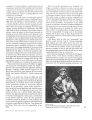
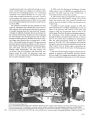
Show protectors. It would be logical to assume that such an organization would have been founded and formed prior to contact when the Zunis lived separately in six or more villages, and this is probably what Kroeber (1919:97) and Cushing (1896:332) allude to as being reflected in the present civil government. Nothing is positively known concerning the origin of the council. However, based in part on traditional knowledge, there was probably a supreme council of 9a-pi9Ia 9a'siwani among the Zunis, instituted by them for their mutual protection when they lived in segregated towns. Their center of activities was probably one of the larger villages, perhaps Hawikuh or Kechipauan, until after 1692 when the Zuni consolidated into a single village at Halona, where the council of Bow Priests continued to function as an arm of the priestly council. Because it was the Head Bow Priest who was the most obvious leader, it was likely he who was appointed as the governor by the Spaniards. A tribal organization was already there in the form of the council of Bow Priests. Certainly this institution has continually undergone change from its original introduction when it probably functioned in its purely native form. The changes instituted by the forces of the Roman Catholic Church and by the Pueblo Revolt in 1680 (Smith and Roberts 1954:28, 29) probably influenced most strongly the formation of the tribal council in its present form. Most observers, both Zuni and non- Zuni, agree that the present form of civil government was instituted by the Spaniards no earlier than the late 1500s and maybe not until as late as 1692 (Smith and Roberts 1954:29). Nevertheless, it is rooted in the native system. There seems to be a fair amount of evidence to suggest that during the mid-nineteenth century the offices of governor and council had become appointive positions. However, Cushing's (1896) accounts suggest that the Bow Priests still had a great influence in civil matters (Smith and Roberts 1954:30-32, 86-89) during this period. There is no doubt that during the 1800s and early 1900s, the interactions with outside cultural forces were increasing; earlier, perhaps under stress from the Spanish administrators, the priestly council had developed a secular government parallel to the existing religious system. In the precontact system, which continues to exist, the priestly council appointed and installed various religious officials at the beginning of each year. The symbol of office was a special feather staff called a telnanne. The appointing priest placed the feather staff in the hands of each appointee, said a prayer, and breathed on the feather staff four times. By this ceremonial installation {yehcuk9a, literally 'to cause to inhale') the priestly council charged the appointees with religious and ceremonial responsibilities for the year. They became the yan9ul9ona 'those who have the responsibility of an office'. When the secular government was instituted, the religious installation ceremony was taken over and used to install the governor and his council, with the substitution of the Spanish governor's cane for the feather staff. This cane was later replaced by the Lincoln cane, given by President Abraham Lincoln, which is still used (fig. 6). The tribal council is called xan9id9ona, originally the term for the appointed religious officials, and the governor is sometimes called 9an9uUa moss9ona 'the head (boss) of the yan9uPona\ The governor is also called ta-pu-pu 'he who blows on wood', an apparent allusion to the blowing on the cane during the oath-taking ceremonies. When the governor is installed, the k9akwe mossi 'House Chief, the head Rain Priest, charges the governor with the responsibility of taking care of his people, whether rich or poor, clean or dirty. He gives him the oath of office (yehcuk9a) to discharge his duties to the best of his abilities. Until about 1692, or after the "reconquest," the priestly council and the 9a-pi9ki 9a-siwani controlled both religious and civil affairs. Some time after this period an individual who could cope with outside matters was selected by the priestly council and installed as governor, probably at first for one year, the same as the various appointed ceremonial officials, and later for more extended periods of time up to four years. This system was changed in 1934 when Zuni Subagent Andrew Trotter of the Bureau of Indian Affairs persuaded the Zunis to accept a new system of selecting the tribal council. At this period there was only a handful of Zunis who could speak English and there was little or no interaction with the Spanish-speaking community. All Smithsonian, NAA. Fig. 6. Wayhusiwa, governor of Zuni in 1923, with cane of office. Photograph by DeLancey Gill, Washington, D.C. 489 Z U N I S O C I A L AND P O L I T I C A L O R G A N I Z A T I ON |