| OCR Text |
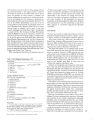
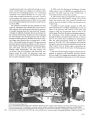
Show I 1=1 J-J-mam - - . . ,.,. ...., •o i r |. fruAwv- •'•-. teccV or J ^«r • . V " \ \ \ \ \ V \ Kfjwo ' • * nana hotia hotta r~^ r~^ ' ^ . ^ *«M> .\ ( ^ y j , \ \ ^»-|A_ -^AA^AAAAAAAAAAAAAAAAAAAAAAAAAA "i \ . J J W * ^ to ^«-A-A-WAJLA-Jiega-AA..V^ A \ VA W», \ e\o\ W» v ~ papa kawu hanni Hon. papa kawu and and hanni hanni A^AAAAAAAAAAAAAAAAAAAAAAAAAAA n The alternate terms for | \ V j Father's clan children : distributed on the same pattern as those for parallel i • Mo | Mother's clan childn o-older than ego's parents y- younger than ego's parents Fig. 1. Zuni kinship terminology and clan relationships, top, Male ego; bottom, female ego. The text explains the extension of kinship terms to relatives here unlabeled. See also Eggan 1950:figs. 11-12. degree to faults in data collecting and interpretations). To the users of the system, there are no "wrong," "incorrect," "irregular," or "inconsistent" usages. Standing at the center of his universe, which is determined at birth, the individual is keenly aware of his relationships. Although he does not separate them overtly with separate terms of identification, he is never confused among blood kin, clan kin, and ceremonial or religious relationships (Kroeber 1919:73). He is aware of the broad outlines of the total system that includes the entire village. He relates to this broader universe by reference to the basic system. And, perhaps because of the short life expectancy- prehistorically perhaps 40 to 50 years-there was never any real need to classify or identify beyond the mother's mother and father's mother. Kinship Terms The Zuni kinship terms are used to designate not only blood kin and relatives by marriage but also clan kin and ceremonial relatives. The basic applications of the 16 terms used for blood Z U N I S O C I A L A N D P O L I T I C A L O R G A N I Z A T I ON kin are given on the kinship charts (fig. 1) (compare Kroeber 1919:178-179); superimposed here are boundaries for the mother's and father's clan and for the "children of the (mother's) clan" and "father's clan children," which may bring into sharper focus the terminology applied to certain categories of relatives. Of these terms all but wowo 'father's mother' are also used to designate clan kin; the specific usages depend on the relative ages and personal closeness of the individuals concerned. The terms for relatives by marriage are ^ulani 'daughter-in-law', t«T*kV 'son-in-law', cilu 'mother's brother's wife', and ^inniha 'step-mother'. There are also extended uses of 9ulani and cilu, and there is a term hassi applied to women older than one's mother of relatively distant blood or clan relationship. Ten of the kinship terms are used to designate ceremonial relatives: taccu, citta, kaka, hotta, nana, kawu, papa, suwe, hanni, and tale. Five of these together with three terms not otherwise in use occur with a suffix -mo in a series of reciprocal terms of address used by the two participants in a certain smoking ritual: taccumo, talemo; 483 |