| OCR Text |
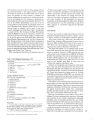
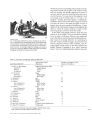
Show Zuni Social and Political Organization EDMUND J. LADD The Zuni social, religious, and political system, with its strong interconnections to the ceremonial and religious cycles and to the kin and clan system, is a complex structure that has occupied scholars and defied interpretation by them since the 1890s. Kroeber's (1919) and Eggan's (1950) are perhaps the outstanding works on the subject. Earlier studies of Zuni life by Cushing (1896) and Stevenson (1904) add historical perspective. More recent studies have added some new data and some reinterpre-tation of old data. What follows is a brief resume of these sources from my own perspective as a Zuni. When contacted by Francisco Vasquez de Coronado in 1540, the Zunis occupied six villages along the Zuni River and its tributaries. Events after 1680, the year of the Pueblo Revolt, and the Spanish "reconquest" in 1692 led to their consolidation into a single village at halona'wa.* In the 1970s there were also four outlying farming villages, which were occupied during the spring and summer growing season. The basic economic activities in order of their importance are: arts and crafts, especially silversmithing; wage work both on and off reservation; stock raising, mainly sheep and cattle; and agriculture. The mother's household is the social, religious, and economic unit. Normally, it is composed of a maternal lineage segment: an older woman, her sisters, and the married and unmarried daughters to which from time to time are added various male relatives and in-laws. In the 1970s the maternal household was still the social and religious center of the family. However, the economic base and the makeup of the household have changed. Male members who join the household bring into it well-developed skills and knowledge by which they gain immediate status. In most cases, husband and wife have skills (usually silversmithing) by which they can support their family and become independent of the household early in life-something that took years of planning and preparation under the old system. And, because heads of families gain more and better assistance from the state and federal social services, there is a tendency toward separation from the maternal household. Although young people move away from their maternal household * The translations and interpretations from Zuni to English in this chapter are my own as a native speaker. The orthography used is that 482 of Newman (1965:12-15; "Sketch of the Zuni Language," vol. 17). early, they maintain strong ties with their respective households to which they return for all major social and religious occasions. Socioreligious Organization The Zuni socioreligious system is composed of four interlocking subsystems, each operating independently yet synchronically to provide for the physical and psychological needs of the users. Superimposed one upon the other are the clans (^annotvwe), the kiva groups (9upa-we, which together make up the kotikanne 'Kachina Society'), the curing societies {tika-we; sg. tikanne), which include the eight Societies of the Completed Path (9ona-ya- naka tika-we), and the priesthoods (9a-siwani 'Rain Priests' and ^a-pi^la 9a-siwani 'Bow Priests') (tables 1-2). Of the Rain Priests, 6 are Daylight Priests and 10 are Night Priests; counted as Daylight Priests are the Head Bow Priest, as the priest of the nadir, and the pelcinne siwani 'spokesman priest', the priest of the zenith and generally referred to in English as the Sun Priest. In 1978 the office ofpekwinne had been vacant since the 1940s and there were only two Bow Priests. Underlying, welded, and cross-tied to these four systems is the kinship system. A child is born into the system. At birth its position is established within the kin-clan group (fig. 1). What it is called, how it will call others, and who it cannot or can marry are established. Position at birth determines future behavior and how others will behave toward the child. It belongs to its mother's household where its greatest responsibilities and loyalties will lie, and it belongs to its mother's clan, which immediately establishes certain behavior patterns and also, to some degree, determines what positions of responsibility it will hold in the religious system. It is a 'child of its father's clan, a relationship that determines future behavior and responsibilities toward the members of its father's household and father's clan, who will provide support in various religious and life crises. Within the limits of the foregoing framework is the nucleus of a system (fig. 1) that is well understood by the users. The "irregularities" and "inconsistencies" in the system noted by students (Schneider and Roberts 1956:3, 4) are in the areas of "extended usage" beyond the limiting boundaries of the nucleus (they are also due to a |