| Title |
John E. Osguthorpe, Salt Lake City, Utah: an interview by Becky B. Lloyd, June 24, 2004: Saving the Legacy tape no. 667 |
| Alternative Title |
John E. Osguthorpe, Saving the legacy: an oral history of Utah's World War II veterans, ACCN 2070, American West Center, University of Utah |
| Creator |
Osguthorpe, John E., 1916-2010 |
| Contributor |
Lloyd, Becky B.; University of Utah. American West Center |
| Publisher |
Digitized by J. Willard Marriott Library, University of Utah |
| Date |
2004-06-24 |
| Date Digital |
2015-12-16 |
| Access Rights |
I acknowledge and agree that all information I obtain as a result of accessing any oral history provided by the University of Utah's Marriott Library shall be used only for historical or scholarly or academic research purposes, and not for commercial purposes. I understand that any other use of the materials is not authorized by the University of Utah and may exceed the scope of permission granted to the University of Utah by the interviewer or interviewee. I may request permission for other uses, in writing to Special Collections at the Marriott Library, which the University of Utah may choose grant, in its sole discretion. I agree to defend, indemnify and hold the University of Utah and its Marriott Library harmless for and against any actions or claims that relate to my improper use of materials provided by the University of Utah. |
| Spatial Coverage |
Hawaii; New Hebrides; Guadalcanal, Solomon Islands; Australia; Admiralty Islands, Papua New Guinea; Philippines |
| Subject |
Osguthorpe, John E., 1916-2010--Interviews; Veterans--United States--Biography; World War, 1939-1945--Personal narratives, American; World War, 1939-1945--Naval operations, American; World War, 1939-1945--Aerial operations, American |
| Keywords |
Ammonium sulfate; Fertilizer; Sugar; Aviation mechanics; Gunnery; Marksmen; Flight crews; Reconnaissance |
| Description |
Transcript (61 pages) of an interview by Becky B. Lloyd with John E. Osguthorpe on June 24, 2004. From tape number 667 in the "Saving the Legacy" Oral History Project |
| Collection Number and Name |
Accn2070, Saving the Legacy oral history project, 2001-2010 |
| Abstract |
Osguthorpe (b. 1916) joined the Air Corps in April 1942, took training at Moffitt Air Base, dropped from the pilot training program and was discharged. He joined the Navy and was stationed in Hawaii as an aviation chief machinist's mate as part of a land-based heaving bombing squadron. He served in the New Hebrides, Guadalcanal, Australia, the Admiralty Islands, and Samar. Interviewed by Becky Lloyd. 61 pages. |
| Type |
Text |
| Genre |
oral histories (literary works) |
| Format |
application/pdf |
| Extent |
61 pages |
| Language |
eng |
| Rights |
 |
| Scanning Technician |
Mazi Rakhsha |
| Conversion Specifications |
Original scanned with Kirtas 2400 and saved as 400 ppi uncompressed TIFF. PDF generated by Adobe Acrobat Pro X for CONTENTdm display |
| ARK |
ark:/87278/s6j40vm8 |
| Topic |
Personal narratives--American; Veterans; World War (1939-1945); Military operations, Naval--American; Military operations, Aerial--American |
| Setname |
uum_slohp |
| ID |
1034974 |
| Reference URL |
https://collections.lib.utah.edu/ark:/87278/s6j40vm8 |
| Title |
Page 54 |
| Format |
application/pdf |
| Setname |
uum_slohp |
| ID |
1034966 |
| OCR Text |
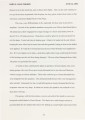
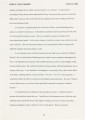
Show JOH E. 0 GUTHORPE J 24 2004 On the hanger deck were rows and rows of bunks tack d thr r £ ur high with very little room. I was far less crowded. In fact ours were only one stack high with a reading room attached. Meals were only served twice a day as it took hours to feed them all on the ship. The officers' quarters were much bigger and the meals, I assume, were a little better quality than the enlisted or non-commissioned mess hall. The ship took the great circle route way by the north pole, a route known for its fierce winds and weather but it was almost a week faster than through a southern more calm sea. A couple of days out, the weather worsened; the ship was taking water over the flight deck as it dove and rose in the troughs of the sea. The waves hammered the sides of the hanger deck, which was not waterproof. The decks were occasionally awash with water. The sailors, soldiers, and marines on this deck could only stay on their bunks to avoid the water or stay below decks with the hatches battened down. Sometimes we stood to eat, holding a plate in one hand and hanging on with the other between bites of food. Most of those on the hanger deck were only given sandwiches and fresh fruit. Occasionally, I'd lie on my bunk flat on my back with my feet and arms hooked under the six-inch side rails around the bunk to keep from being thrown to the deck. I did not venture above the hanger deck to see how the men were doing but it must have been horrible. We finally arrived in San Francisco and were bussed to Camp Carpenter where they were processing sailors for discharge and transportation day and night. After about three days, the camp was mostly empty. When I asked, "What about me?" They only replied, "We can't find any orders for you." On the fourth day, a young lieutenant JG said to me, "If you are going to get home for Christmas, you must leave today. I will 54 |
| Reference URL |
https://collections.lib.utah.edu/ark:/87278/s6j40vm8/1034966 |