| Title |
Arthur A. Astle, North Ogden, Utah: an interview by Winston P. Erickson, July 16, 2003: Saving the Legacy tape no. 516 |
| Alternative Title |
Arthur A. Astle, Saving the legacy: an oral history of Utah's World War II veterans, ACCN 2070, American West Center, University of Utah |
| Creator |
Astle, Arthur A., 1915-2008 |
| Contributor |
Erickson, Winston P., 1943-; University of Utah. American West Center |
| Publisher |
Digitized by J. Willard Marriott Library, University of Utah |
| Date |
2003-07-16 |
| Date Digital |
2015-12-16 |
| Access Rights |
I acknowledge and agree that all information I obtain as a result of accessing any oral history provided by the University of Utah's Marriott Library shall be used only for historical or scholarly or academic research purposes, and not for commercial purposes. I understand that any other use of the materials is not authorized by the University of Utah and may exceed the scope of permission granted to the University of Utah by the interviewer or interviewee. I may request permission for other uses, in writing to Special Collections at the Marriott Library, which the University of Utah may choose grant, in its sole discretion. I agree to defend, indemnify and hold the University of Utah and its Marriott Library harmless for and against any actions or claims that relate to my improper use of materials provided by the University of Utah. |
| Spatial Coverage |
Hawaii; Saipan, Northern Mariana Islands; Tinian, Northern Mariana Islands; Philippines; Okinawa, Japan |
| Subject |
Astle, Arthur A., 1915-2008--Interviews; Veterans--Utah--Biography; World War, 1939-1945--Personal narratives, American; World War, 1939-1945--Military operations, American; World War, 1939-1945--Campaigns--Pacific Area--Personal narratives, American; Leyte Gulf, Battle of, Philippines, 1944--Personal narratives, American |
| Keywords |
Great Depression; National Guard |
| Description |
Transcript (59 pages) of an interview by Winston P. Erickson with Arthur A. Astle on July 16, 2003. From tape number 516 in the "Saving the Legacy" Oral History Project |
| Collection Number and Name |
Accn2070, Saving the Legacy oral history project, 2001-2010 |
| Abstract |
Astle (b. 1915) was born in Montana. He discusses his childhood and the Depression. He joined the 222nd Field Artillery Utah National Guard Unit and took training near San Diego, California; Fort Lewis, Washington; and later at Stoneman, California. He shipped to Hawaii onboard the USS Republic and was based in Maui at the message center. Shipped to Saipan and Tinian for combat and later fought in Leyte and finally Okinawa. Following his discharge, he worked for Standard Oil, and in other oil-related industries. Interviewed by Winston P. Erickson. 59 pages. |
| Type |
Text |
| Genre |
oral histories (literary works) |
| Format |
application/pdf |
| Extent |
59 pages |
| Language |
eng |
| Rights |
 |
| Scanning Technician |
Mazi Rakhsha |
| Conversion Specifications |
Original scanned with Kirtas 2400 and saved as 400 ppi uncompressed TIFF. PDF generated by Adobe Acrobat Pro X for CONTENTdm display |
| ARK |
ark:/87278/s68h0nsb |
| Topic |
Personal narratives--American; Veterans; World War (1939-1945); Leyte Gulf, Battle of (Philippines : 1944) |
| Setname |
uum_slohp |
| ID |
1026929 |
| Reference URL |
https://collections.lib.utah.edu/ark:/87278/s68h0nsb |
| Title |
Page 45 |
| Format |
application/pdf |
| Setname |
uum_slohp |
| ID |
1026914 |
| OCR Text |
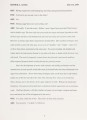
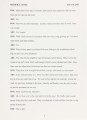
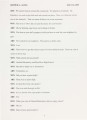
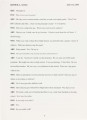
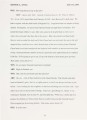
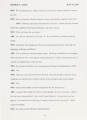
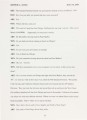
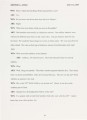
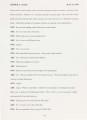
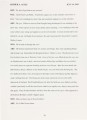
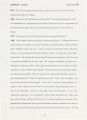
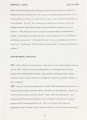
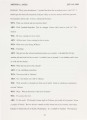
Show ARTHUR A. ASTLE J L 1 20 gumbo. The American offen ive ground to a halt. Fin all , toward · th end of May the rain began letting up, the roads dried and the Gls began moving forward again into the teeth of the Japanese defenses. Time and again Gls would storm a hill or piece of high ground, at great cost, only to be blown back off by Japanese counter-attacks and artillery fire from surrounding Japanese strong points. The next day the same battle would repeat itself Fresh troops were brought up, but still the Japanese defenses refused to break. Finally cave by cave, the Gls began to overwhelm the outflanked Japanese in their positions. The Japanese fell back to their last defensive line, which finally fell in the third week of June. ] WIN: You had quite a battle. ART: We did. I don't know how many divisions the Japane e had on that island, but it was terrific. They laid in wait until we got all our forces on the island. Then it rained for thirty days and we didn't do anything. But when the rains lifted, boy oh, boy, all hell broke loose. The J aps really killed a lot of our men on Okinawa. WIN: You went with the National Guard and a lot people that you knew. Did many of your friends die? ART: In mine? Not really. We ran into a lot of our comrades who'd been shot but we were very fortunate; the artillery was always behind the infantry. Things were pretty quiet. [Editor's note: The main US landing force on Okinawa was the US Tenth Army under Lt. General Simon B. Buckner, Junior. The two main subordinate formations of the Tenth Army were the US Army XXIV Corps and the Marine III Amphibious Corps (IliAC). The XXIV Corps comprised the Corps Artillery and four infantry divisions. The XXIV Artillery, under Brigadier General Josef R Sheetz, consisted of three artillery groups ( 419th Field Artillery Group, 420th Field Artillery Group and I 44th Coast 45 |
| Reference URL |
https://collections.lib.utah.edu/ark:/87278/s68h0nsb/1026914 |