| Title |
Robert E. Thayer, Salt Lake City, Utah: an interview by Becky B. Lloyd, December 3, 2002: Saving the legacy tape no. 552 and 553 |
| Alternative Title |
Robert E. Thayer, Saving the legacy: an oral history of Utah's World War II veterans, ACCN 2070, American West Center, University of Utah |
| Creator |
Thayer, Robert E., 1916- |
| Contributor |
Lloyd, Becky B.; University of Utah. American West Center |
| Publisher |
Digitized by J. Willard Marriott Library, University of Utah |
| Date |
2002-12-03 |
| Date Digital |
2015-09-16 |
| Access Rights |
I acknowledge and agree that all information I obtain as a result of accessing any oral history provided by the University of Utah's Marriott Library shall be used only for historical or scholarly or academic research purposes, and not for commercial purposes. I understand that any other use of the materials is not authorized by the University of Utah and may exceed the scope of permission granted to the University of Utah by the interviewer or interviewee. I may request permission for other uses, in writing to Special Collections at the Marriott Library, which the University of Utah may choose grant, in its sole discretion. I agree to defend, indemnify and hold the University of Utah and its Marriott Library harmless for and against any actions or claims that relate to my improper use of materials provided by the University of Utah. |
| Spatial Coverage |
Wales |
| Subject |
Thayer, Robert E., 1916- --Interviews; World War, 1939-1945--Personal narratives, American; Veterans--Utah--Biography |
| Keywords |
Group Communications Officer; Schweinfort; D-Day |
| Description |
Transcript (57 pages) of an interview by Becky B. Lloyd with Robert E. Thayer on December 3, 2001. This is from tape numbers 552 and 553 in the "Saving the Legacy Oral History Project |
| Collection Number and Name |
Accn2070, Saving the Legacy oral history project, 2001-2010 |
| Abstract |
Robert Thayer was born in 1916 in Salt Lake City, Utah. Drafted in 1942, he served as a communications officer in the 381st Bomb Group in Wales and received a Bronze Star. 57 pages. |
| Type |
Text |
| Genre |
oral histories (literary works) |
| Format |
application/pdf |
| Extent |
57 pages |
| Language |
eng |
| Rights |
 |
| Scanning Technician |
Mazi Rakhsha |
| Conversion Specifications |
Original scanned with Kirtas 2400 and saved as 400 ppi uncompressed TIFF. PDF generated by Adobe Acrobat Pro X for CONTENTdm display |
| ARK |
ark:/87278/s6mw4gc9 |
| Topic |
Personal narratives--American; Veterans; World War (1939-1945) |
| Setname |
uum_slohp |
| ID |
1025183 |
| Reference URL |
https://collections.lib.utah.edu/ark:/87278/s6mw4gc9 |
| Title |
Page 12 |
| Format |
application/pdf |
| Setname |
uum_slohp |
| ID |
1025134 |
| OCR Text |
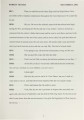
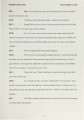
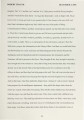
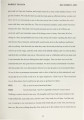
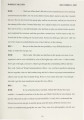
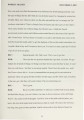
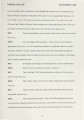
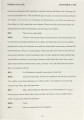
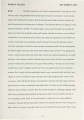
Show ROBERT THAYER B 2 2 strictly physical. We did drill, we played basketball out in the sun in the op n. I 11 t 11 you by the time my orders come through I was in real good shape (laughs). And I was happy for it because the cadet training was quite rigorous too. But I didn't have any problem with any of the physical activity, and I did very well in the class too. BEC: Now I was just trying to think, while we were talking, you were in your upper twenties by then, weren't you? ROB: BEC: Yes, when I went in the service I was twenty-six. That's pretty old. That was probably older than most of the men you were with. ROB: Yeah. I was older than most of the draftees and the people-though, they took quite a few of my buddies up there. At the time I was at Fort Douglas I had several of the fellows I played ball with downtown up there. BEC: ROB: BEC: So it wasn't really unusual, there were just more younger guys? Yeah. They were taking anywhere from eighteen to thirty. Of course, now when we talk about that, the difference between twenty-one and twenty-six is just nothing, isn't it? ROB: It is to me now (laughs). But after I got my orders to go to Scott Field-and I went all alone; there wasn't another cadet going to Scott Field from hereso I was on the train all alone, and went back to Scott Field. I think right about then you start becoming a man and losing what boyhood you had because you're all alone, and you're on your own, and you don't have anybody to look out for you. You look out for yourself and you try to do the best you can. BEC: So then do I understand that while you were based at Fort Douglas you didn't live at home with your wife? 11 |
| Reference URL |
https://collections.lib.utah.edu/ark:/87278/s6mw4gc9/1025134 |