| OCR Text |
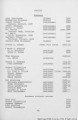
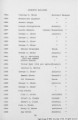
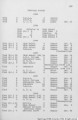
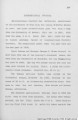
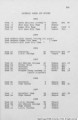
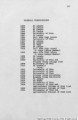
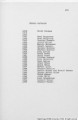
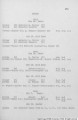
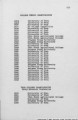
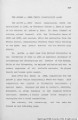
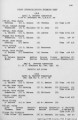
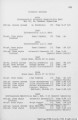
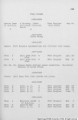
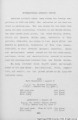
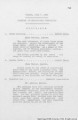
Show maay . Initiation feas and dlles paid to the Ath letic Association and liberal contributions by students and faculty members were not sufficient to finance satisfactorily an athletic program . An unfenced athletic field made it impossible to charge an admission fee to athletic contests . The Athletic Association had to erect a fence and bleach-ers and charge admission . HoY/ever , the small admission fee of twenty- five cents , even with a good attendance in those days, was not enough to equip football and baseball teams. In order to raise funds, the Athletic Association , whose officers and members were among the outstanding students of the University , sponsored various kinds of entertairunents and dances. These were very well attended , and of the highest class that could be found in the city . The Salt Lake Theater was often used where a large dance floor was laid i n the parquet , thus affording ample space for a largely attended dance . At times , SOcial Hall was used , and later, Christensen ' s Dancing Hall. ing the years 1894 to 1900 appear constantly, urging students and members of the Athletic Association to pay - their dues . Others are urged to jOin: members of the Athletic Association and ha ve not paid their initiation fees or dues are requested to call upon Professor Cummings, Treasurer of the Association , as soon as possible , and pay up . The Association is in dire need of funds . " Chronicle, January 22 , 1895. "Pay your dues to the Athletic Association if you do not wish to be deprived of your membership in the gymnasium classes . " Chronicle, Harch 18, 1895 . "It is gratifying to note the success of the enter-tairunents given by the Athletic Association. Both the dancing reception of Thanksgiving Eve and the football game helped to lift the Association out of financial difficulties." Chronicle, December 10, 1895. "The Athletic Association made about seventy-five dollars from the game . Another such will clear the debt." Chronicle, November 17 , 1896. "The Athletic Association , though in a better financial condition than at any time since it began to deal in finances , is still unable to make a single purchase ot bats , balls or suits until more students join and the present members pay their dues ." Chronicle, April 13, "Join the Association . You ' ll never regret it ." Chronicle, February 9, 1895. $59 . 00 . Of this , $42 . 00 Is an old debt , and $17 . 00 bas been incurred this year. Preparations are being clear off this debt by the end of this year." Chronicle, January 25 , 1898. Theodore Nystrom and Barnard J. Stewart , officers of the Athletic Association, signed a note for .)500 and ob tained materials from the Taylor- Armstrong Lumber Company to build bleachers for the spectators and a fence to enclose the athletic field . The students leveled the field and cut down a few large trees. The cutting down of these trees angered the Superintendent of the School for the Deaf , (The School for the Deaf occupied one building on the University grounds . ) and Mr. Nystrom and Mr . Stewart had to explain their acts to the President of the University . They were mildly rebuked . The players built the field by obtaining ashes from the railroad a block away . These ashes were used as a foundation . Sand was spread over this material to make a softer surface . i'hus, the The football goa l posts were at the east and west ends, often a great disadvantage on a sunny afternoon to one or Committee of the Athletic Association met last Thursday to take action on the purchasing of suits, stockings, and other supplies for the football bOYS, and it was decided to obtain the best ma terial possible in order that boys may be fully equipped for the coming season." Chronicle, October 13, IS97 . To purchase the best material meant more expense . From that day in October , ISg?, until the present time , University teams have always been well eQ.uipped, thus affording , especially the football teams , the best kind of protection . The year 1900 brought many changes . The arrival of the new coach , Harvey R. Holmes , was a great historical event . The salary was $1200 . 00 and be was to coach all athletic teams and teach two classes in mathematics . Athletic programs were expanded. Football and track teama were brought to salt Loke City from Nevada and Colorado , thus adding to the financial problems of the Athletic Council . The University had just moved to the East Bench. There was no athletic field and so football games were played on Walker ' s Field downtown ct 9th South and Main Street . These games off the campus were not conducive to student body enthusiastic support although the town atter.dance increased somewhat . The Athletic Association bad difficulty in raising funds to layout the new athletic field . However , the young and enthusiastic Mr . Holmes had the dependable, enor5etic and loyal Professor Byron Cur.unings and an Athletic Council of rice red by cap- The remarkable and outstanding athletic Digital lmage C 2006, UniversityofUtlh. All rigllts reserved manager , George C. Riser, knew how to make money and keep it for the Athletic Association. During his term of office , 1897- 1905 , the a t hletic programs continued to expand . Game attendance increased and a t hletic p r ograms were put on a firm basis . Th i s increased game attendance , dues from members , and small gifts from some townspeople , and help from the Board of Regents made the expanding program. possible . The bi- annual report of the Board of Regents for the years 1901 - 1902 records the improvements made by the Athletic Association : portion of the New C8!!lPU'3 into very good athletic grounds , surrounding them by a high board fence and providing them with a g randstand and seats , in all , sufficient to accommodate three thousand people ." Manager Riser ' S accounts show his gr~at care in handling the funds of the Association . The minutes of November 5 , 1900 , record the following report to the AthleticAssociation : Due to Browning Brothers , City . ;,)22 .05 To I"rofessor B. CUIIl!!tings . . 50.00 (Professor Cum.:nings hed undoubtedly advanced ~50 " 00) ~~ : : ;~~d~~ff " " l~: ~g To \"illkes cycle Co . " T;t~l : : :~ 369 . 70, leaving a net debt of ~8':LlO . "}Jr . Groo thought that BrownIng Brothers' bill v.as too large and believed that the firm had not allowed for some bill that had been pe.id . "The secretary presented a bill for 45 cents for various expenses . Mr . Riser presented a bill for 31.80 for expenses incurred as manager of the football team . Both claims were allowed . " The following is an excerpt from the minutes of the Executive Com.m.ittee meeting, Monday , November 26 , HIOO : "Messers . Cummings , Groo , Morris , and Sheley of the Execut i ve Committee , and Riser of the football team pres- " Committee accepted Mr . Riser ' s report on the U.U. Y. M. C.A . football game . Tbe r eport was as follows : Total receIpts ...•... To Lake as ticket seller for grounds ..•.. Leaving ..... . To Ground Rent, 25. or . Leaving tor the Teams To two guards .. To Adve r tIsing . . LeavIng a bal ance ot . . .. The U.U. ' s share was 5~ •• DeductIng 66 A. A. J.Iember-ship tickets . .... . . Leaving ... Allowance for cost ot ball · So U.U. ne t receipts were · . To oarfare and Baths tor 14 p l ayer s . Balance turned over to t r easury . --'78 . 25 1 8 . 30 ~ 2 . 00 ~ 16 . 50 ~ ~11. 20 4 .20 $ 7 . 00 Digil.llm.ge 0 2006, Universil ofUtlh.Allri hlsreserv,d "rJ.orris~nd Merrill Co . ' s bill for ~. 25 was allowed ordered to be paid after Browning Brothers ' bill. Treasurer Morris stated that he had paid \'lilkes Cycle Co . :)25.00, as per directions given November 23. "Mr. Riser ' s report on the football team. ' s trip to Logan was accepted and was as follows : ~~r~U:~h~~a~ ~o~ ~ ~u~stitu~e~ : ,pi : ~g ~~ ~;~~:s ~n . s~o~s. . . . . . 3 : ~~ ToHeadgusrd . . .. ~ Total Expenditure. . . $14 .35 A letter dated June 5 , 1900, shows the financial difficulties of the Athletic Association. "The Athletic Association of the University of Utah bas struggled hard for the past few years to build up healthful athletic sports at the institution . They have fenced, and prepared an athletic field, and have maintained teams ot"tEn against great discouragement . The results obtained in developing a greater vigor and more healthful college spirit among the students, have more than justified us in pushIng ahead . "On account of the difficulties we have had in carrying on meets with local institutions, the stu- ~~~i:ti~ou~~t w!il ;!s:n ~~a~~;~c:~ contest with the University of Nevada . The expense of bringing this ~~:m a~~~~da~~: !~75 t~~r ~:~/!~: . rather small, the reoeipts being only ~138 . The incidental expenses of bringing on the meet and equipping our own traok team, have absorbed this ~:s:f~e;he wf~~~tn ~:~~~ ~dm::t f!: ~75 neoessary to pay the expenses ot transportation for the Nevada team. . "We feel that the meet has given a great impetus to athletios at the University ; therefore we respectfully request that the board of regents ad~ vanoe the athletic assooiation the$-9?5 necessary to discharge our obligation to tha Navada University association , and we,it until our assooiation can reimburse them. ,(fe probably will be :~;:o!o n:~t t~!~l~uring the foot bell "Hoping that you will look upon our request with favor, we are, A scheduled football game between the University and Agricultural College football teams in 1899 v.as can-celled on account of lack of funds . In 1902 , much to the disappointment of the baseball entllusiasts in the institution , the athletic aSSOciation decided to have no team in the field that year. It wes too expensive to purohase oomplete outfits for the players . The students appealed to the Board of Regents and received a favorable reply. "At last they have oonsidered OigiU,1 Im.g.e C 2006, Univ.rsity of Utah. All rights ru.rv.d U. athletics. Through this aid, a good board fence will be built around the football and baseball grounds . A larger grandstand will be erected and a new track will be constructed a little to the north of the present one . " In the late nineties and at the beginning of the century, visiting students were served a luncheon on the day of the contest . Contributions were solicited in the form of money or vegetables , but there was always a large amount for the athletic association to pay. On Thanksgi ving Day in 1901 on Vlalker ' s Field, the University team. defeated the team. from the University of Nevada, 5- 2. Nearly 3000 spectators were present. "Nearly every fashionable equippage in the city was out to see the game . Governor Heber M. \'lells stepped forward from the side- lines dressed in a sa ok coat and made a kick-off." Such interest made possible a suooessful athletic program . A general mass meeting of students honored the state championship team . "Never before in the memory of the oldest students and perhaps never before in the history of the institution did a football team. reoeive such rec-ognition from. the student body ." The Athletic Council wi th its treasurer guarded very carefully its finances. Bills were always paid, although sometimes long overdue . Just hO'v this money Vias specifically handled we do not know, except that the manager , who undoubtedly had deposited his money in one of the city banks , paid his bills under the direction of the athletic committee. The bringin3 in of athletic teams from neighboring states meant substantial guarantees . These guarantees were often difficult to meet . Coach Harvey Holmes resigned in 1904 . A new coach , Joseph H. Maddock , came to the University . Under Mr . Maddock, the athletic program. continued to expand . More teams were brought from Colorado and neighboring states, which meant more guarantees , and greater financial obligations. Tllese obligations mounted and yet the Athletic Association kept out of the red . Dr . Joseph F . !.:.errill succeeded Professor Byron Cwumings as Chairman of the Athletic Council in 1911- For some reason, the University seemed unwilling to assume financial responsibility or even control of athletic activities . Dr . Merrill instituted a new financial system by which every check issued for athletic equipment , guarantees, etc . , had to pass through his hands . He, as cht1lrtll!ln of the Athletic Councll, 1911- 16, and Professor Richard B. Ketchum , as SecretFlry- Treasurer, signed individually hundreds of ctlecks, totaling $53, 573 . 99 . On the face of th~se cbecks was a v'ritten itemized account of the expenditure. Uany of therle checks are interesting to read ~fj may be :leen in the follo1'lina voucher check copies . Digital lmage C 2006,UniversityofUtlh.Allrigllts reserved Dec . 10 , 1912, ;1918 . 90 , reimbursement to University of Utah for payment of lumber furnished by Nonl Brea. /lnd Armstrong Lumber Co . for ;/est Stadium , June 17, 1911 and H. A. Silver F &. U Co ., ;1 . 1. Steeples . ~~i;e~rmstrong Voucher ill!: : ~g 29 , 1912 , Manager of Athletics A.C.U. ,J500 . 00 guarcntee A. C.U. game . Nov . 22 , 1912 , Joseph F . llerrill , $200 . 00 , loan advanced on account of trip to Spokane . Nov . 15 , 1912 , Athletic Association, Colorado college , guarantee for foo~ball eame, two checks $~gg : gg Nov . 5 ~a;9;~~omm~~~~~o~:c~~~~e~{~r~~ t l!~~ 4~;r ~~e:~!~ Nov . 2$4~~:~b :~~~~~~e~~iVerS1ty of ~ontena football team Oct . 19 , 1912 , _ a vouchers to t:o.nager Denver University football team , guarantees !~gg : gg Oct . 19, 1912 , Check to R. B. Ketchum , $17.50, refund paid for carpenter repairs . Oct . 17, 1912, Lt . Bowen, ~15 . 00 , referee \lY01Ding game. Oct . 5 ~56~ :~6 , C~~~ v:~~n~l!1~~t \:YOming football manager , For many years the Athletic Council had the High School athletes and their coaches as guests for the annual Spring Track Meet . Traveling expenses vlere assumed . Luncheon was served and gold, silver and bronze medals distributed to the winners. Some of the expenses incur red Sept . 27 , 1912, J . P. . Leyson, $78 .30, 17 silver medals , $53 . 55 , 15 bronze medals $21.25. Billed June 1 . 1912. June 3, 1912, Melvin Luke, $69 . 50, Railroad fare to state high school track meet from ~ilford for 10 men at $6 .95. June 3 , 1912, Hugh Holdaway , ~4.30, Railroad fare to state track meet from Springville . June 3 , 1912, Henry Raile, $25 . 25 , Railroad fare to state high school track meet $11.25 and 314 .00 for 1911 June 3, 1912, John Christensen, $23 . ?0 , Railroad fare to ~i~~:t~:gh school traok meet from Richfield for 3 June 3 , 1912, Gilbert \'I11son , $3.55, Railroad fare to state high school track meet from Nephi . June 3 , 1912, B. H. Robinson, t16 . 05 , Railroad fare for 3 persons , state high school track meet from Manti. June 3 , 1912, U. of U. luncheon room, .29.50--60 plates for state hIgh school track luncheon 0 .20 • $12 .00; ?O plates for state high school track dinner 0.25 , $1?50. On November 5 , 1914, Professor David R. Allen, Seoretary of the Board of Regents, was named by the Regents to act as Bursar for the varIous student activities . including the Athletic Association. The Bursar was char~ to pay the bills of the various aotivities on vouchers duly approved by the proper committee within each activity. Some activities did not take kindly to this action of the Board , as they thought it Interfered too much with student Between 1911 and 1916 , Professor Allen undoubtedly had under his control , all athletic funds. However, 00- thing was paid unless the voucher check was approved and signed by Dr. Merrill and Professor Ketchum . No budget was officially adopted and accepted by the President of the University and the Board of Regents . The whole financial policy seeelS to have been to allow the athletic council to assume full responsibility for all athletic activities . The student body , in the year 1905 , voted to assess each student a five dollar activity fee, which was divided among the various activities . The Chronicle was often in debt , and needed money , as were the debating teams , and other activities . The Athletic Association, out of dire necessity, received by far the largest portion . This activity fee . given for the purpose of encouraging athletiCS , was a great asset an(l meant much for the support of athletics on the campus . As the student body increased in size, more demands were made upon the student body funds . l.~ore activities oame iota existence and the apportionment given to the Athletic Council did oat by any means inoreaae according to the student body funds . Great care was exercised by the writers of the early Constitutions of 1894 readppted 1n 1897 . of 1902 and 1905 , amendments of 1897 and 1903 pertaining to Each member shall pay to the Treasurer a monthly assessment of ten cents . Assessments will be delinquent on the lOth of each month and if not paid to the Treasurer of Association wit.hin five days after becoming delinquent, the delinquent member shall be suspended untl1all dues are paid in full , and shall not be recognized as a member of this ~~!~~~~:ion nor entitled to the privileges The Treasurer shall keep all moneys of the Association and shall have charee of all property belonging to the Association . He shall keep an account of all mOlteys received and disbursed by the Association, which account ~~~l;f b~h~P~~so;~~ti~~ .inspection of any mem- The following amendments were accepted by the Student Body on Monday, October 11, l89? A3sessments may be levied by the Executive CO!Ill!littee to the extent of 25 cents during ~~~h t~:m::;~~i:~~~n. n~~:=~:~y as;~s~!~~s r~~~~ be levied by the Associatlonas a whole . ~~~hl~ym~; ~;e~~y ois;~~:~e~;tl~~~:~i~nl:~!!~ constitute forfeiture of membership . The first amendment to the constitution pertaining to the control of athletics and its monies, was adopted by the student body April 8 , 1903 . The manager of athletics shall be appointed by the Athletic co.c:unittee, and shall , upon the recommendation of: the committee, enter into all contracts (scheduling games and trips) to which the Association is a member, and shall have sole charge of purchaSing of' supplies. The manager of athletics shall , after every game , entertainment or benefit , submit a detailed report of: the finances involvedand :~~:l certify to the reports of any sub -mana- |