| OCR Text |
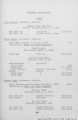
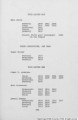
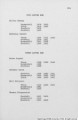
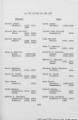
Show The first sign of the war that affected t he athletic activities of the University was on January 30, 1942, when the chairman of the Athletic Council announced that Keith Brown had been selected as Graduate Manager of Athletics in place of Theron Parmelee who had responded to his country's call. The next indication was on Ootober 13, 1942, when, "in connection with the plan to auction off autographed footballs as a stimulus to the buying of War Bonds at the Denver game, it was decided to offer Mr . Jobn Mooney of the Salt Lake Telsgram. five minutes on the loud speaker during the intermission to use as he ssw fit in carrying out this undertaking." Again, on November 3, 1942, Captain Floyd Goates, Provost Marshall of Fort Douglas, appeared before the Atbletic Council and requested tbe use of the Stadium. for football games between Army tea.m.s in t he Salt Lake region. On November 17. 1942, Mrs. Fabian and Mrs . B:r\:1Nn appeared before the Council in bebalf of the women's organizations sponsoring the sale of Bonds to pay for the manufacture of a bomber to be named "The Flying Ute". (The Kearns football team asked for the use of old football Jerseys. The approval was granted with the understanding that the Kearns football team.s were to trained under t he supervision of Army personnel and regular coaches.) The Council decided to allow, for this purpose, as much time as possible between halves of the Thanksgiving Game . This policy was continued throughout the football season. On December 6 , l'i:l42 , Intercollegiate sw1.mm.ing and wrestling were temporarily discontinued because ot lack of campeti tion. The other Utah colleges had no sw1.mtning or wrestling teams . The Administration, on February 16, 1943, announced that it had decided to convert the Fieldhouse , at once, into sleeping quarters for Army personnel on the ca.m.pus. The Athletic Councll willingly accepted the announcement and offered to do everything possIble to help in the War The Athletic Council, on May II, 1943, after careful consideration and discussion, passed the following resolution: "That the Athletic Council considers it feasible and desirable for this Institution to maintain 8 diver-sified program of Intercollegiate athletics next year. That the program. be modi fied and curtailed as much as may be necessary to suit the existing conditions 88 they develop." Plans were JIlBde on September 18, 1943, to oarry out t he football schedule. The Council approved the starting time at 3:00 P.ll. for the first two ga.m.es , October 2 and October 16, so that the A. S , To P . trainees might be able to attend as per Colonel Lundberg ' s suggestion. On December 1, 1943 , the Athletic Cou.ncll restated its position authorizing schedule that could be undertaken finenci ally without a serious loss. A frsw days later a letter was read by Mr. Brown from Mr. John F. Fitzpatrick of the Kearns Corporat i on who represented the Salt Lake Tribu.ne and Salt Lake Telegram., co.m.m.ending the Athletic Co u.ncll for its attitude in continuing athletics under such hardships. This same opinion was expressed by the sports editor of the Deseret News and other sports editors in cities and towns outside of Salt Lake. The Administration, the Faculty, the Alumni, a..o.d tbe Students also favored heartily the attitude of the Athletic CounciL games played . However. football, in 1943 . was not what it bad been before the war. There were only four letter men on the squad whioh was composed mostly of seventeen and eighteen- year· old boys just out of high school and who bad not been drafted . SOme members of the squad had physical defects which kept them out of the service. Coach Ike Armstrong had a d i fficult time making any kind of respectable showing. There were only two Conference institutions which fielded football teams (Colorado and Utah) . A home and bome arrangement was made with the Colorado University. In the fir st game with the University of Colorado, Utah was completel y outClassed, but in the second game . wbich was lost, the Utes made a very creditable showing . Other games were played with teams trom Colorado College and Fort Warren which boasted men ot long tootball experience. In spite ot all the drawbacks, the Utah team improved as the season went on and nearly upset the Homecoming rivals t rom the University ot Colorado on Thanksgiving Day. The tootball schedule tor 1942-4:3 provided tor seven games, tour at home and three away trom home. These games were with teams trom Fort Warren, Cheyenne, Wyoming (two games) ; University of Nevada; Colorado College; University of Colorado (two games); and Tulsa University at Tulss, Oklahoma. For the first time in twenty- six years, the tootball team ot tbe University, like many other teams the country over, opened a cam.paign against acme of Uncle SSm's soldiers. The first game was played at t he Army post at Fort Warren. The scores in most at the games were one- sided . Interest , however , was continually higb. The University of Colorado and Colorado College had a greet advantage over Utah inaSlQuch as these institutions had Naval units on the campus. The Navy allowed Navy trainees to participata in Interoollegiate games while t he Army forbade it. The Army Specialized Training unit on the University campus had many tine athletes but none was permitted t o represent the University i n athletic oompetition. Basketball games were arranged by Manager Brown in December, 1943. The Fieldhouse was occupied by the A. S. T. P. unit and basketball games had to be played oft the 08Jl1pus. Mr. Howard Clark of the Deseret Gymnasium was very co. operative and all the hOlDe games were played in the Deseret GYJIUlasiwn. The basketball season was very succe~sf'ul. In f'act, the basketball year of' 1943-44 was, in the history of' Utah, the most outstanding. This bas· ketbsll team, like t he f'ootball team, was composed of young men who were too young to be drafted and others who had been rej ected by the Armed Forces . In March of' this year, the "Blitz Kida" or "Cinderella Kids", as they were called by eastern sports wri· ters, f'or the second time in University of' Utah basket· ball history won the National Championship. If' it had not been tor the eastern basketball trip to Madison Square ae.;den, the Athletio Council would have several thousand dollers in the red. Tennis and track, in the spring of' 1944. carried on a modified basis. On April 5, 1944, Athletic Council passed motion to continue tennis trsok on a home and home basiS with the .Agricultural College and Brigham Young Univer sity. These schools had no track teams in the spring of 1944, and track was maintained at t he University on an Intramural basis with the understanding that some of' the men would be sent to represent the school at the American Athletic Unlon (A . A.U.) meet at Denver and perhaps also at the Nat1alal Colleglate Athletio Assooiation (N. C. A. A. ) meet 1n Milwaukee 1n .mld-June. Coach Armstrong brought the question again before the Athletic Council in May, 1944, as to whether football should be played in the fall of 1944. The Council reaffirmed its attitude and expressed itself as wishing to oontinue with all sports wherever possible. On May 23, 1944, the Athletic Council authorized Coach Armstrong to take a maxi.m.u.m. party of four athletes to the Denver A. A. U. meet, and also to aooompany Fred Sheffield to the N. C. A. A. meet in Milwaukee, providing his performances, his condition, and his attitllde mer-ited this distinction. At this same meeting , the Athletio Council approved representation at the N. C. A. A. tennis tOllrnament in Chicago in Jllne, 1944. Bob Lewis and Richard Warner, University tennisters, were chosen to represent the school. On July 25, 1944, the Athletio COWl oil met and reaffirmed again its pOlioy to continlle with athletics and the athletic program as long a8 possible. The follOWing motion wes passed: '"He are to~~ the continllance of aU sports for the coming year." By August 26, 1944, the whole sitllation had ohange:1, Mr . Facer, of the Secretary's Office, and Mr. Evans, SIl-perintendent ot Bllildings and Grounds, met with the Ath-letic Council to discllss financial dealings pertaining to equipment that had been installed by the Army in the Fieldhollse. The University was allowed the first privilege of bidding on the eqllipment. The things that io-teres ted the Council most were the ventilation system end of t he scholastic year of 1943- 44 found the Athletic Council in a sound financial status. Sohedules of the major sports had been carried through. This at-titude on the part of the AdIIlinistration and the Athl.e-tic Council gave the University a great deal of fine publicity. The basketball team, with its victory at Madison Square Garden, was a credit to the school and state . The game was broadcast allover the world, which enabled soldi ere in the Phillipines and sailors in the SOuth Pacific to hear the game in full. Later, motion pictures of t he game were shown allover the country . The ~the News Film Corporation, in the fall of 1944, sent their experts to the campus where campuS scenes were filmed and the 1944-45 basketball team was photographed. During the basketball season in Hl44- 45, t his basketball short was shown throughout t he nation, and gave, again, great publicity to the University. |