| OCR Text |
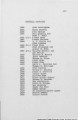
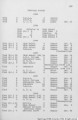
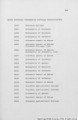
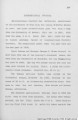
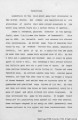
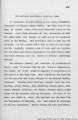
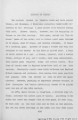
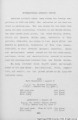
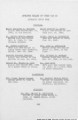
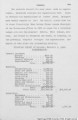
Show The arrival of Coach Ike J. Armstrong on the campus in the tall of 1925 added greatly to the sentiment already forming that one ot the greatest needs of the University at Utah was a stadium. The attendance at over 23,000 spe cta-t ors at the Thanksgiving Day tootball game in 1~26 was sll!ficient evidence. Loyal graduates llk::e Howard Barker, tootball lettermen at 1~13 and 19l4-, Ellis Barker, track letterman ot 1921, both University at Utah graduates in Civil Engineering. George Ellerbeck. class at 1927 and Vernon L. Bell, class of 1928. had much to do with the making at plans end designs at the new stadium. A "0" shaped bowl was tirst suggested but the horse shoe stadium seemed best tor the campus. A model design was made and exhibited in in the window of the Utah Power and Ligbt Company. and was later placed on the main floor ot the John R. Park: building. Some friends and ottioials at the University had visited and inspeoted the newly ereoted stadium on the University at Colorado campus costing $60.000. It the University at Colorado could build a stadium, why couldn't the University of Utah? Nobody doubted the need of such a structure. The live question was how to :t'1nance it. The tirst thouabt was that the University might borrow tram the State Loan Commission. This suggestion was favorably received. A bill was drawn up and presented to the Legislature. The Houee ot Representatives passed it unaniJaously. The Senate in last JIlinute rush to tinish the business did not even vote on the b1ll. The suggestion ot organizing the Stadium Trust was advan ced, legally examined and decided upon. This Trust could issue bonda and bulld the stadium and when finished turn it over to the University ot Utah . The Governor and the Board ot Regents tavored this proposition and so on January 21 , 1927. the Board ot Regents decided that the stadium should be bull t and appOinted the JIlembers ot the Stadium Trust and e.m.powered them with the tinancing and oonstruotion. The meJDbers were President George TbQ&S8, Walter A. Kerr, Chairman ot the Athletic council , Ronald MoGregor , studen; representative, Charles R. llabey. president ot the Alumni Association. John 7. 71tzpatrick, Warren L. Wattie, W. W. Ray, representative ot the CbaJllber ot Q:mmerce and Royal K. Barnes. The Trust was organized January 20, when George Thomas was elected cbairman, Theron S. parmelee, secretary, and ThoJnas Hllll , treasurer. A sbort t1m.e atter Warren L. Wattle died and Dr. Edward Le Com:pte was appointed in his place. A tew years later Tbomas Hull died and Leon D. Garrett was apPointed in bie place . The Trust iJamedie.tely apPOinted Dean R. B. Ketcbum and Edward 0. Anderson,architect, to work out plans and constrUction de- Bids tor the excavation work were opened February 1& and the contract awarded to the J. L. Griftith Companr tor Digital lmage C 2006, University of Utlh.AII rigllts reserved $35,422.50. Bids tor the superstructure were opened on March 8. The bid at Christensen, Jacob and Gardner of tg9,8l6.50 was accepted. On March 24 the bid of the Ross Beeson Company for the financing of the stadium was approved. Superintendent of Grounds Charles E. Forsberg was authorized to prepare and sod the field, layout the sprinkling system., and build the oDe quarter mile track:. The Chamber of Commerce agreed to raise the tirst money so that construotion might get under way. They were to raise $25,000 by selling $50.00 dollar ooupon tiokets allowing the buyer and one other to attend for ten years all the football games on the home grounds. The $25,000 "as not raised although the Athletic Council did appreciate the $12,000 received from the sale or such tickets. It was the spirit behind the movement even more than the money itself that was so assuring. The stadium was ready for the first game October 1 with the Colorado Scbool or Mines, Utah winning by the score or 40 to 6 . The Dedication, however, of the stadium took plaoe on Homecoming Day, October 22, when Armstrong's team. defeated the team from the University of Colorado 20 to 13. Impressive dedicatory exercises marked the official opening of the stadium. The university band under the dir-m. e.rched acrose the field at the conclusion of tb.e first be.lf of the ga.m.e. The band was followed by the Spurs, the girlS garbed in white sweaters , white skirts and red and oaps . The bend tormed a large "U", and the girls tD8.rching two abreast carried large clusters ot crimson balloons. The 15,000 spectators applauded all the men wtlO made the stadium possible marched onto the playi08 tield. This group inoluded President George Thomas, H. E. Crockett, Secretary ot State and Aoting Governor , E.M . .Ashton, President ot the Chamber of COllllDerce. Mayor C. Clarence r;eslen, Dr. Clarence Snow, Chairman ot the Board or Regents, 1"rank H. Jonas, student body preSident, Jesse Thompson, ohairman ot the ticket selling committee, Chamber of Commeroe, Walter A. Kerr, chairman ot the Athletio Counoil, Riohard T. Hart, President ot the Alumni Assooiation, Charlea R. Mabey, William. W. Ray, John F. Fitzpatriok, Edward LeCompte, Roral C. Barnes , Stadium t"rust members, and '!'beron Parmelee, Secretary to the Prea1dent and Seoretary ot the Stadium. Trust, and Dean R. H. Ketchum, the dealgn1ng engineer. The special guest at this g8Jlle was the tall and graoious Prince William of SWeden, introduced by )(eyor Neslen. He spoke into the microphone made possible by the ina tal-lation ot the Publio Address System by the Salt Lake Trib- Wle. Prince William 's "Hello Everybody and I wish everrbody good luck" was greeted with loud applause . Dr. Clarence Snow , Chairman of the Board or Regents and master ot ceremonies ot the occasion, introduced Richar d T. Hart, President or the Alumni .Association, who made the OigiU,1 Im.g.e C 2006, Univ.rsity of Utah. All rights ruerved dedicatory address. At tbe close ot the address the Spurs "released their clusters ot balloons. Like buoyant bubbles, the blots or crimson rose alott to tlaunt Utah's colors high against the white background ot the clouds . " Thanksgiving Day was also tull ot interesting athletic history. The stadium lacked the tlag pole and the two Indian heads on Homecoming Day, October 22 . At a nun Jllen ' s banquet, Protessor Kerr in his talk expressed the hope that a donor ot the Indian heads pl anned tor in the original design, Jllight be tound. Joseph Rosenblatt arose at'd announced that he would make the girt . Protessor Kerr and Student Body President Frank Jonas talked one day about a senior gitt, and both agreed that the Senior class might present the school with a tlag pole. The seniors in their meeting voted the gitt. Mr. Gilbert Riswol d, soulptor ot the MorJllon Battalion Monument, agreed to design and create the Indian head . The tact is that Mr . Torleit S. Koaphus did most ot the work. The senior otticers, President John S. Boyden, Alice Doremus , Vice- president , Charles Blevins, treasurer, and Franois Gustin, seoretary , ordered the pole. Edward O. Anderson, the architeot , and the soulptor, Willard F . Malin were to design and create the base. The olass had In its treasury $800.00, while the estimated cost ot the pole and its ereotion was $1000.00. The oontributions ot Mr. Anderson , Mr. Malin, and the Eastern Iron and Metal Company , made P08- sible its erection. In the ereotion it might be said that the pole tell and it was with some diftieulty that the kink was tinally removed . The bands trom the college snd the Uni versi ty marched onto the tootball tield t ogether, playing eollege aire. Protessor Vlalter A. Kerr made a sbort introductory talk, then John S . Boyden, president ot the Senior Class, presented the senior gitt, the tlag pole, Joseph Rosenblatt at the clas8 at 1926 the two Indian heads. President George Thomas made the acceptanee speech. Six buglers stationed on the north r1..m. at the stadium sounded the call. Team members and the huge crowd stood in sHence and Governor George Dern raised tbe tlag and the two eollege bands played the Star Spangled Banner . The stadium with a seating capacity at nearly 20,000 had beaome a reality, the stadium with its training rooms, teb rooms, shower roOJll.s, storage space tor athletic equipment, rest roOllls, tbe heating units, tbe playing tield and the track: . The movement started by a tew students, who met with President George Thomas in tbe tall at 1926 at the close ot the tootball sesson, had brought results . The Stadium Trust bad been tor.llled and bad funotioned, Serial Gold Bonds bearing interest at 5~ bad been issued and handled by the Walker Bank & Trust Cotapany . All these bonds had been redeemed by the end at the year 1936, and otbers issued at 2 'S1 4lf., thus savi48 several thousand dol- lars. These bonds, rentals, student rees and apportionments, book store and press monies, had JIl8.de possible the wish or the many rriends or the University or Utab. Sixt een years or partnership, not twenty as originally planned, bad come to an end May 4, 1943, when the Stadium. Trust was dissolved , all notes, bonds and debts having been oleared . On September 50, 1943, the Stadium. Trust in a ceremonial burned all the retired bonds . The stadiwn beoame the property or the University or Utah under direct oontrol or the Board or Regents . The total oost was $153 ,530 . 68. The State or Utah had not been asked to oontribute one dollar . President George Thomas and the Stadium. Trust bad done a rine job. |