| OCR Text |
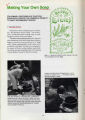
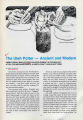
Show ARTIST: TRAVIS WINN y The Utah Potter - Ancient and Modern USED BY EARLY MAN, POTTERY IS A DEVELOPMENT IN TECHNOLOGY, A TOOL FOR ARCHAEOLOGISTS, A USEFUL CRAFT, AND AN ART FORM BY JANET G.BUTLER Sometime during human development, people discovered that containers of some kind were absolutely necessary. Natural objects like animal skins and gourds were among the first containers used. Next came baskets. But once fire was under control, a new kind of container was needed - one that would heat but not burn, one that could be used for cooking. Pottery was an early answer. Not everyone used pottery. Nomadic peoples sometimes found such heavy "baggage" inconvenient. And they did not stay in one place long enough to build the kilns to fire the pots. But those peoples who settled in one place and had the raw materials handy could start making pottery. Many did, among them the Anasazi Indians living in the Four Corners region of the United States. As a matter of fact, the early Anasazi were called Basketmakers and the later ones Pueblos partly because of the shift in their technology from baskets to pottery. Pottery is made of clay, dug from the earth's surface, from which all stones and hard particles are removed. When water is added to the clay it becomes pliable and easy to work with. When the clay dries, however, it shrinks and cracks. So, nonplastic materials must be added to temper the clay - sand or chopped grass, cinders, dried dung, or old potsherds. Next, the clay must be wedged or pounded to remove air bubbles that could cause the pottery to burst during firing. An early method of shaping clay was by coiling. Long, thin ropes of clay were wound around to form a base. The sides were formed by continuing to coil up to the desired height. Then the coil ends were pinched together, the pot smoothed to eliminate seams, and the clay dried to a leather-hard consistency. Finally, the pot was fired, simply by setting it in the fire until it became hard. Then it was usable. Imagine the delight of these early peoples when they discovered the firing process, be- 27 Knifemaking THREE STAGES OF KNIFEMAKING: PATTERN DRAWN ON BLANK STEEL, CUT OUT, AND THE FINISHED KNIFE. KNIFEMAKER CURT CROSTON SPENDS HOURS SANDING AND POLISHING HIS KNIVES UNTILTHE BLADES HAVE A MIRROR FINISH. BMGB BT'^ ! B w . HOURS OF TEDIOUS FILING (ABOVE) AND OTHER HAND PROCEDURES, RESULT IN BEAUTIFUL ONE-OF-A-KIND HANDMADE KNIVES (LEFT). 7603 7800222 |