| OCR Text |
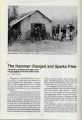
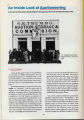
Show y An Inside Look at Auctioneering LOTS OF ACTION AND COLOR SPICE THIS AGE-OLD WAY OF BUYING AND SELLING • jk.rn.rn AUGTIO o ORAGE & I w Ml J. K.TRUMBO'S AUCTION HOUSE IN SALT LAKE CITY, 1869. BY JANET G.BUTLER Going, going, gone! Sold to the gentleman on the aisle for $500! The hammer hits the table and the goods are "knocked down" to the successful bidder. And so an item is sold today on the auction block in much the same way it has been done in recorded history for 2,500 years. Auctioneering gets its name from the Latin auctio, or "increase," and the usual type of auction in the United States is the process of selling by successive offers of increasing sums of money, or bids, from potential buyers. The competition of rival buyers is supposed to force prices to maximum levels. But there is the idea on the buyer's part, illusion or not, that bargains are being offered. In either event, the auction is the perfect way of matching supply with demand to determine prices. When the California forty-niners went through Salt Lake City, for example, they sold many goods at auction. According to a local news story: Common domestic sheeting sold from five to ten cents per yard by the bolt. The best of spades and shovels for fifty cents each. Vests that cost in St. Louis one dollar and fifty cents each, were sold at Salt Lake for thirty-seven and one half cents. Full chests of joiner's tools that would cost one hundred and fifty dollars in the East, were sold in Salt Lake City for twenty-five dollars. Indeed, almost every article, except sugar and coffee, were selling on an average fifty cents below wholesale in the eastern States. One of the earliest established commercial families in Salt Lake City - the Walkers - got its start through an auction. Among their many business ventures the Walker brothers set up a general store at Camp Floyd in 1859. And Camp Floyd became an early site of auctions. At these sales the Walkers came out way ahead. Bacon, which originally cost $5.00 per hundred weight, the Walkers bought for $1.34; 18 and flour, costing $28.00 per hundred, went at the same low price. Today, from the customer's point of view, auction buying may still produce bargains. Everyone has an equal chance to buy. And the festive atmosphere of an auction lends a gamelike quality to the sale. This is produced in large part by the chant of the auctioneer, the jokes, and the gestures. Some spectators or participants even bet on the outcome. The folklore that surrounds auction sales adds to the color and excitement. Many of us have heard that if you scratch your nose or ear or move your hand, you may accidentally buy something. This is not quite true, but there is a reason for the belief, which we shall mention later. Although buyers or sellers, or both, may benefit from an auction sale, it is usually the auctioneer, acting for the seller, and paid by commission, who controls the sale and therefore the pricing. Alan Muir, auctioneer at a recent bull auction held at Teichert Ranch, Benjamin, Utah, explains auctioneering as a psychological process where he tries to motivate people to buy. At a purebred bull sale he does not take bids out of the audience but rather calls for the money he wants and so controls the price he will accept. He tries to bring the value of the cattle higher than what people might normally want to pay. "An auctioneer becomes valuable by his ability to get all of the money off the seats. If he leaves money all over the seats he's not an auctioneer worth anything," according to Mr. Muir. In a purebred bull sale "fitters" such as Lew and Diane Morgan get the cattle ready for the sale by shining them up, brushing the hair on the belly of the animal. Ringmen, or "spotters," like Mike Montgomery and Jerry York, are each in charge of a section of the audience, and they spot bids in the crowd. The fervor is built by the auctioneer and the audience. "People is excitement," according to auctioneer Frank Trunzo. The momentum is kept up by the auctioneer's chant; he uses fillers, or throw words, such as "Hit 'em again," or "a bit of momma;" he also uses jingles, such as "Save a lot of conversation, Bid without a hesitation." He finds that speed is vital in getting the highest prices. "Runners" keep the auctioneer supplied with merchandise to prevent lulls and keep the interest pyramiding. The auctioneer must keep two bidders happy and the rest of the crowd entertained at the same time. He can get caught up in the momentum, too. One auctioneer who practices his chant in his car says he would be driving on the desert, and chanting, and pretty soon he would look down at the speedometer to discover he was going about 90 mph. The faster he chanted, the faster he drove. L. A. "Speed" Riggs, the famous Lucky Strike tobacco auctioneer, holds the world record in his field with a chant at the rate of 784 words per minute for forty-two seconds. His normal chanting speed is 460 words per POTENTIAL BUYERS INSPECT PUREBRED BULLS ATTHE TEICHERT RANCH PRIOR TO THEIR SALE AT AUCTION. 19 FITTERS LEW AND DIANE MORGAN GROOM BULL BEFORE HE IS OFFERED FOR SALE AT AUCTION. minute, that of the average tobacco auctioneer 340. People in ordinary conversation speak 70 to 90 words per minute. There are tricks of the auction trade, some the auctioneer will reveal, others he keeps secret. Alan Muir starts a purebred bull sale with the best animal and sets the tone of the sale with the highest price he can. Then he feels he can run through the rest of the sale in a hurry. At the Teichert sale he said he would try for $2,000 for the best bull, which he did. When he could not get that quickly, he went to $1,000, then $1,500, and finally sold the bull for $2,100. If lively bidding begins early, there will be a faster tempo to later bidding. Hot demand items start a sale out well, as does knocking down an item quickly at a relatively low price with the "fast hammer." Mr. Trunzo found this method highly successful at one sale when he could not get the excitement going. An antique copper kettle worth $50 came up for sale. The bidding began and someone bid $20, way below the item's value. Before another bid could be called, Mr. Trunzo yelled, "Sold!" Suddenly everyone realized what a good deal had been missed. They all started paying attention so they would not miss anything else. The sale turned into a huge success. If a dead spot develops in the sale an auctioneer may switch to another item to enliven the bidding. Before the Teichert sale, Mr. Muir said "If I get one (bull) that won't go very well I'm going to ask for another one to bring in to give them a choice." At the sale he did that, and both bulls sold. Another technique used by Mr. Muir was to suddenly stop his chant to talk to the audience. That first bull was bid up to $2,000 when he suddenly broke the rhythm and said, "And don't you like the bull?" He then proceeded to talk about the bull's merits and gradually worked back into the chant. Finally, with an accompanying, "starting him out the gate," the bull sold for $2,100. But bidders have a few tricks of their own. Why did signals, instead of yelling out bids, become popular at auctions? Mr. Muir explains it this way: "Suppose you have three good ranchers and they know what individuals are going to be wanting the same bulls. All right? Joe Blow stands up and does that (bids obviously) then the other guys know that he's wanting that bull so they're going to run the daylights out of him (force the bidding up) to run him out of money so he won't be contending on those other bulls that they want." Some signals used are quietly raising a hand, or finger, or even just catching the auctioneer's eye. When there are ringmen they must communicate the sign to the auctioneer. To be certain his bid is considered, a bidder using signals should tell the auctioneer or ringman what they mean before the sale. 20 The buyers seek to reduce competition; the sellers and auctioneer to intensify it. Sometimes there is a reserve price, below which the auctioneer will not sell the item. Often, an auctioneer will try to increase the bids by set amounts, say one hundred dollars, until a certain price is reached. As the price nears what a buyer would pay in another market, the auctioneer will usually raise the price by smaller amounts. Otherwise, he may lose his bidders. If the increase is too much for a bidder, he may show this by moving his hand away from his body with the palm down. This means he wants to raise the bid by half. Another way is by showing five fingers (half of ten). If a bidder wishes to see an item for sale more clearly, he may "say" this to the auctioneer by turning the knuckles of his hand and moving his fingers, according to Mr. Trunzo. In the increasing-bid auction system an item is sold when the hammer hits the table or the auctioneer yells, "Sold!" Over the years different ways of determining when something is sold have been the English "inch of candle" method, where the last bid before the candle goes out is the winning bid; or the sandglass, used in the same way; or by a running boy reaching a certain goal. Although the increasing-bid system is the most popular, auctioneering takes different forms over the world. There is the Dutch descending- price auction where the auctioneer starts with a figure and then quotes prices at descending amounts until someone yells, "Mine!" and the object is sold to him. In the Japanese simultaneous-bidding system, all bids are made at the same time using individual hand signals for each monetary unit. Bidding starts when the auctioneer gives the signal and the highest bidder is awarded the lot. In the written bid auction, the highest bid buys the item. In the handshake auction, the buyers communicate their bids to the auctioneer by squeezing his fingers. Then there is the whispered-bid system where the buyers whisper their bid to the auctioneer. But the most common system is the one we are familiar with, the increasing-bid system. The best auctioneers are good psychologists. Therefore those who buy at an auction should heed the Latin warning, caveat emptor - "let the buyer beware." Before the items he wants go under the hammer, he would be wise to examine them well, compare prices, and try to avoid an emotional reaction to the auctioneer and the bidding. Conditions of the sale are usually spelled out in a catalog given to buyers or a posted notice. The basic rules are that the highest bidder is the purchaser, and there can be no bid after the fall of the hammer. The man wielding the hammer might try to "milk' the crowd by getting every nickel from them. Or, on the other hand, bids may be "left in the room." Good auctions are public competitive sales at their best, where a fair price is paid and received. The auctioneer with integrity is the one who is asked back to auction again. All present feel they have received good values and had a fun time. Mrs. Butler is assistant editor of Beehive History and Lifah Historical Quarterly. RINGMAN MIKE MONTGOMERY (RIGHT) POINTS TO BIDDER IN AUDIENCE AT BULL AUCTION. BIDS ARE RELAYED BY RINGMEN TO AUCTIONEER ALAN MUIR (LEFT ON AUCTION STAND). 21 |